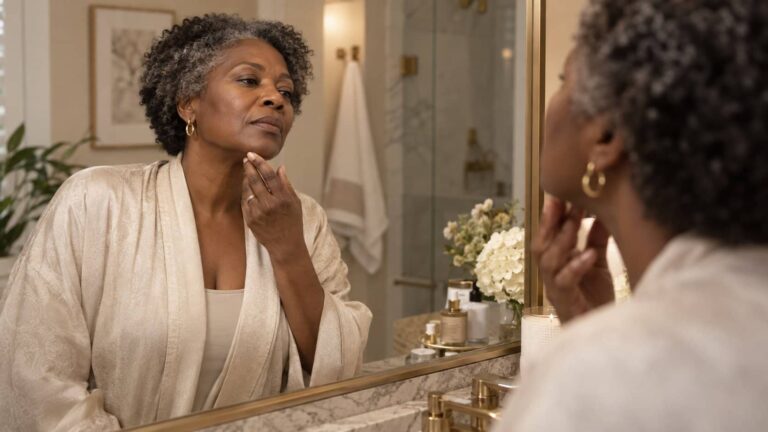
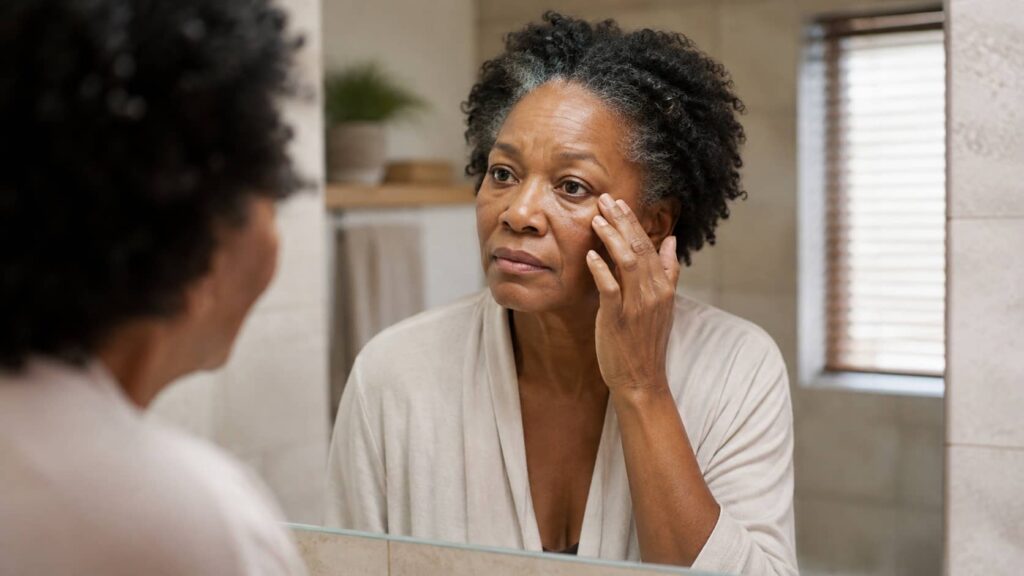
Mature skin is not a separate skin type or a problem that begins on one particular birthday. It describes skin that is showing natural age related changes such as dryness, reduced firmness, slower recovery and uneven pigmentation. This guide explains what mature skin looks like on Black women over 50 and how to care for it gently.
What is mature skin? For me, the answer is written into a scar on my left thigh.
I have had that scar for as long as I can remember, so long that I no longer know how it got there. For years, I knew it as a mark sitting near the centre of my thigh.
Today, it appears lower, closer to my knee.
The scar did not travel on its own. The skin and soft tissue around it changed. Over the years, my thigh lost some of its firmness and elasticity, carrying the scar lower with it.
Every time I see it, it tells me something honest.
My skin no longer holds itself in quite the same way it did when I was younger. It has softened. It has settled. It has lived.
That, more than any wrinkle, is what mature skin means to me.
Mature skin is skin that has begun to show the natural changes that come with time. It may become drier, less firm, slower to recover, and more uneven in tone. It is not a flaw. It is not a failure. And it does not mean your skin has stopped being beautiful.
For Black women, mature skin also has its own particular story. Fine lines may appear later, while dryness, dullness, dark spots, and loss of firmness become the changes we notice first.
Is Mature Skin a Skin Type?
Mature skin is a practical beauty term rather than a medical diagnosis.
It describes skin that is showing age related changes, including:
- Increasing dryness
- Reduced elasticity and firmness
- Fine lines and creases
- Changes in texture
- Slower healing
- Uneven pigmentation
- Greater sensitivity or irritation
- Loss of facial volume
As skin ages, it generally becomes thinner, loses water more easily and may become more easily irritated. Some people also notice more bruising, itching and slower healing.
But mature skin is not one fixed skin type.
You can have mature dry skin.
You can have mature oily skin.
You can have mature sensitive, acne prone or combination skin.
The word mature describes the stage and behaviour of the skin. It does not replace your underlying skin type.
That distinction matters when choosing products.
A woman with mature oily skin may not need the same rich cream as a woman whose mature skin feels tight and flaky. Both have mature skin, but their routines should not look identical.
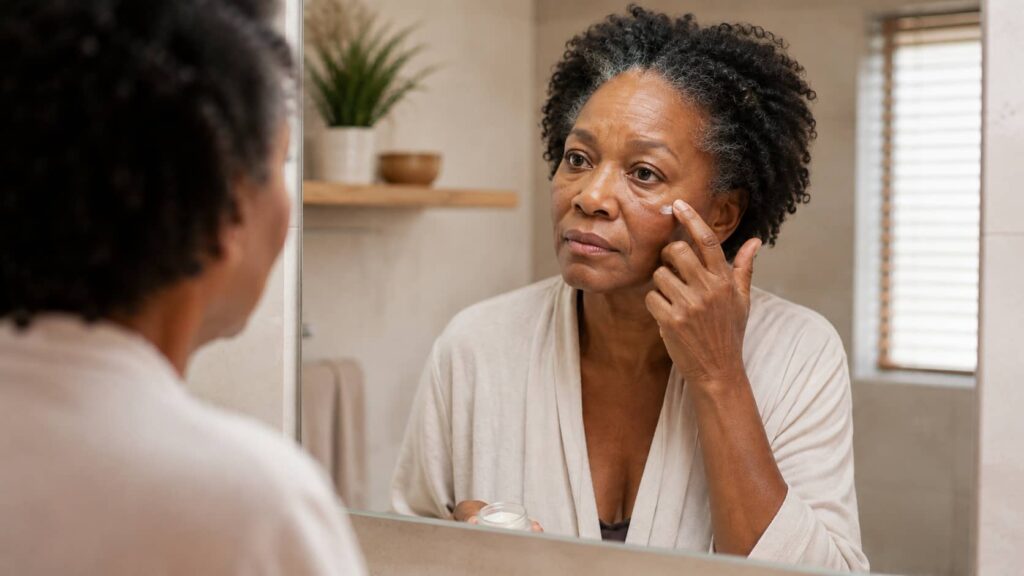
What Age Is Skin Considered Mature?
There is no single birthday when your skin officially becomes mature.
Ageing happens gradually, and every woman’s skin changes at a different pace.
Genetics play a part. So do menopause, sun exposure, smoking, health, medication, climate, stress and the way the skin has been treated over the years.
Some women begin noticing dryness and fine lines in their forties. Others maintain relatively firm, comfortable skin well into their fifties and beyond.
The phrase mature skin is often used for skin in the late forties, fifties and later, but age alone does not tell the full story.
A 52 year old woman may have oily, resilient skin with few visible lines.
Another woman of the same age may be dealing with severe dryness, sensitivity and loss of firmness.
Both experiences are normal.
So the honest answer to what age is mature skin is this:
There is no exact age.
Your skin becomes mature as it begins showing the biological and visible changes associated with ageing. For many women, these changes become more noticeable through the menopausal years.
How Mature Skin Changes After 50
Skin ageing is not one single event.
It is a gradual change in how the skin produces oil, holds water, repairs itself and supports its structure.
Skin may become drier
As we age, the skin often produces less oil and has more difficulty holding onto water.
This can leave it feeling tight, rough, itchy or uncomfortable. By the sixties, dry skin is extremely common, although it can begin much earlier.
Firmness and elasticity gradually decline
Collagen gives the skin strength and support. Elastin helps it stretch and return to position.
As these structures change with age, the skin becomes less springy. The jawline may soften. The cheeks may lose fullness. Skin on the arms, thighs and stomach may begin to sit differently.
This is the change my scar helped me recognise.
Skin becomes thinner and more delicate
Thinner skin may bruise more easily and take longer to recover after irritation or injury.
Products, treatments or habits you tolerated at 30 may begin causing tightness, stinging or prolonged irritation after 50.
Renewal and healing may slow
The skin may take longer to recover from dryness, spots, scratches or inflammation.
Dark marks may also appear to linger because the original irritation has settled while the pigment left behind remains.
Texture may become less even
Mature skin may feel rougher in some places and thinner in others.
Dry surface cells can make the complexion look less smooth and reflective, which is often what women describe as losing their glow.
What Mature Skin Looks Like on Black Women
There is some truth behind our familiar saying that Black does not crack.
Melanin offers some natural protection against ultraviolet damage, and facial lines may become noticeable later in darker skin than in lighter skin.
But that is only part of the story.
Black skin still ages. It may simply show ageing differently.
Research on ageing in skin of colour suggests that darker skin often develops fewer visible fine lines at an earlier age, while uneven pigmentation, dark spots, roughness, loss of elasticity and volume remain important signs of ageing.
Dryness may look ashy
On deeper skin tones, dry flakes and roughness may appear whitish, grey or ashy.
This can make dryness more visible even when the skin is not severely dehydrated. Dermatologists note that flaking and grey white discolouration caused by dryness are often especially noticeable on darker skin.
Dullness may be more noticeable than wrinkles
When the surface becomes dry or rough, it reflects light less evenly.
The face may look tired or flat even when there are few visible lines.
This is why many Black women say they have lost their glow before they say they have developed wrinkles.
Dark spots may become more stubborn
Melanin rich skin is more likely to produce noticeable pigment after irritation.
A spot, rash, scratch, burn or aggressive skincare product may leave a dark mark that remains long after the original problem has healed.
Uneven tone can therefore become a bigger concern than fine lines.
Firmness and volume still change
Wrinkles may arrive later, but Black skin is not protected from loss of collagen, elasticity or facial volume.
The cheeks may appear flatter. The lower face may soften. The skin around the eyes and mouth may loosen.
Skin may become more reactive
Some women find that mature skin no longer tolerates strong acids, fragranced products or aggressive exfoliation as easily.
A routine that once produced glow may begin causing dryness, soreness or pigmentation.
For many Black women, mature skin is not only about wrinkles.
It is also about dryness, dullness, uneven tone, lingering dark marks and a gradual loss of firmness.
From the Salon Chair
Women would come to me worried about wrinkles they barely had, while overlooking the dryness and dullness that were changing how their skin looked and felt.
I would tell them, your skin is not cracking. It is thirsty, and it has lost some of its bounce. Give it moisture, protect it and be gentle with it. It can still glow beautifully at every age.
How Menopause Can Affect Mature Skin
Ageing and menopause are connected, but they are not exactly the same thing.
Age related skin changes happen to everyone. Menopause can make some of those changes feel more sudden.
As oestrogen levels fall, skin may become drier, thinner and less firm. Oestrogen is involved in collagen, elasticity, hydration and the skin’s ability to hold water.
You may notice that:
- Your usual moisturiser no longer feels rich enough
- Your face feels tight after cleansing
- Fine lines appear more visible when the skin is dry
- Your jawline or cheeks look softer
- Irritation takes longer to settle
- Dark marks remain longer
- Your skin reacts to products it once tolerated
This does not mean menopause is responsible for every skin concern after 50.
Sun exposure, health conditions, medication and natural ageing also matter.
But menopause may be part of the reason your skin seems to have changed within a relatively short period.
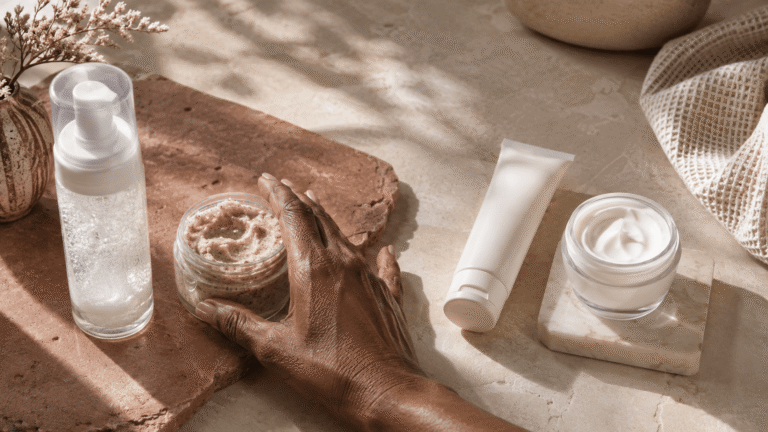
A Simple Mature Skin Care Routine for Melanin Rich Skin
A good mature skin care routine does not need ten products.
It needs to cleanse without stripping, restore moisture, address your main concern and protect the skin from further damage
- Cleanse gently
Choose a mild cleanser that leaves your face feeling comfortable.
Your skin should not feel tight, squeaky or sore after washing.
Use warm rather than hot water and avoid scrubbing with rough cloths or brushes. Dermatologists recommend mild cleansing and avoiding scrubbing as skin becomes drier with age.
2. Restore water and moisture
Look for moisturising ingredients such as:
- Glycerin
- Hyaluronic acid
- Ceramides
- Squalane
- Shea butter
Humectants such as glycerin and hyaluronic acid attract water. Creams containing oils, lipids or ceramides help reduce water loss and support the skin barrier.
A serum is optional.
A moisturiser is not.
Choose a texture that suits your own skin. Some women need a rich cream. Others prefer a lighter moisturiser during the day and something richer at night.
3. Treat one concern at a time
Choose products based on what your skin actually needs.
For dullness or uneven tone, you might consider vitamin C, niacinamide or azelaic acid.
For fine lines and texture, a retinoid may be useful, but it should be introduced slowly because it can cause dryness and irritation.
You do not need several strong ingredients in the same routine.
Give one product time to work before adding another.
4. Exfoliate only when your skin tolerates it
Exfoliation is optional.
Some mature skin benefits from occasional gentle exfoliation. Very dry, reactive or sensitive skin may not need it at all.
Do not follow a fixed rule simply because a product label says to use an acid every night.
Your skin decides the frequency.
Burning, soreness, peeling and lasting tightness are signs to stop, not signs that the product is working harder.
5. Protect exposed skin every day
Melanin offers some natural protection, but it is not a replacement for sunscreen.
Ultraviolet exposure contributes to premature ageing, loss of firmness, wrinkles and dark spots. The AAD recommends a broad spectrum, water resistant sunscreen with SPF 30 or higher on skin not covered by clothing. Tinted formulas containing iron oxide can also help protect darker skin from visible light, which may worsen pigmentation.
Apply it to the face, neck, chest, hands and other exposed areas.
The best sunscreen is one you can apply comfortably and consistently.
What Mature Skin Often Needs Less Of
Caring for mature skin does not always mean buying more.
Sometimes it means removing the things that keep irritating it.
Harsh foaming cleansers
A cleanser that leaves the face feeling tight may be removing more oil than your skin can comfortably replace.
Aggressive scrubs
Rough scrubs and brushes can create irritation and make dark marks more likely on melanin rich skin.
Frequent strong acids
Exfoliating acids can be useful, but more is not always better.
Using them too frequently may weaken the skin barrier and leave the face sore, flaky or discoloured.
Alcohol heavy toners
Some traditional toners remove oil so thoroughly that the skin feels temporarily fresh but later becomes tight and dry.
Too many active ingredients
Vitamin C, retinoids, exfoliating acids and pigment treatments may all have a place in skincare.
They do not all need to be used at once.
The more reactive your skin becomes, the more useful it is to simplify.
Sometimes the products themselves have not changed. Your skincare may stop working after 45 because your skin now has different needs.
Mature skin rarely needs to be attacked into looking younger.
It needs a routine that respects what it can tolerate today.

How to Help Mature Black Skin Look Its Best
Healthy mature skin does not have to look 30.
That was never the goal.
The goal is skin that feels comfortable, looks cared for and reflects light with health rather than irritation.
Cleanse it without stripping.
Moisturise before it feels painfully dry.
Protect it from sunlight.
Address one concern at a time.
Pay attention when a product begins stinging or leaving you tight.
And allow your routine to change as your skin changes.
There is also something softer to remember.
Mature skin carries the story of your whole life.
Every laugh, every season, every period of stress and every recovery has left something behind.
That is not something to erase.
It is something to care for with respect.
Frequently Asked Questions About Mature Skin
What is mature skin?
Mature skin is skin showing natural age related changes such as dryness, reduced elasticity, slower healing, fine lines, uneven pigmentation and loss of firmness. It is a stage of skin change rather than a separate skin type.
What age is considered mature skin?
There is no exact age. Changes often become more noticeable through the forties, fifties and beyond, but genetics, menopause, health, lifestyle and sun exposure all affect when they appear.
Can mature skin still be oily?
Yes. Mature skin can be oily, dry, sensitive or combination. Ageing describes the stage of the skin, while oily or dry describes how much oil it produces and how it behaves.
Is mature skin different for Black women?
Mature Black skin may develop fine lines later because melanin provides some protection against ultraviolet damage. However, dryness, uneven pigmentation, dark spots, roughness and loss of firmness may become especially noticeable.
Does mature skin need a special routine?
It needs a routine suited to its present condition. For many women, this means gentler cleansing, more consistent moisturising, fewer irritating products and daily sun protection.
Should mature skin be exfoliated?
Only when it tolerates exfoliation well. Some women benefit from occasional gentle exfoliation, while very dry or sensitive mature skin may become irritated by it. Exfoliation is not compulsory.
What should mature skin avoid?
Avoid products that repeatedly cause tightness, burning, heavy peeling or soreness. Harsh cleansing, aggressive scrubbing and layering too many active ingredients may lead to irritation and dark marks.
Can mature skin still glow?
Yes. Glow comes from comfortable, hydrated skin with a relatively smooth surface. Mature skin can look radiant without looking younger or completely free of lines.
The Honest Takeaway
Simply put, mature skin is skin that has lived.
It may produce less oil, hold less water and recover more slowly than it once did. It may lose some firmness and show more uneven tone.
For Black women over 50, those changes may appear less through early wrinkles and more through dryness, dullness, dark marks and a gradual loss of bounce.
My scar taught me that.
It did not suddenly become a different scar. The skin around it changed with time.
Our job is not to panic when we notice those changes.
It is to respond.
Hydrate the skin.
Protect it.
Stop using products that repeatedly irritate it.
And care for the face and body you have now, rather than punishing them for no longer behaving as they did at 30.
Your mature skin is not a problem to fix.
It is the skin that has carried you through your entire life.
It deserves to be tended with knowledge, patience and love.
Mature Skin Is Not a Flaw. It Is a Life Well Lived.
The Melanin Tone brings honest, gentle skincare guidance for Black women over 50. Understanding mature skin and caring for melanin rich skin with knowledge instead of fear. Stay close. 🖤