Sunscreen for Dark Skin No White Cast: What Actually Works
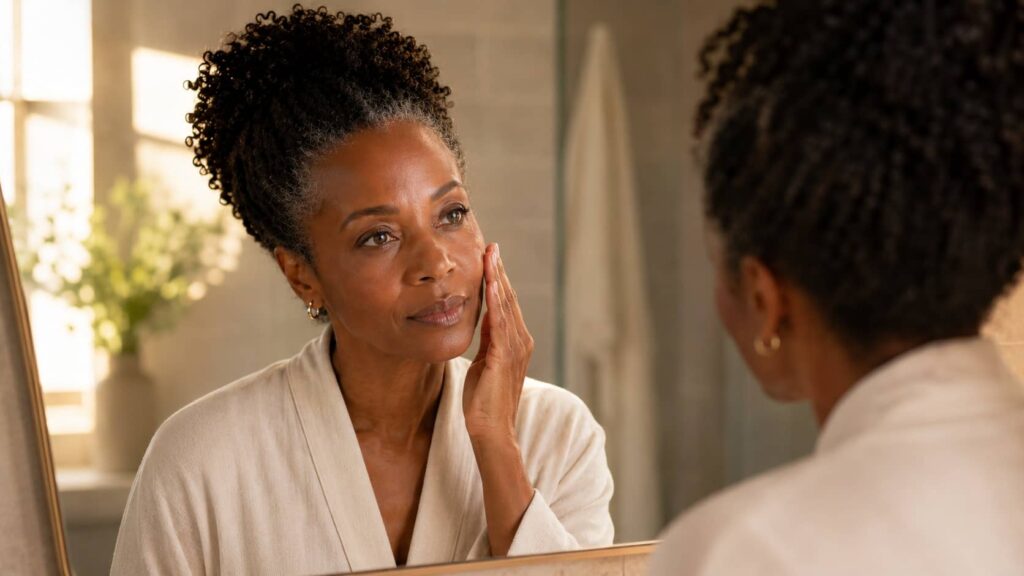
Sunscreen for dark skin no white cast should not be this hard to find after 50. You should never have to choose between protecting your skin and looking like yourself. You stand at the mirror at 53 with a bottle of dermatologist recommended sunscreen in your hand, and you watch your face turn gray.
Not subtly. Not just a little chalky. Gray. Ashy. Two shades lighter than your actual skin and several tones cooler. You blend it. You rub it. You try patting it in. You wait twenty minutes for it to settle. The cast is still there. Your face still looks like a movie character about to deliver bad news.
If you have been searching for sunscreen for dark skin no white cast, this post is written for you. The good news is that real options finally exist, formulas that protect mature melanated skin without making you look like a ghost in every photograph. The better news is that wearing one daily is one of the most important things you can do for your skin, more important now than at any other point in your life.
The hard part has always been finding one that works without making you choose between sun protection and self respect. Most of the women I styled in 22 years of salon practice quietly skipped sunscreen for one of two reasons. Either they had been told their melanin was enough protection (it is not, and we will get to that). Or they had tried sunscreens for years and gotten tired of looking like a ghost every time. Most of them would rather risk the sun than walk out the door with a chalk face.
I understand that decision. I have made it myself. But after watching dark spots, melasma, and uneven tone become harder to treat in clients in their fifties, and after watching the science of sunscreen finally evolve to include skin like ours, I want you to know this: the era of sunscreen without white cast for dark skin is genuinely here. You just have to know what to look for.
What is Happening With Sunscreen on Dark Skin
Two things are usually going on when a Black woman over 50 has not found a sunscreen she actually wears every day.
The first is cultural. For generations, Black women have been told that melanin is our built in sunscreen. There is a kernel of truth in that. Melanin does offer some natural protection against UV rays. But the protection is partial, and it is far less than people think. Most estimates put the natural SPF of deeply melanated skin somewhere between 3 and 13. The American Academy of Dermatology recommends a minimum of SPF 30. The math does not work in our favor.
The second is practical. The sunscreens that have dominated the market for decades were designed for white skin. Physical sunscreens, sometimes called mineral sunscreens, use zinc oxide and titanium dioxide as their active ingredients. Both of those are white minerals. When you spread them across deeper skin, they sit on top in a chalky, gray, or purplish cast that no amount of blending will fully fix. This is exactly the problem that women searching for sunscreen for dark skin no white cast have been trying to solve for decades. Chemical sunscreens do not leave a cast, but many of them sting more sensitive mature skin, and the older formulas had a sticky greasy finish that nobody enjoyed wearing.
The result is that an entire generation of Black women learned to associate sunscreen with looking worse, not better. We learned to skip it. We learned to count on our melanin. We learned to deal with the dark spots, the uneven tone, the melasma, and the slow loss of brightness without ever connecting any of it back to the sun.
Now we are in our fifties, and we are paying for it.
Why Sunscreen Matters More for Black Women After 50
The need for sun protection grows in this decade, for several specific reasons that almost no one explains to Black women over 50.
The first reason is hyperpigmentation. The cells that produce pigment in your skin become more reactive in midlife. A breakout that healed in two weeks at 30 may leave a dark mark that lingers for six months at 53. Sun exposure accelerates this. Every minute of unprotected UV exposure deepens existing dark spots, triggers new ones, and worsens melasma, which often flares for the first time in perimenopause. The good news is that modern sunscreen for dark skin no white cast finally makes daily protection a realistic habit instead of a daily compromise. Sunscreen is the single most effective tool you have for managing hyperpigmentation, and on melanated skin over 50, that battle is already harder than it was at 30.
The second reason is collagen. You are already losing collagen at roughly one percent per year after menopause, and the steepest drop happens in the first five years. UV exposure speeds that loss dramatically. The collagen you lose to age you can manage. The collagen you lose to the sun on top of age is what makes the skin look older than it has to. Daily sunscreen is one of the few things research consistently shows slows visible aging.
The third reason is skin cancer. Skin cancer is less common in Black women than in white women, but when it occurs, it is more often caught late and is more often deadly. Melanoma in Black women has a survival rate significantly lower than in white women, in large part because the warning signs are missed and the assumption that we do not need to worry about skin cancer is still widespread. Sunscreen reduces your risk. Self checks for unusual moles, including on the soles of the feet and the palms of the hands where Black women are more likely to develop melanoma, reduce it further.
The fourth reason is visible light. This is newer science that has not made its way into mainstream advice yet. Visible light, the kind that comes from the sun and from indoor screens, is now understood to worsen hyperpigmentation in deeper skin tones in ways that traditional UV protection does not fully address. Sunscreens that include iron oxides offer protection against this visible light. For mature melanated skin dealing with dark spots and melasma, iron oxide containing sunscreens are no longer optional. They are essential.
Put these four reasons together and the picture is clear. Sunscreen at 25 was about not getting a burn. Sunscreen at 55 is about pigmentation, collagen, cancer prevention, and visible light protection all at once. It has graduated from a nice idea to the most important step in your morning routine.
Sunscreen for Dark Skin No White Cast: What Actually Works
The sunscreen market has finally begun catching up to Black women, and you have more good options now than at any point in the past. The category of sunscreen for dark skin no white cast covers several different formula types, and the right one for you depends on your skin’s other needs. Let us break them down.
Tinted Mineral Sunscreens with Iron Oxides
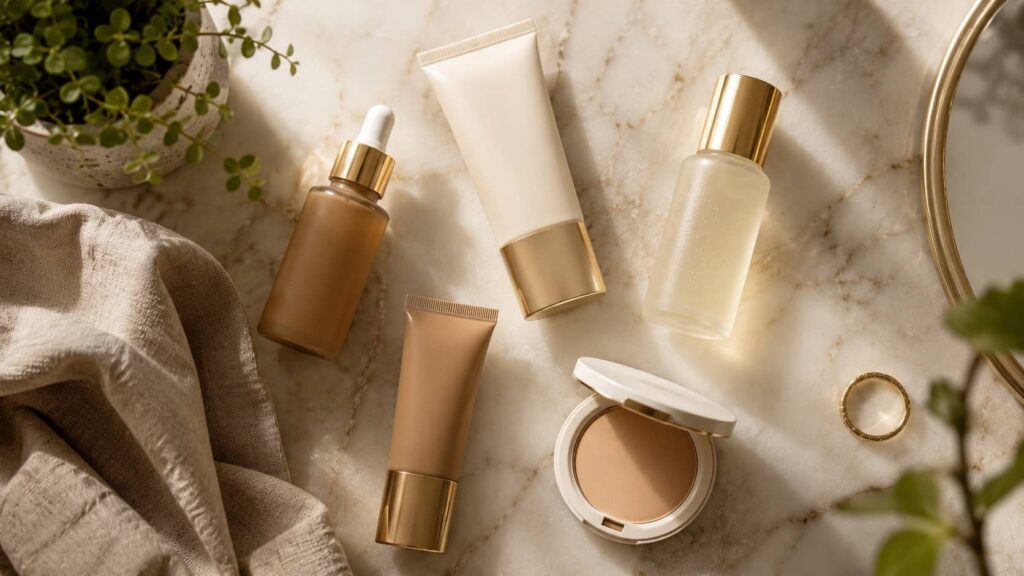
This is the category that changed the conversation for most Black women over 50. Tinted mineral sunscreens use zinc oxide and titanium dioxide for sun protection, but they are tinted with iron oxides to match a range of skin tones. The iron oxides do two things. They cancel out the white cast of the minerals. They also protect against visible light, which is the cause of stubborn hyperpigmentation in deeper skin tones.
For mature melanated skin dealing with dark spots, melasma, or uneven tone, a tinted mineral sunscreen with iron oxides is usually the single best version of sunscreen for dark skin no white cast you can buy. Look on the label for zinc oxide, titanium dioxide, and iron oxides together. Many of these formulas now come in a range of tints, including deep ones, though the deepest end of the market is still expanding.
Modern Chemical Sunscreens for Dark Skin
If your skin tolerates chemical sunscreens, the newer formulations from Korea, Japan, and increasingly from American brands offer broad spectrum protection without any cast at all. Look for ingredients like avobenzone, tinosorb, mexoryl, and uvinul. These newer chemical filters are gentler than the older ones, less likely to sting sensitive mature skin, and they apply invisibly on every skin tone. This is one of the most underrated sources of sunscreen without white cast for dark skin in the current market.
The trade off is that chemical sunscreens can still irritate skin that has become more sensitive in menopause. Always patch test a new one on the side of your neck for three days before applying to your face.
Skin Tints With SPF for Deep Tones
A skin tint that includes SPF 30 or higher can be a beautiful option for everyday wear, especially if you do not want to layer separate makeup over sunscreen. The newest generation of these products is formulated to behave more like skincare than makeup, with a wider tonal range than older tinted moisturizers offered. For a Black woman over 50 who wants light coverage, even tone, and daily sun protection in one step, this category is worth exploring.
The catch is that you need to use enough. Most people apply skin tints in much smaller amounts than they would apply sunscreen, which means the actual protection ends up well below the SPF on the bottle. Use a generous, even layer.
Hybrid Mineral and Chemical Formulas
The newest category combines mineral and chemical filters in a single formula. These can offer the gentle feel of mineral sunscreens with the invisible finish of chemical ones. They are worth trying if you have struggled with both categories on their own and are still searching for sunscreen for dark skin no white cast that works on your particular skin.
What to Avoid in Sunscreen for Dark Skin
Skip pure mineral sunscreens without any tint if you have deeply melanated skin. They will cast. There is no technique that fixes this completely.
Skip sunscreens with strong alcohol bases or heavy fragrance on mature skin. Both can irritate the barrier that is already more reactive in menopause.
Skip anything that advertises a matte finish if your skin has become drier in your fifties. Matte sunscreens often pull on dry skin and emphasize fine lines. Look for satin or dewy finishes that work with the skin you have now.

How to Find Your Sunscreen: A Practical Next Step
Here is what I would do if I were starting over in your shoes, and looking for the right sunscreen for dark skin no white cast for your specific face.
Set aside one week of low pressure shopping. Go to a beauty store that carries a wide range of brands and tints. Sephora and Ulta have improved their tinted sunscreen ranges considerably. Independent Black owned beauty stores often carry options the big chains do not. Ask to swatch tinted sunscreens on the back of your hand and on your jawline, in natural light if possible. Take your time.
When you find two or three that swatch well, buy the smallest sizes available. Most brands now offer travel sizes or sample sets. Spend a week testing one at a time. Apply it as the last step of your morning routine, after moisturizer, in a generous even layer on the face, the neck, the ears, and the back of the hands. Check yourself in natural light, not just in your bathroom mirror. Photograph yourself wearing it.
If a sunscreen passes those tests, buy the full size. If it fails, return it. Most major retailers accept opened beauty returns now, and you should use that policy without guilt.
Layer your sunscreen with the rest of your routine in the right order. After cleanser, after any actives like vitamin C or hyaluronic acid, after moisturizer, sunscreen goes last. Wait two or three minutes before applying makeup over it. Reapply every two hours if you are outside, and use a powder sunscreen for touch ups if reapplying liquid disturbs your makeup.
If you have not found your sunscreen after testing three or four options, talk to a Black dermatologist or a Black esthetician. They will know the brands and shades that work for our skin and can save you months of trial and error. Ask in Black women’s online communities for current recommendations.
The Honest Truth About Sunscreen for Black Skin
One last thing, because every post on this site ends with the truth.
The myth that Black women do not need sunscreen has cost us. It has cost us in dark spots that took longer to fade than they had to. It has cost us in melasma that flared up in our forties without warning. It has cost us in skin cancer cases that should have been caught earlier. It has cost us in collagen we did not have to lose. We deserve better information than we have been given, and we deserve it now, not after another decade of dark spots.
But here is the harder truth. Even the best sunscreen for dark skin no white cast is not perfect. No formula will block every UV ray. No sunscreen replaces shade, hats, sunglasses, or staying out of the sun during peak hours. The protective melanin in our skin is real, even if it is not as much protection as the myth suggested. Sunscreen is one piece of a larger sun strategy, not a magic shield.
And here is the kindest truth. The sunscreen you actually wear every day is worth more than the perfect sunscreen you wear once a month. If the only one you can stand on your skin right now is an imperfect one, wear that one. If you can only manage SPF 15 most days, that is still better than nothing. If you only remember it three days out of seven, build the habit slowly. The goal is consistency, not perfection.
The most beautiful mature melanated skin I have ever seen, after two decades of looking closely at skin every day, belonged to women who had been wearing sunscreen for decades. Not the most expensive routines. Not the most active ingredients. The most consistent sun protection. That is the quiet truth the beauty industry does not advertise. The cheapest insurance you can buy for the next thirty years of your skin is a sunscreen you actually like, applied to your face every single morning.