
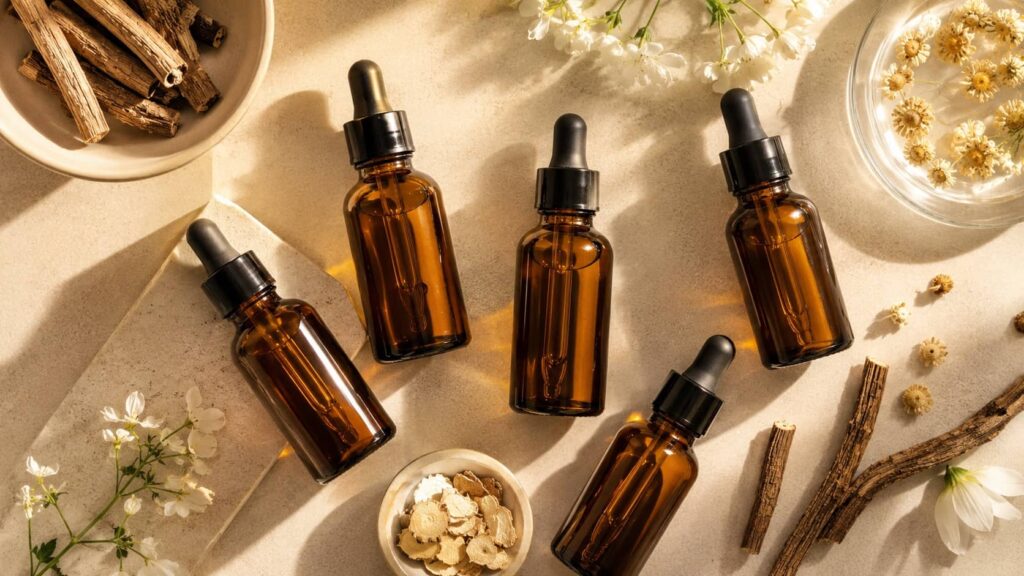
Finding the best ingredients for dark spots when you have deep melanin skin is not as simple as picking whatever the beauty magazines recommend. Because here is the truth that the big skincare websites rarely say out loud. Some of the most popular dark spot ingredients can actually make hyperpigmentation worse on Black skin. Not better. Worse. And after 22 years of working closely with melanin rich skin, I have seen exactly how that happens, and how to avoid it.
This guide is different from the usual ingredient list. I am going to tell you which ingredients genuinely fade dark spots safely on Black skin, which ones you need to use with real care, and which ones can trigger the very post inflammatory hyperpigmentation, or PIH, that you are trying to get rid of.
I am also going to talk honestly about something the polished beauty blogs avoid completely. Skin bleaching. The damage I have witnessed. And why your natural skin deserves so much better. Let us begin.
Why Skincare for Dark Skin Needs a Different Approach
Let me start with the science, kept simple, the way I always explained things to my clients.
Melanin rich skin is beautiful and strong. It carries more melanin, which gives natural sun protection and that gorgeous depth of colour. But that same richness means our skin marks more easily and holds onto pigment longer than lighter skin does.
The Simple Science
When melanin rich skin is irritated, inflamed, or treated too aggressively, the pigment producing cells called melanocytes go into overdrive and produce excess pigment. This is what causes post inflammatory hyperpigmentation, or PIH. It is the dark mark left behind after a spot, a scratch, a burn, or a harsh product. This is why skincare for dark skin has to be gentle and intentional. The wrong approach does not just fail to help. It actively creates new dark spots.
So when we talk about the best ingredients for dark spots on Black skin, we are really asking two questions at once. Does it fade pigment? And does it do so without triggering more inflammation? An ingredient that fades spots but inflames the skin is not a good beauty ingredient for us. It is a trap.
Keep that in mind as we go through them. Gentle and patient always beats strong and aggressive for melanin rich skin.
The Best Ingredients for Hyperpigmentation That Are Safe for Black Skin
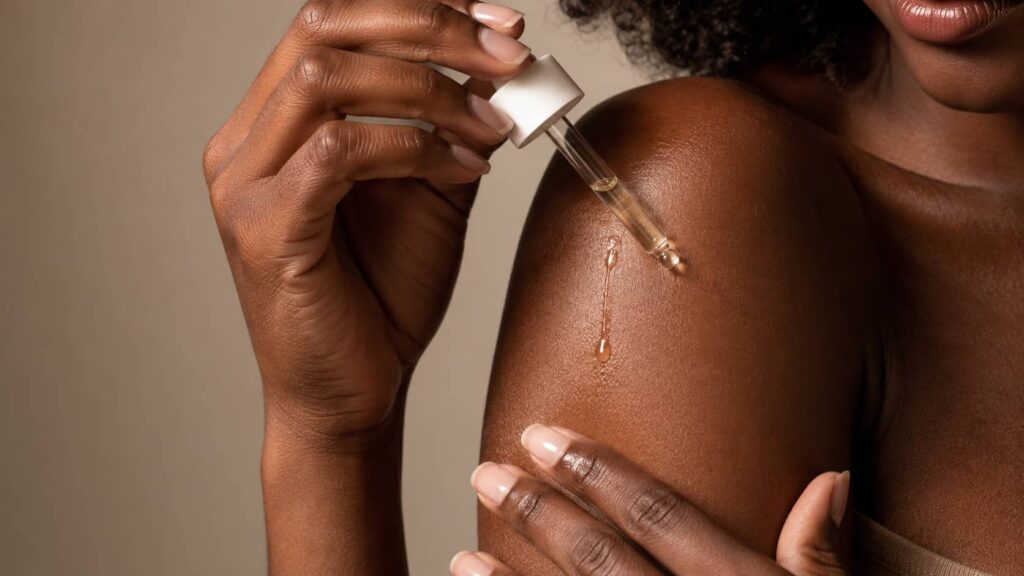
These are the ingredients I trust for fading dark spots on melanin rich skin. They work with your skin, not against it. They fade pigment while keeping inflammation low, which is exactly what we need.
Niacinamide
One of the gentlest and most effective ingredients for hyperpigmentation on Black skin. It works by slowing the transfer of melanin to the surface of the skin, which fades dark spots gradually. It also calms inflammation and strengthens the skin barrier, which makes it especially good for mature skin after 50.
Best for hyperpigmentation, uneven tone, sensitive skin
Vitamin C
A brightening antioxidant that fades dark spots and protects against the sun damage that worsens them. It works by slowing melanin production. Look for gentler forms like sodium ascorbyl phosphate if pure vitamin C feels too strong for your skin.
Best for dullness, dark spots, overall radiance
Azelaic Acid
One of the kindest ingredients for melanin rich skin. It fades pigment and calms inflammation at the same time, with a very low risk of irritation. This makes it one of the safest choices for treating dark spots on Black skin.
Best for PIH, melasma, sensitive and reactive skin
Alpha Arbutin
A gentle brightening ingredient that fades dark spots without the harshness of stronger lighteners. It is a much safer alternative to hydroquinone and works well alongside vitamin C and niacinamide.
Best for dark spots, general brightening
Licorice Root Extract
A natural brightener that fades pigment while soothing irritation and redness. Gentle enough for sensitive melanin rich skin and a lovely natural option for fading dark spots slowly and safely.
Best for hyperpigmentation, redness, sensitive skin
Mandelic Acid
A gentle exfoliating acid that suits darker skin tones particularly well because its larger molecule penetrates slowly, which lowers the risk of irritation. It fades dark spots and smooths texture without the harshness of stronger acids.
Best for PIH, sunspots, gentle exfoliation
From the Salon Chair
“If a client only ever took two ingredients from me, I would say niacinamide and azelaic acid. Both fade dark spots, both calm the skin, and both are very hard to get wrong. For melanin rich skin, gentle and forgiving is exactly what you want.”
Retinol, Glycolic Acid and Salicylic Acid on Dark Skin – Use With Care
Now for the ingredients that can work beautifully on Black skin, but only if you treat them with respect. These are not forbidden. They are just powerful. And power, used carelessly on melanin rich skin, can backfire into more dark spots.
Retinol on Dark Skin
Retinol fades dark spots and renews skin beautifully, but it can also cause dryness and irritation when introduced too fast. On Black skin, that irritation can trigger PIH. The answer is not to avoid it, but to start slow. Use it once or twice a week at first, with a gentle low strength formula, and always follow with moisturiser.
Use with care, start slow, build up gradually
Glycolic Acid on Black Skin
Glycolic acid is a strong exfoliating acid. It works, but its small molecule penetrates quickly and can irritate melanin rich skin if the percentage is too high. Lower percentages, around 5 to 8 percent, are much safer. Mandelic acid is often a gentler alternative that does a similar job.
Use low percentages only, patch test first
Salicylic Acid on Dark Skin
Salicylic acid is helpful for acne and clogged pores, which in turn can prevent the dark marks acne leaves behind. But used too often it can dry and irritate the skin, which risks PIH. Use it in moderation and not alongside other strong actives on the same day.
Use in moderation, avoid layering with other actives
The golden rule for all three of these. Introduce only one new active at a time. Start slow. Always wear sunscreen the next day, because these ingredients make your skin more sensitive to the sun, and sun is the number one thing that darkens spots on melanin rich skin.
The Ingredients That Can Trigger Post Inflammatory Hyperpigmentation
Now I need to talk to you honestly, woman to woman, about the ingredients and practices that genuinely harm Black skin. This is the part the polished beauty blogs will not tell you. But I will, because I have seen the damage with my own eyes for 22 years.
The most dangerous of all is skin bleaching.
A Personal Note
“I have never bleached my skin. I never have, and I never will. But I have watched far too many women damage theirs trying to become lighter. And it breaks my heart every single time.”
Skin bleaching is common in our community, and I want to be clear that I hold no judgment toward any woman who has done it. The pressure to be lighter is real, and it comes from a long painful history of colorism that told us our natural skin was not enough. That is not your fault. But the products used for bleaching are genuinely dangerous, and you deserve to know the truth about them.
The Honest Warning
Fanta face, Coca Cola body. For anyone who does not know, that phrase describes the heartbreaking result of bleaching gone wrong, when the face is bleached lighter, like the orange of Fanta, while the body stays dark, like Coca Cola. It captures the unevenness, the damage, and the sadness of it in a way that statistics never could.
Many bleaching creams contain high strength hydroquinone, mercury, or strong steroids. Some women even mix hydrogen peroxide into their soaps to bathe with. These are not minor risks. Strong hydroquinone misuse can cause a condition called ochronosis, where the skin turns a darker blue grey colour permanently. The cruel irony is that the very thing used to lighten the skin ends up darkening it forever.
Strong steroids thin the skin, cause burning, redness, and visible broken blood vessels. Mercury is a poison that absorbs through the skin and can damage the kidneys and nervous system. And the scarring and burns from these chemicals can be permanent.
I have seen women who were brave enough to stop bleaching take years to recover their skin. Some never fully got their natural colour back. Some were left with permanent scars and burnt, damaged skin. It is one of the most heartbreaking things I witnessed in all my years of work.
So please hear me. Your natural skin is not a problem to be corrected. It is beautiful exactly as it is. And there are safe, gentle ingredients, the ones we covered above, that can fade genuine dark spots without ever putting your health or your skin at risk.
“You do not need to change your colour. You only need to care for your skin. There is a world of difference between the two, and that difference is everything.”
How to Prevent Hyperpigmentation While Using Active Ingredients

Fading dark spots is only half the work. Preventing new ones is just as important, especially on melanin rich skin that marks so easily. And when you are using active ingredients like vitamin C, retinol, or acids, prevention matters even more, because these actives can make your skin more sensitive. Here is how to protect your skin while you treat it.
- Wear sunscreen every single day. This is the single most important step. Sun is the number one cause of new and worsening dark spots on Black skin.
- Introduce only one new active ingredient at a time, so you know how your skin responds.
- Always patch test a new product on a small area first, before applying it to your whole face.
- Never pick at spots, acne, or scabs. Picking causes inflammation, and inflammation causes PIH.
- Keep your skin barrier strong with a good moisturiser. A healthy barrier is less reactive and less prone to dark marks.
- Be patient. Fading dark spots takes months, not days. Consistency is what works, not intensity.
If your dark spots are deep, stubborn, or widespread, please see a dermatologist who has real experience with melanin rich skin. Ask them directly about their experience with Black skin before any treatment. The right professional can help safely. The wrong one can make things worse.
The Honest Takeaway
The best ingredients for dark spots on Black skin are the gentle, patient ones. Niacinamide, vitamin C, azelaic acid, alpha arbutin, licorice root, and mandelic acid. Powerful actives like retinol, glycolic acid, and salicylic acid can help too, but only when treated with care and introduced slowly.
And the things that promise fast, dramatic lightening, the strong bleaching creams, the harsh chemicals, the hydrogen peroxide, those are not shortcuts. They are dangers. Your natural skin deserves protection, not punishment.
After 22 years, this is the truth I want to leave you with. Your skin has carried you through your whole life. Treat it gently. Feed it the right ingredients. Protect it from the sun. And give it time. That is how dark spots fade safely. That is how melanin rich skin stays healthy and beautiful for life.
Your Skin Deserves Honest Guidance and Gentle Care.
The Melanin Tone brings you real ingredient knowledge for Black women over 50. No hype, no harmful shortcuts, just honest guidance from someone who has spent 22 years caring for skin like yours. Stay close. 🖤