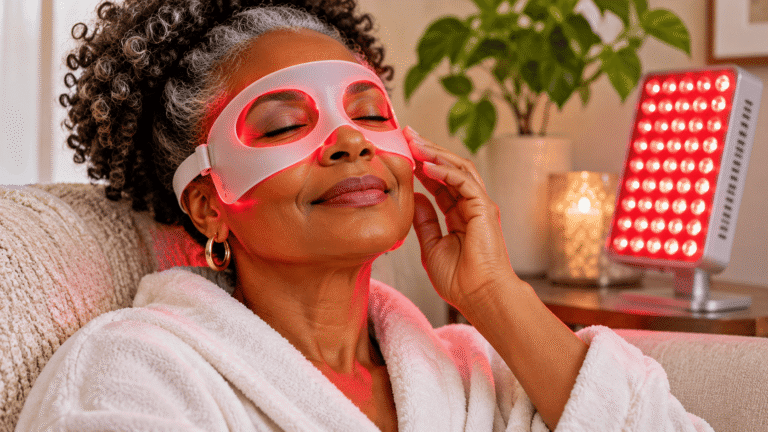
After 50, skin and hair often ask for a different kind of care. Mature melanin-rich skin may need more hydration, barrier support, gentle brightening, sunscreen, and ingredients that respect dryness, sensitivity, uneven tone, and the beauty changes that can happen through menopause and beyond. This guide translates 10 important skincare and haircare ingredients into clear, practical language so Black women over 50 can make more considered choices for crown and canvas.
Beauty Ingredients for Mature Skin and Hair
Beauty ingredients matter more after 50 because skin and hair may no longer respond to the same routines.
There is a particular kind of frustration that can happen in the skincare aisle after 50.
You are holding a bottle. The front label says all the right things: glow, renewal, firming, restorative, brightening, barrier support. The packaging looks beautiful. The price makes you pause. Then you turn the bottle around and find a long ingredient list in tiny print.
Some ingredients you recognize. Some you have heard about on social media. Some sound like they belong in a science textbook. And somewhere between the label, the price, and the promise, you ask yourself the question that matters most:
Will this actually work for my skin now?
Not for the 28-year-old influencer with perfect lighting.
Not for the general “mature skin” article that never mentions Black women.
Not for the product ad promising transformation in two weeks.
For you.
For your melanin-rich skin.
For your textured hair.
For your dark spots that linger.
For your dryness that seems new.
For your skin that may feel different through perimenopause, menopause, and beyond.
For the woman who is no longer impressed by pretty packaging alone.
This is the stage where ingredients matter more than marketing.
And this is where The Melanin Tone begins its work: translating beauty information into something useful, honest, and considered.
What Is Happening to Your Skin After 50?
Before we talk about what to put on the skin, it helps to name what may be changing underneath it.
Around perimenopause and menopause, many women notice their skin feels drier, thinner, less firm, or more reactive than it used to. Dermatology guidance from the American Academy of Dermatology notes that skin can lose collagen quickly in menopause, with studies showing around 30% collagen loss in the first five years of menopause, followed by a more gradual decline over time.
That does not mean every change is dramatic. It does not mean beauty is disappearing. But it does mean the skin may need more support than it did before.
For Black women, this season can bring its own set of concerns. Hyperpigmentation may become more stubborn. Irritation can leave marks that take months to fade. Sunscreen becomes even more important, especially because dark spots and uneven tone can worsen with UV exposure and visible light. The AAD recommends sunscreen as a key part of treating and preventing dark spots in darker skin tones, especially tinted sunscreen with iron oxides for visible-light protection.
So when you read an ingredient label now, you are not only asking:
Does this ingredient work?
You are also asking:
Will it work for my skin tone, my age, my dryness, my sensitivity, and this season of my life without making things worse?
That is the right question.
Here are 10 ingredients worth knowing
1. Exosomes: The New Frontier Worth Watching
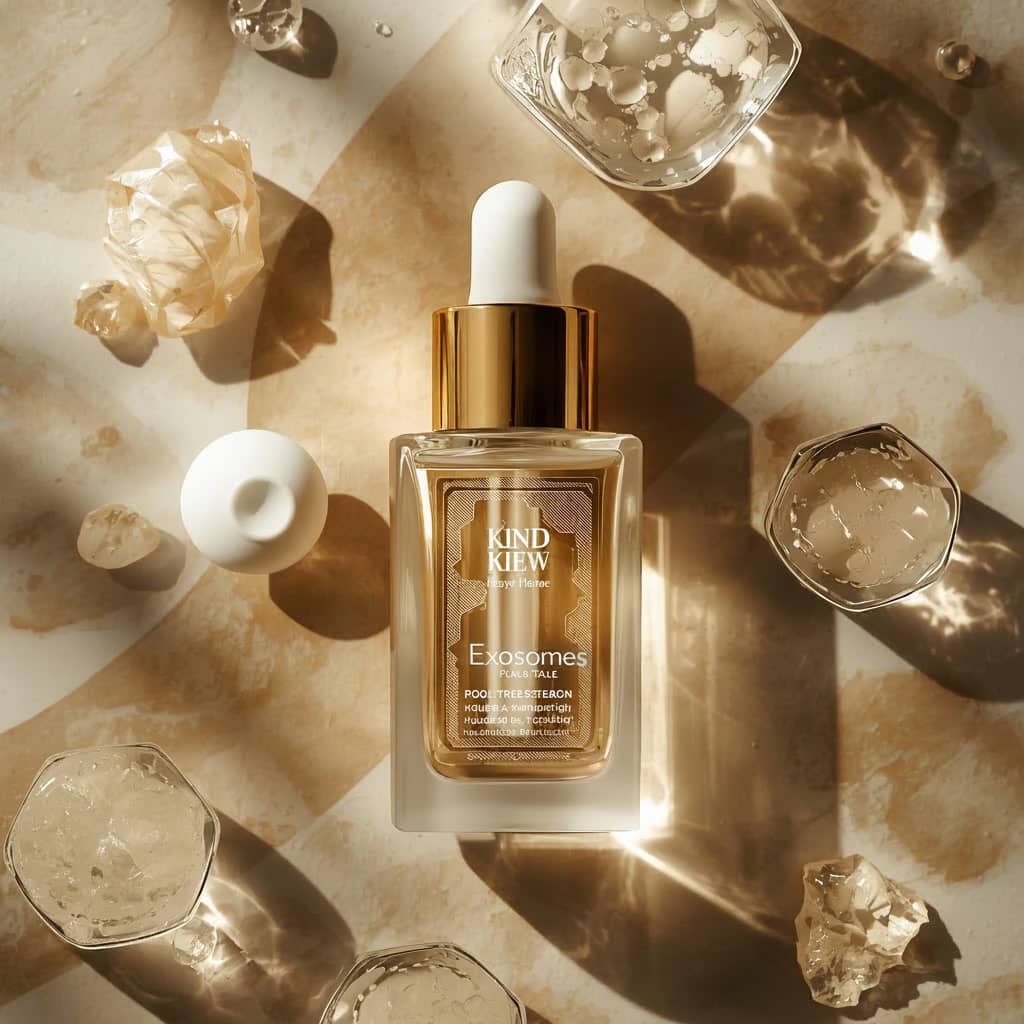
Exosomes are one of the most talked-about ingredients in advanced skincare right now. They sound technical because they are. In simple terms, exosomes are tiny messenger particles involved in cell communication. In skincare, they are often used in formulas that focus on repair, renewal, firmness, and a healthier-looking complexion.
For women over 50, that idea is naturally appealing. Mature skin often needs more support with recovery, texture, firmness, and glow. The skin may not bounce back as quickly. It may look tired more easily. It may feel like it takes longer to recover after irritation, stress, or dryness.
For melanin-rich skin, exosomes are interesting because many women are not only looking for firmness. They are also looking for a more even-looking tone, smoother texture, and support for skin that may feel slower to renew.
But here is the honest truth: exosomes are still an advanced category. They are often expensive, quality varies between brands, and they should not be treated as the first step in a routine.
If your cleanser is harsh, your moisturizer is not enough, your sunscreen is inconsistent, or your skin barrier is irritated, exosomes are not where I would tell you to begin.
They may be worth watching. They may have a place in more advanced skincare. But they should not distract you from the foundation.
What may help
Look for exosomes only after your routine already includes gentle cleansing, daily sunscreen, hydration, and barrier support.
Realistic next step
If you are curious, start by learning about the brand, the formula, and whether the product is appropriate for your skin type. If you have sensitive skin or a history of hyperpigmentation, be especially careful with advanced formulas.
Honest truth
Exosomes are promising, but they are not magic. They are the layer above the foundation, not the foundation itsell.
2. Manketti Oil: A Nourishing Oil for Skin and Hair
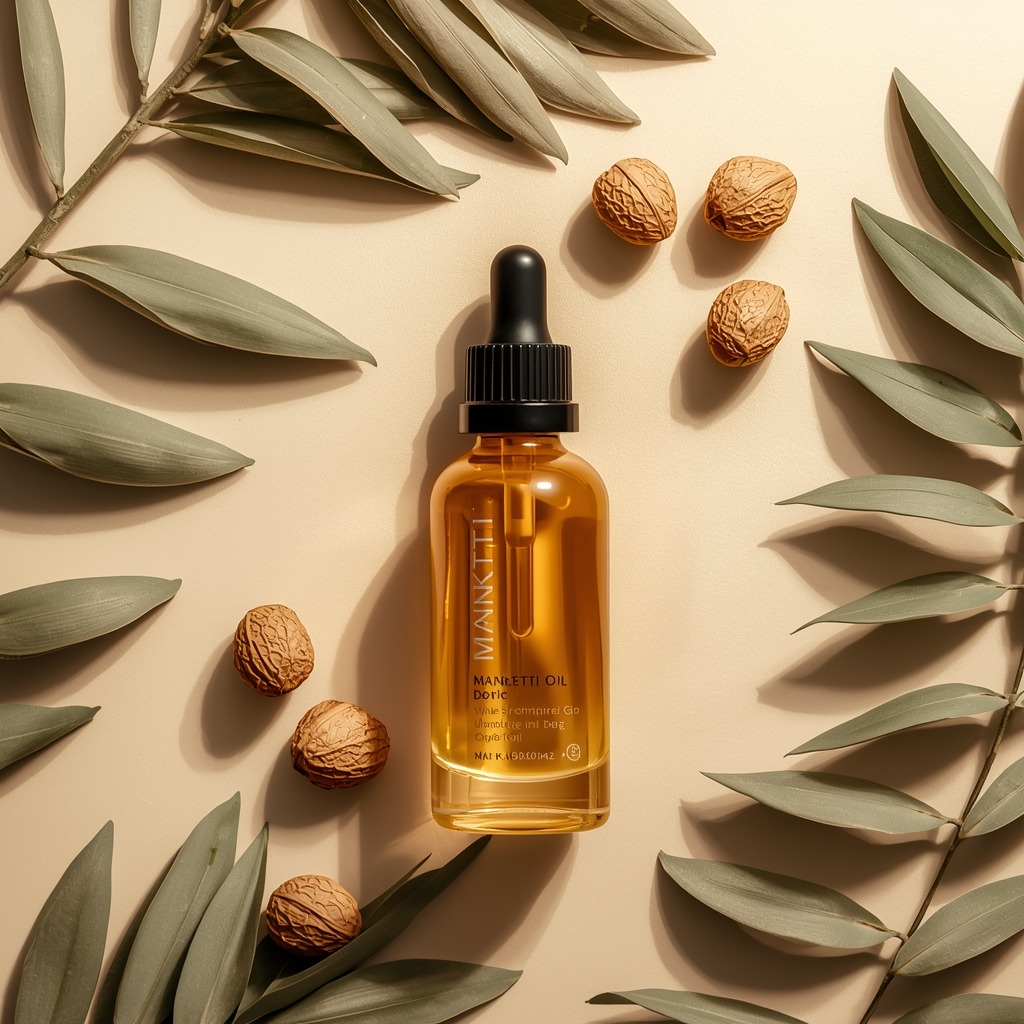
Manketti oil is one of those ingredients that feels both luxurious and rooted. Pressed from the seeds of the African manketti tree, it is valued for its nourishing, softening qualities and its ability to support both skin and hair.
After 50, dryness often becomes more noticeable. The skin may feel less supple. Hair may feel more brittle. Gray strands may feel coarser. Ends may need more protection. The scalp may feel drier than it did years ago.
That is where oils can be useful, but only when they are used correctly.
Manketti oil is rich in fatty acids and vitamin E, which can help support softness, comfort, and the feeling of a stronger moisture barrier. On textured hair, it may help ease dryness and add a healthy-looking sheen without always feeling as heavy as some richer butters.
For crown and canvas, it is a beautiful ingredient because it understands both sides of the beauty conversation: skin and hair.
What may help
Use manketti oil as a sealing or softening ingredient, not as your only source of moisture. On hair, it can work well on ends or as part of a lightweight oil blend. On skin, it may be useful in body oils, creams, or richer moisturizers.
Realistic next step
If your skin or hair feels dry, try using oil after water-based hydration, not instead of it. For hair, mist or moisturize first, then seal lightly.
Honest truth
Oil alone does not hydrate. It helps seal, soften, and protect. If you apply oil to already dry hair or skin without adding hydration first, the result may still feel dry underneath.
3. Vitamin C: The Glow and Dark Spot Ingredient
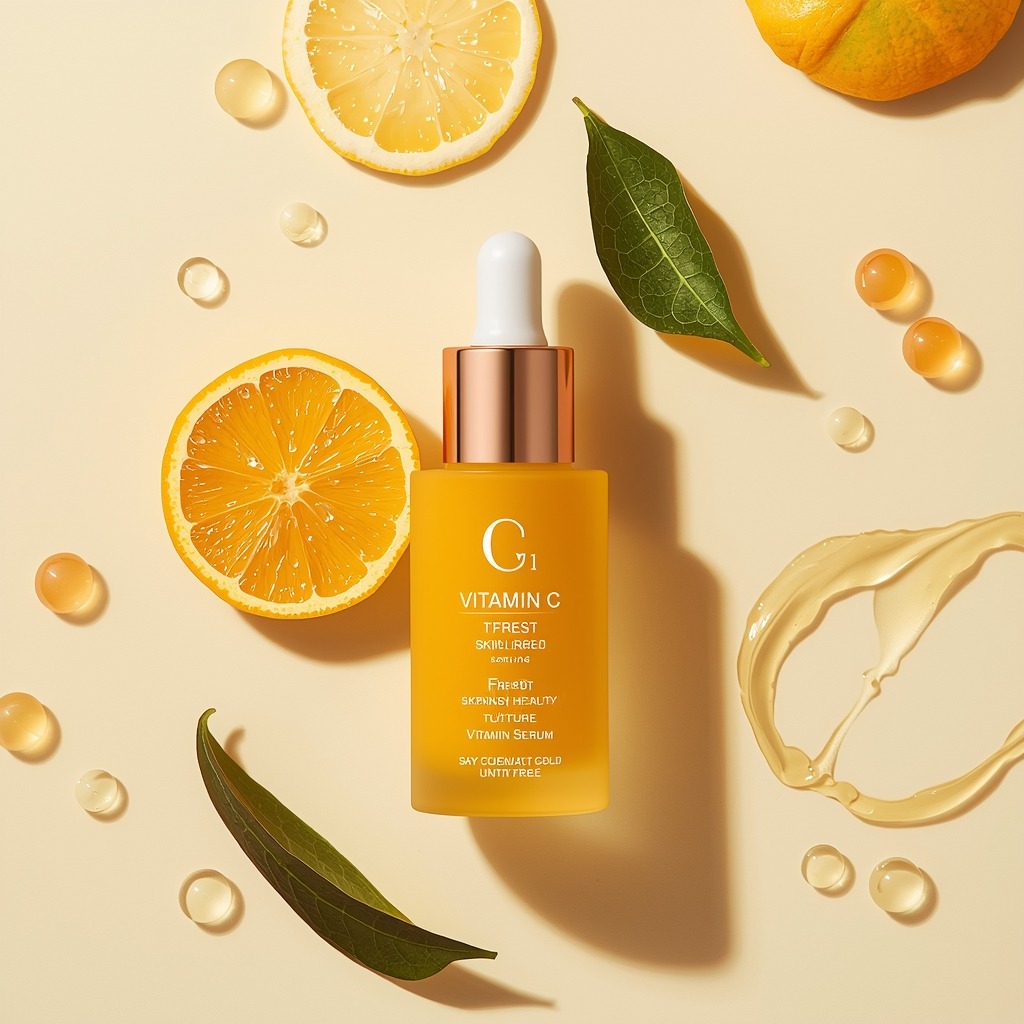
If I could choose a small group of ingredients worth knowing after 50, Vitamin C would be one of them.
Vitamin C, especially in its pure form called L-ascorbic acid, is known for supporting brightness, helping with dullness, and protecting the skin against environmental stress. It also plays a role in collagen support, which makes it especially relevant for mature skin.
For Black women over 50, Vitamin C is important because it sits at the intersection of glow and tone. Many women are not trying to lighten their skin. They are trying to bring back clarity. They want dark spots to soften. They want dullness to lift. They want the skin to look awake again.
That is where Vitamin C can be helpful.
But Vitamin C is not always simple. Some formulas are strong. Some oxidize quickly. Some sting. Some may not suit sensitive skin. And for melanin-rich skin, irritation is not a small matter because irritation can sometimes leave discoloration behind.
What may help
Choose a Vitamin C formula that suits your tolerance level. If pure L-ascorbic acid feels too strong, a gentler Vitamin C derivative may be a better start.
Realistic next step
Use Vitamin C in the morning under sunscreen. Start a few times a week if your skin is sensitive, then increase slowly if your skin responds well.
Honest truth
Vitamin C will not erase old dark spots overnight. Brightening is a long game, especially on melanin rich skin. It works best with sunscreen, patience, and consistenc
4. Niacinamide: The Quiet Workhorse
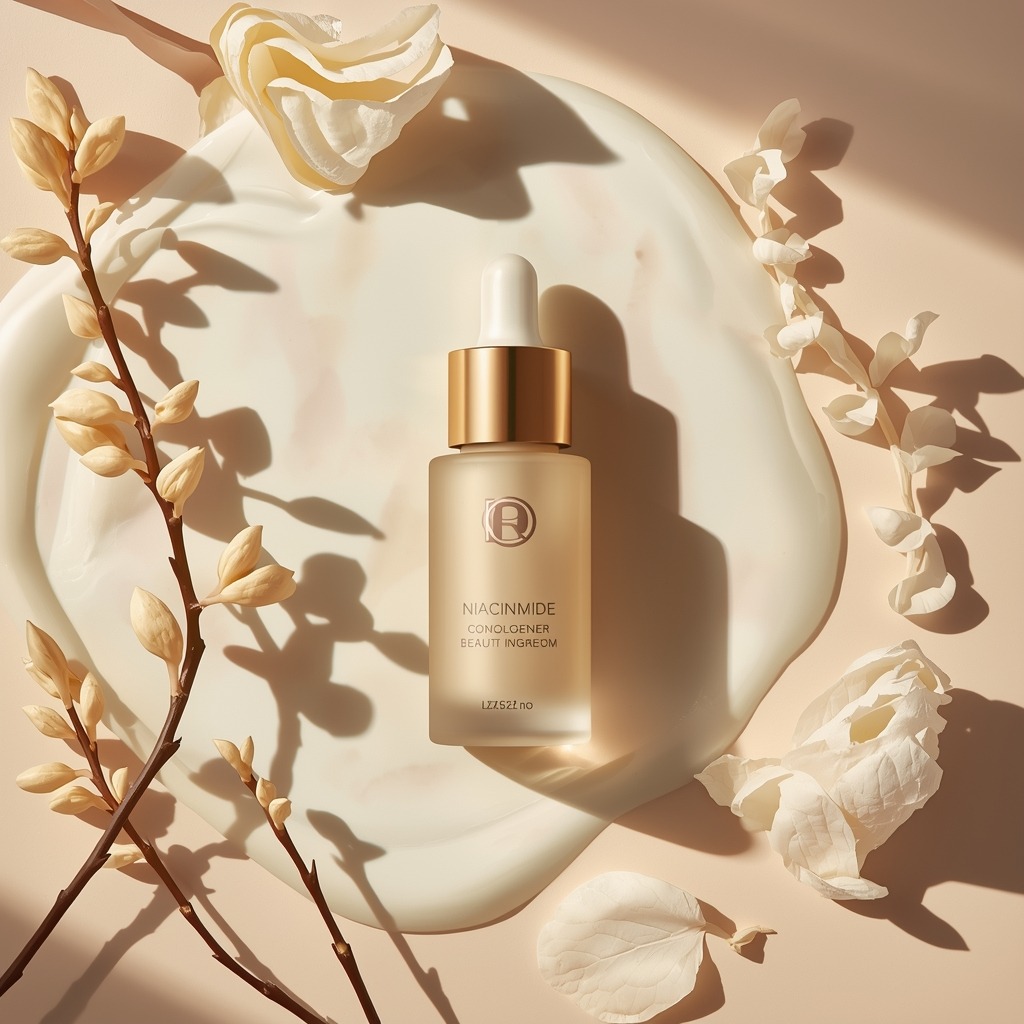
Niacinamide, also known as Vitamin B3, is one of the most useful ingredients for mature melanin-rich skin because it does several things gently.
It supports the skin barrier. It helps with moisture retention. It can improve the appearance of uneven tone. It may soften the look of pores. It can help calm the appearance of irritation.
That combination matters after 50 because the skin often needs steadiness more than drama.
A lot of women want to begin with the strongest active ingredient they can find. But if your skin is dry, tight, reactive, or easily irritated, the first goal should often be to calm and support the barrier.
For Black women dealing with hyperpigmentation, this is especially important. The less irritated the skin becomes, the less likely it is to keep entering the cycle of inflammation and dark marks.
What may help
Look for niacinamide in serums, moisturizers, or barrier-supporting formulas. Many people do well with moderate percentages rather than very high-strength formulas.
Realistic next step
If you are rebuilding your routine, niacinamide is a good early ingredient to consider because it is usually easier to tolerate than many stronger actives.
Honest truth
Niacinamide is not flashy. It may not give you a dramatic before-and-after in one week. But for many women, it helps the skin look calmer, smoother, and more balanced over time.
5. Hyaluronic Acid: For the Dryness Nobody Warned You About
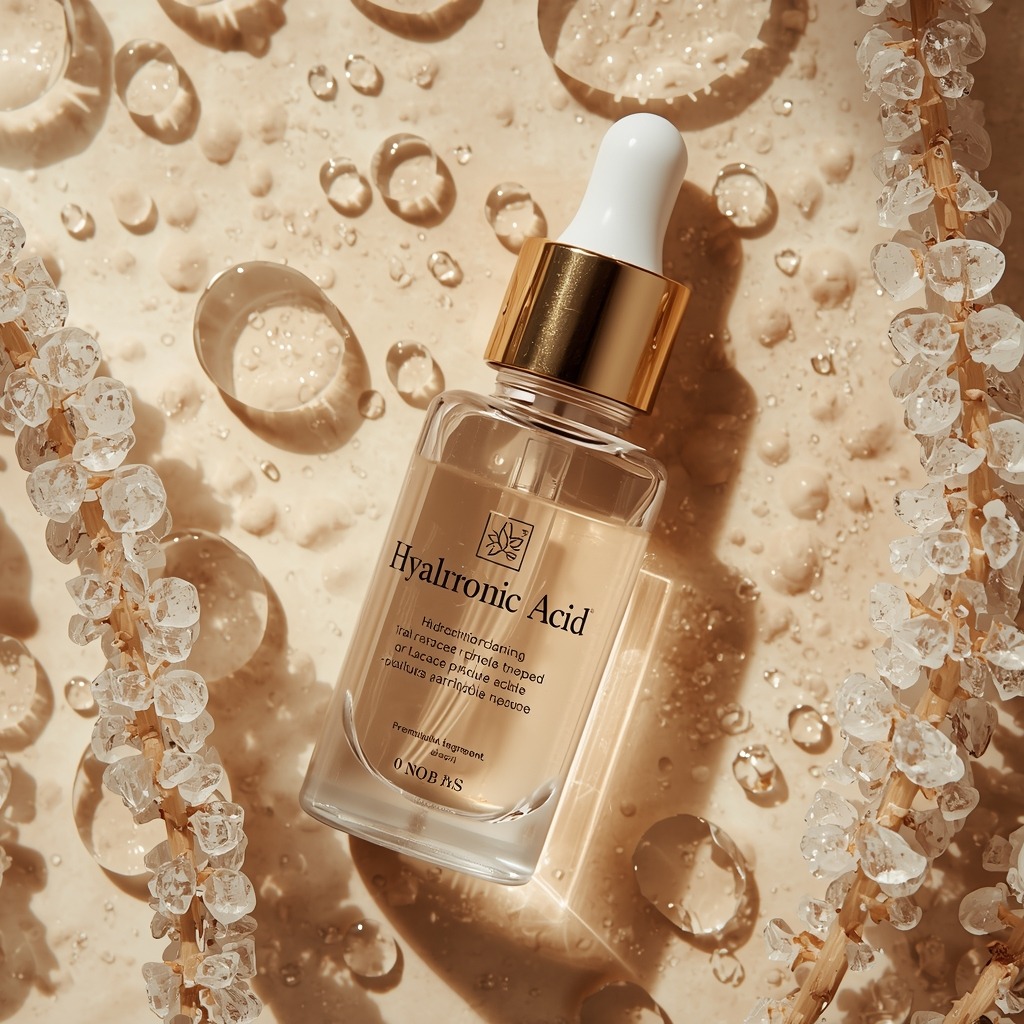
Hyaluronic acid is often described as a moisture magnet. It helps attract water to the skin, which can make the complexion look smoother, fresher, and more comfortable.
After 50, dryness can feel different. It is not always the kind of dryness that disappears with one layer of lotion. Sometimes it feels like tightness by midday. Sometimes makeup settles more quickly. Sometimes fine lines look deeper simply because the skin is dehydrated.
Hyaluronic acid can help, but only if you use it well.
The common mistake is applying it to dry skin and leaving it there. Hyaluronic acid works best when applied to slightly damp skin and sealed with a moisturizer. Otherwise, especially in dry environments, it may not give the soft, plump effect you were hoping for.
For melanin-rich skin, hydration is also part of radiance. Dehydrated skin can look dull or ashy, even when the issue is not true dryness but lack of water in the upper layers of the skin.
What may help
Use hyaluronic acid after cleansing, while the skin is still slightly damp. Follow with a moisturizer to seal it in.
Realistic next step
If your skin feels tight, add hydration before you add stronger actives. A hydrated face often tolerates the rest of a routine better.
Honest truth
Hyaluronic acid is not a full moisturizer by itself. It is a hydration step. It needs a cream, lotion, or oil-based layer after it.
6. Raw African Shea Butter: The Heritage Ingredient That Earned Its Place
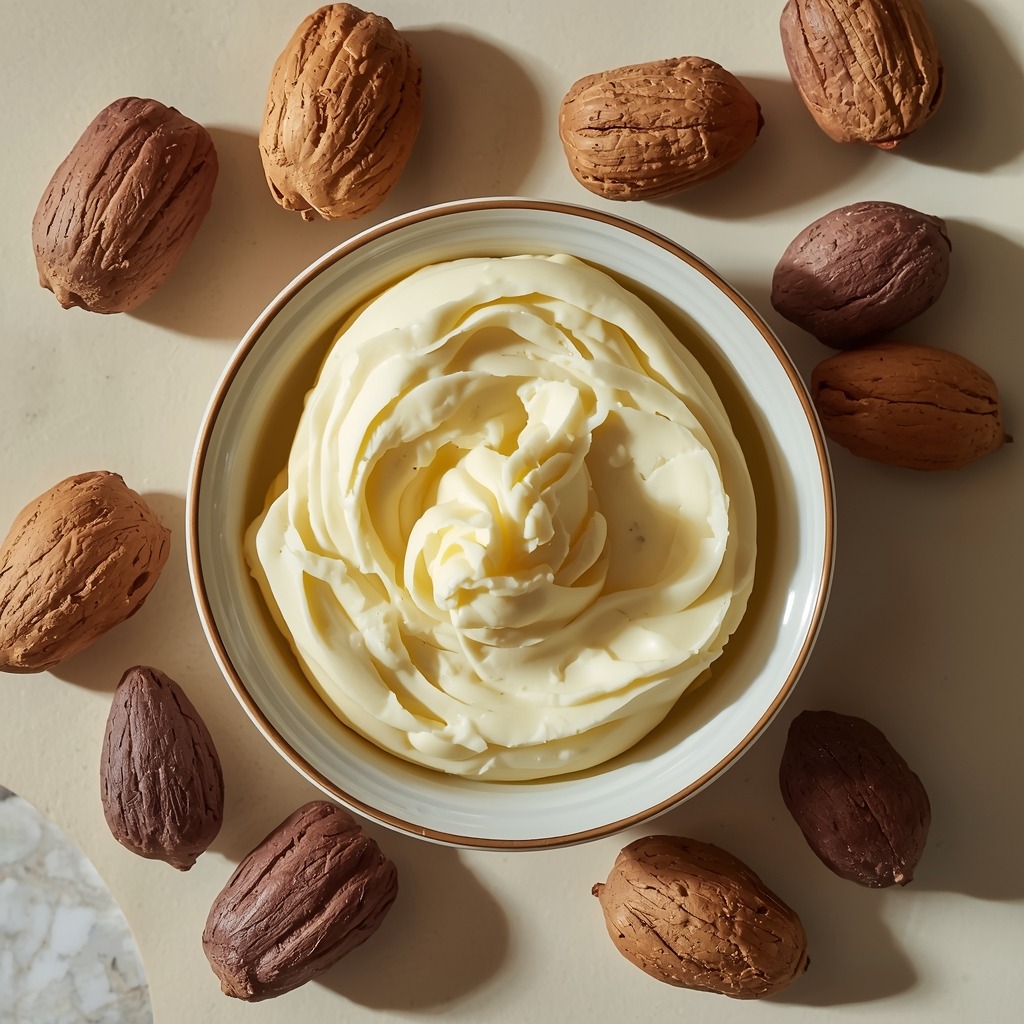
Some ingredients are trends. Shea butter has been doing the work for generations.
Raw African shea butter is rich, protective, and deeply familiar in Black beauty traditions. For mature skin, it can be especially useful because it helps soften roughness, protect against dryness, and support comfort.
After 50, body care becomes more important than many women expect. The face gets most of the attention, but the body often tells the truth first. Legs feel drier. Elbows become rougher. Feet need more care. Hands show more texture. Skin that once stayed soft with any lotion now needs something richer.
Shea butter can be beautiful for this.
It can also be helpful for textured hair, especially on dry ends. But like every ingredient, it has a place. Shea butter can be too heavy for some facial skin types and too weighty for fine or low-density hair.
What may help
Use shea butter on body skin, hands, feet, elbows, knees, and dry hair ends. Layer it over hydration when you want to seal in moisture.
Realistic next step
Try it first on the body or hair ends before deciding whether it belongs on your face.
Honest truth
Shea butter is rich. That is its strength, but it can also be too much in the wrong place. Use it where your skin or hair truly needs protection.
Encapsulated Retinol: The Renewal You May Have Been Afraid Of
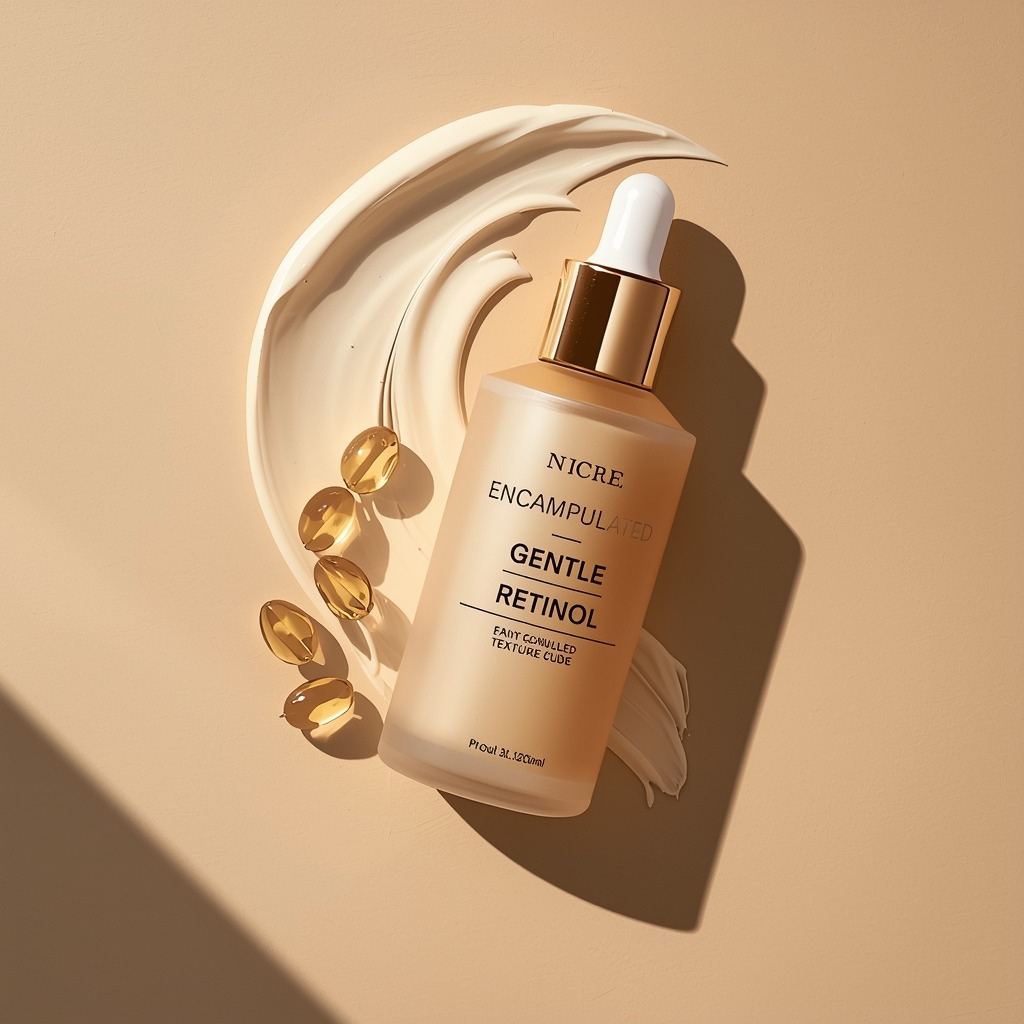
Retinol is one of the most discussed ingredients in mature skincare, and for good reason. Retinoids can be helpful for mild pigmentation irregularities, fine lines, wrinkles, and texture. The American Academy of Dermatology notes that starting with a less intense retinoid and using it every other night at first can be a sensible way to build tolerance.
But many Black women are understandably cautious.
Retinol can irritate if used too quickly or too strongly. And on melanin rich skin, irritation may leave behind dark marks. That is why the way you begin matters.
Encapsulated retinol is designed to release more gradually than traditional retinol. That slower release can make it feel gentler and easier to tolerate, although every skin is different.
For black women over 50, retinol can be helpful for texture, dullness, fine lines, and uneven tone. But it should never be introduced like a punishment. Mature skin does not need to be forced into renewal. It needs to be guided.
What may help
Choose a gentle, low-strength, or encapsulated retinol if you are new to retinoids. Use it at night. Moisturize well. Wear sunscreen every morning.
Realistic next step
Start two nights a week. Do not combine it immediately with exfoliating acids, strong Vitamin C, or other aggressive actives. Give your skin time to adjust.
Honest truth
Retinol can be powerful, but it is not for rushing. If your skin is already irritated, repair the barrier first.
8. Moringa Oil: The Nourisher That Does Not Need to Announce Itself
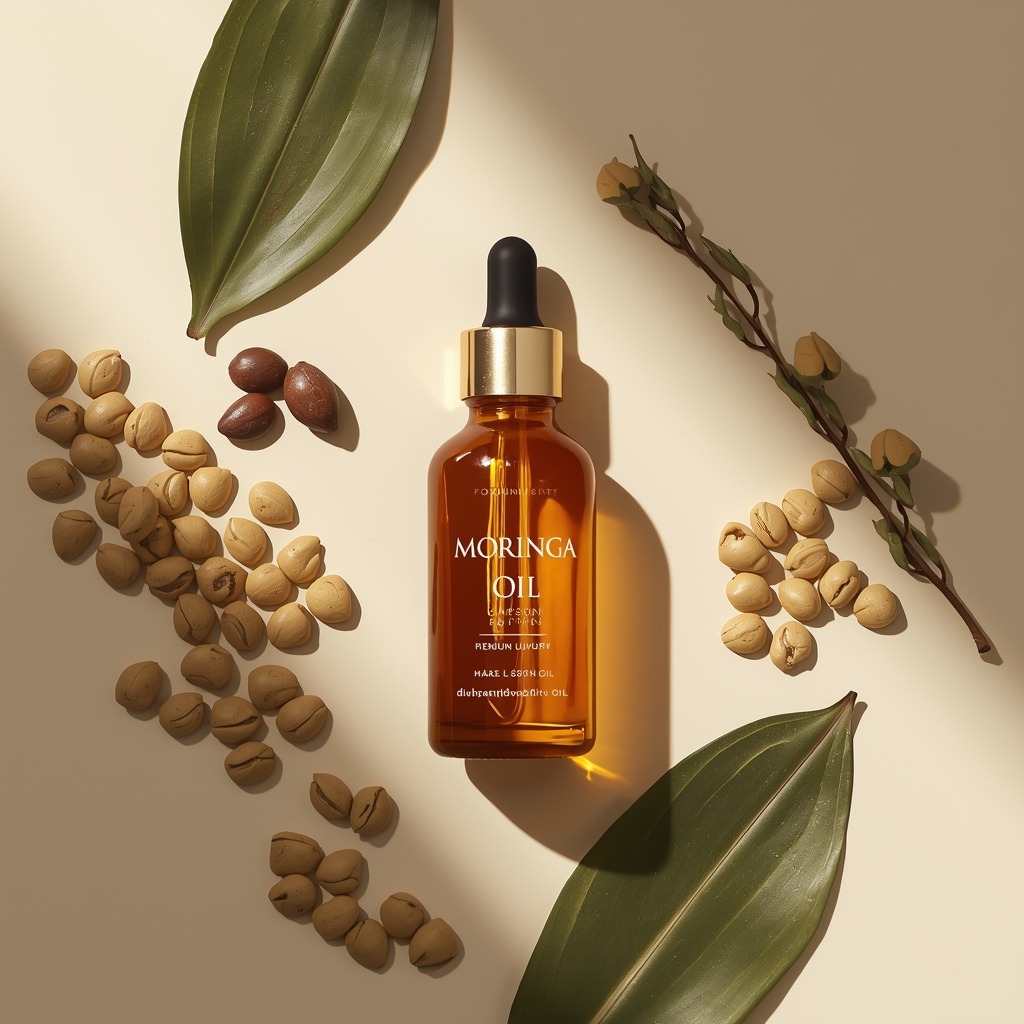
Moringa oil is pressed from the seeds of the moringa tree and is loved for its nourishing, softening feel. It is rich but often more elegant than many heavy oils, which makes it useful in both skincare and haircare.
For mature skin, moringa oil can bring comfort and glow when the complexion feels depleted. For textured hair, it can help improve the feel of dryness, add softness, and support a healthier-looking sheen.
It is especially useful for the woman who wants nourishment but does not want to feel coated.
After menopause, many women notice that skin and hair feel drier than they used to. Oil production can shift. Hair may need more protection. Skin may need more support at night. Moringa oil can be part of that support.
What may help
Use moringa oil as a finishing step on skin or hair. A few drops can be enough. It can also work well in body oils, scalp blends, or nourishing hair formulas.
Realistic next step
If you are oil-curious but dislike heaviness, moringa is a good ingredient to explore.
Honest truth
Even beautiful oils can build up if overused. If your hair starts feeling coated or your skin feels congested, reduce the amount or use it less often.
9. Peptides: The Long, Quiet Work of Firmness
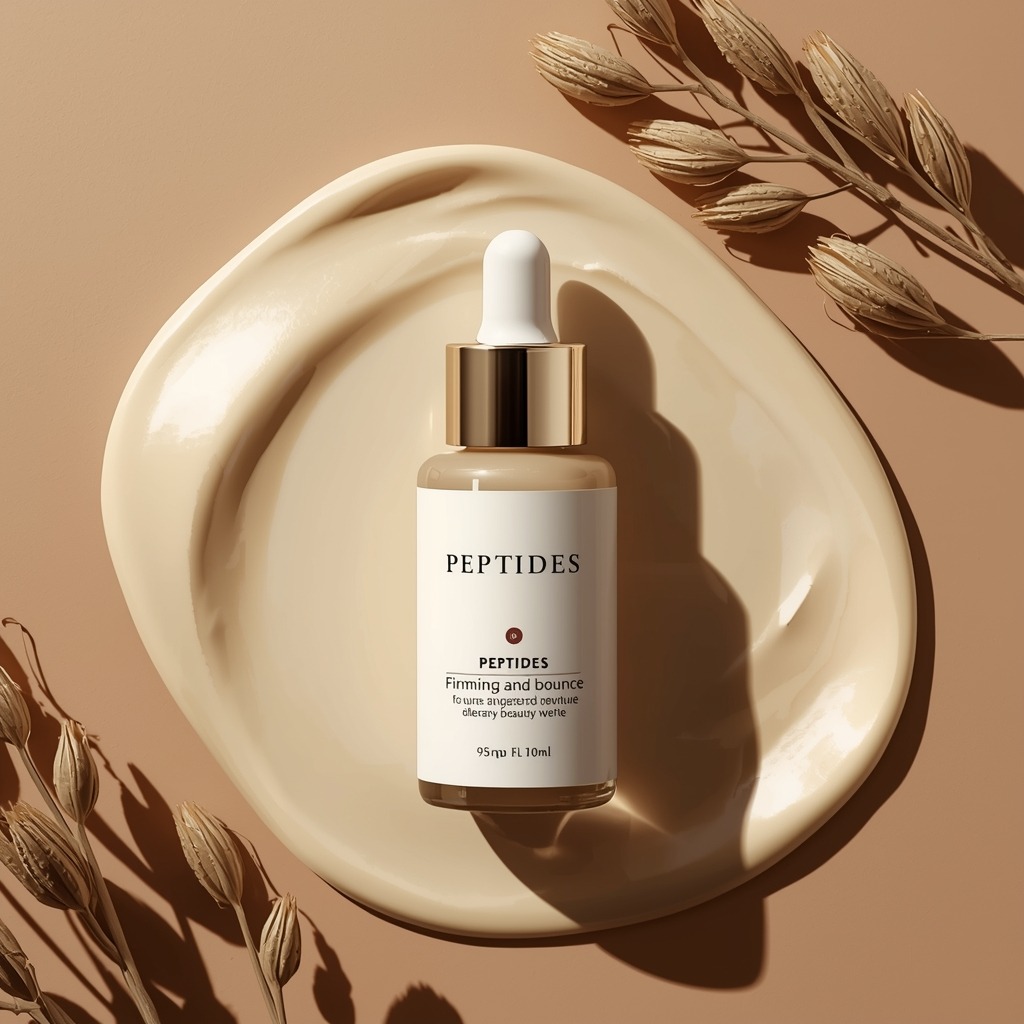
Peptides are short chains of amino acids that are often used in skincare to support the look of firmness, smoothness, and resilience.
They are not dramatic. They do not usually give the instant sensation of an acid exfoliant or the reputation of retinol. But they can be valuable in a routine for women over 50 because they focus on support.
As skin matures, it may lose some of the bounce and firmness it once had. Peptides can be part of a routine that helps skin look steadier and more resilient over time.
For melanin-rich skin, peptides are appealing because they tend to be gentler than many aggressive actives. They can often be paired with moisturizers, barrier ingredients, and hydrating serums.
What may help
Look for peptides in serums or moisturizers, especially if your skin feels thinner, less firm, or more fragile.
Realistic next step
Use peptides consistently rather than expecting immediate drama. They are often best as part of a long-term routine.
Honest truth
Peptides are support ingredients. They can be valuable, but they will not replace sunscreen, moisturizers, retinoids, or healthy routine habits.
10. Chelating Agents: The Ingredient Almost Nobody Talks About
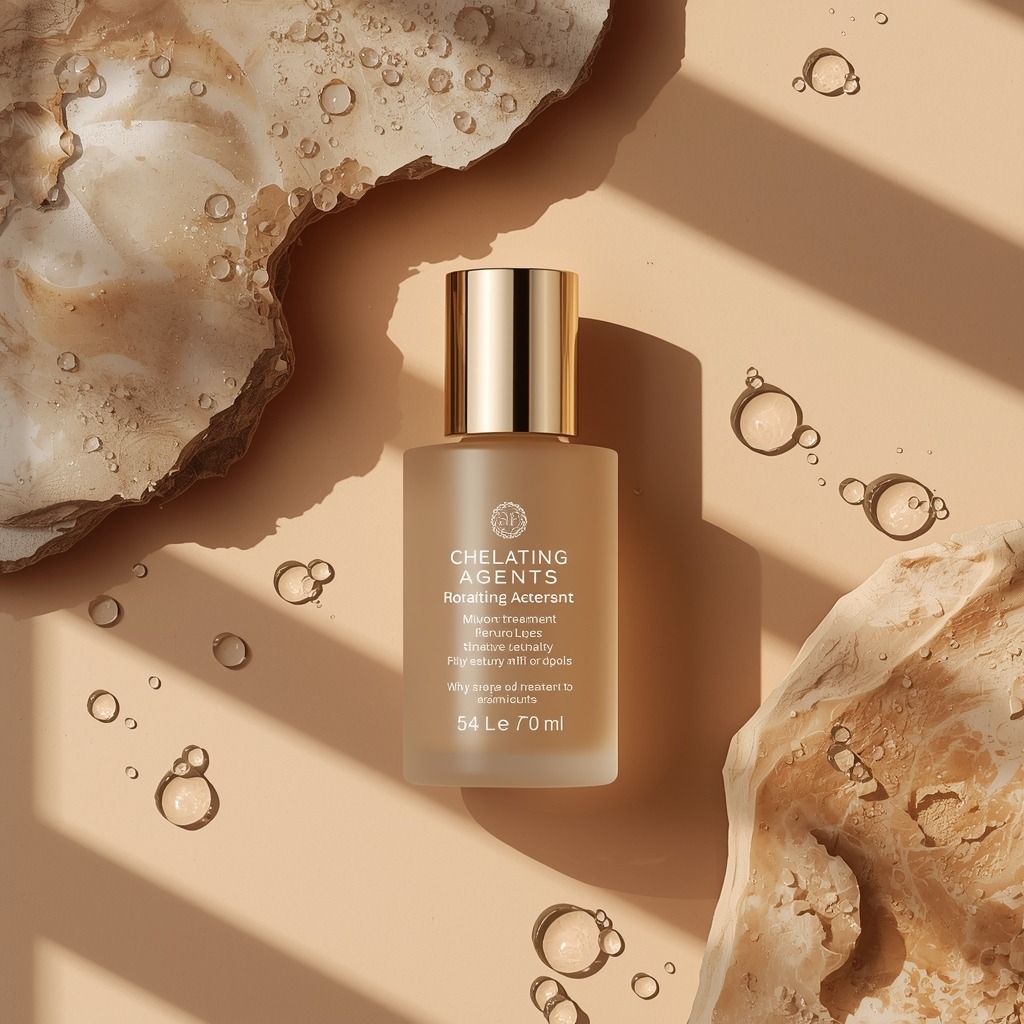
Chelating agents may be the least glamorous ingredients on this list, but they deserve attention, especially for textured hair and hard water buildup.
Hard water contains minerals such as calcium and magnesium. Over time, those minerals can leave residue on hair and skin. Hair may feel rough, dull, coated, or resistant to moisture. Skin may look less fresh. Products may seem like they have stopped working.
For Black hair, buildup can be especially frustrating because it can mimic dryness. You may keep adding creams, oils, masks, and leave-ins, but the hair still feels hard or coated because the problem is not lack of product. It is residue.
Chelating agents help bind to minerals so they can be rinsed away more effectively. You may see ingredients such as EDTA, tetrasodium EDTA, sodium phytate, or sodium gluconate on labels.
What may help
A clarifying or chelating shampoo can help if your hair feels coated, dull, or resistant to conditioning, especially if you live in a hard water area.
Realistic next step
Use chelating products occasionally, not every wash day. Follow with moisture, especially if your hair is gray, dry, natural, or fragile.
Honest truth
Sometimes the answer is not another moisturizer. Sometimes better results begin with removing what should not be there.
Where to Actually Start
If this list feels like a lot, take a breath.
Most women do not need all 10 ingredients at once. In fact, starting everything at the same time is one of the easiest ways to confuse your skin and overwhelm your routine.
Start with the foundation:
A gentle cleanser.
A good moisturizer.
A sunscreen you will actually wear.
A hydration step if your skin feels tight.
One supportive ingredient, such as niacinamide or hyaluronic acid.
Once your skin feels calm and steady, you can add Vitamin C in the morning or retinol at night. Not both aggressively. Not all at once. Slowly.
Then, depending on your needs, you can build around oils, peptides, shea butter, or advanced ingredients.
For hair, begin with the basics too:
A gentle cleanse.
A good conditioner.
A moisturizing leave-in.
A sealing oil or butter if your hair needs it.
A clarifying or chelating reset when buildup becomes an issue.
The goal is not to own more. The goal is to understand more.
The Honest Truth About Ingredients After 50
No ingredient will reverse menopause.
No serum will rebuild a lifetime of collagen overnight.
No oil will restore hair density if the real issue needs medical attention.
No moisturizer will fade dark spots without sunscreen.
No product can do the work of consistency.
But the right ingredients can still matter. They can support comfort. They can improve the look of tone and texture. They can help the skin feel less dry. They can make hair feel softer. They can help you stop guessing and start choosing with more confidence.
That is the point.
Not perfection.
Not panic.
Not chasing youth.
Mastery.
The most beautiful mature melanin rich skin I have seen did not always belong to the women with the most expensive routines. It belonged to women who understood what they were using, why they were using it, and what they were no longer chasing.
Your skin is not failing you.
Your hair is not betraying you.
Your beauty is not disappearing.
Your crown and canvas are asking for a more considered kind of care.And that is exactly what The Melanin Tone is here to translate.
For a deeper explanation of each ingredient, visit The Melanin Tone Ingredient Glossary a growing skin care ingredients dictionary created for mature, melanin rich beauty.