
How to reduce pressure, calm irritated skin, and prevent lasting dark marks without compromising your CPAP treatment
CPAP mask skin irritation can leave the face sore, itchy, flaky or marked after nightly use. This guide explains how to recognise a rash, pressure injury or lingering dark spot, improve the fit of your mask, use liners safely and care for mature melanin rich skin without compromising essential sleep apnoea treatment.
CPAP mask skin irritation can begin as a temporary pressure mark but develop into soreness, peeling or lingering dark patches when the same area is rubbed every night.
Managing sleep apnoea is important for your health. But wearing a mask for several hours can bring an unexpected problem. You may wake with marks across your nose and cheeks, an itchy patch beneath the cushion or tenderness where the straps sit.
Sometimes the mark disappears before breakfast. Sometimes it does not.
On melanin rich skin, repeated irritation may leave post inflammatory hyperpigmentation after the soreness has settled. Instead of seeing the temporary redness often described in general CPAP advice, you may notice a brown, grey brown, purple or darker outline where the mask touches your face.
After 22 years as a salon owner, I understand how repeated pressure and rubbing can affect Black skin and textured hair. I saw it at hairlines, beneath tight headwear and anywhere something pressed against the same area day after day.
A CPAP mask creates a similar pattern, but the answer is not to stop using equipment that protects your breathing.
The answer is to identify whether you are seeing ordinary pressure, friction, dermatitis or a developing pressure sore. Then you can correct the cause, calm the skin and treat any remaining pigment gently.
What Causes CPAP Mask Skin Irritation?
Several things may contribute to skin irritation from a CPAP mask.
The mask is too tight
A CPAP mask needs to create a reliable seal, but it should not dig painfully into your face.
Many people tighten the straps when they notice an air leak. That may stop the leak temporarily, but it can concentrate pressure on the bridge of the nose, cheeks, forehead or jaw.
A properly fitted mask should maintain a seal without requiring painfully tight straps. If it only works when pulled firmly into your skin, the size, cushion or mask style may not suit your facial structure. The Mayo Clinic notes that a poorly fitting or leaking mask can cause skin irritation and pressure sores, and that a properly fitted mask should not feel uncomfortable or painful.
The mask is too loose
Loose does not always mean gentle.
A mask that shifts while you sleep can repeatedly rub the same areas. Air leaks may also blow towards the eyes and cause discomfort, leading you to adjust the mask throughout the night.
This repeated movement creates friction even when the straps do not feel particularly tight.
Oil, sweat or residue has collected on the cushion
Facial oil, sweat, makeup and skincare residue can build up where the cushion touches the skin. They may affect the seal, cause the mask to move and contribute to irritation.
Many mask manufacturers recommend cleaning the cushion regularly with mild soap and warm water, following the instructions for the specific model. Harsh detergents, fragranced cleaners and products that leave residue may damage the cushion or irritate the skin.
Warmth and trapped moisture are softening the skin
Sweat and moisture beneath the mask can soften the outer surface of the skin. When softened skin is also exposed to pressure and rubbing, it may become more vulnerable to chafing.
Dry skin can be vulnerable too. A rough, dehydrated surface creates more resistance as the cushion moves across it.
The goal is therefore not to make the face greasy before bed. It is to keep the skin barrier comfortable during the day while allowing the mask to sit on clean, dry skin at night.
Your skin may be reacting to something touching it
An itchy, burning, blistered, scaly or cracked rash may suggest irritant or allergic contact dermatitis rather than ordinary friction.
The trigger could be the cushion material, a cleaning product, residue left after washing, a mask liner or skincare applied beneath the seal. Contact dermatitis can appear brown, purple or grey on darker skin rather than bright red.
Mature skin may tolerate repeated pressure differently
After menopause, some women experience increasing dryness, thinner skin and reduced firmness. The skin may also hold less water and become less tolerant of rubbing or products it once handled comfortably.
This does not mean every woman over 50 has fragile skin. It means the mask and routine that once felt comfortable may need adjusting as the skin changes.
This is one reason your skincare may stop working after 45. Your skin has different needs now, even when your products and equipment have remained the same.
CPAP Mask Rash, Allergy or Pressure Sore?
Not every mark beneath a mask should be treated in the same way.
A temporary pressure mark
A shallow line or indentation that disappears shortly after removing the mask is usually a temporary pressure mark.
The mask may still need adjusting, especially when the mark is deep or uncomfortable, but this is different from a rash or wound.
A CPAP mask rash
A CPAP mask rash may feel:
Itchy
Dry
Scaly
Burning or stinging
Tender
Rough or cracked
The skin may look red on lighter complexions. On darker skin, it may look brown, purple, grey or simply darker than the surrounding area.
A rash can result from repeated irritation, trapped moisture, residue or sensitivity to something in contact with the skin.
An allergic reaction to a CPAP mask
A true allergy is less common than ordinary irritation, but it is possible.
Think about an allergic or contact reaction when the area is intensely itchy, swollen, blistered or spreading beyond the exact pressure points. A delayed rash may also appear after changing masks, liners, cleaning products or skincare.
A dermatologist may use patch testing when the cause remains unclear.
A pressure sore
A pressure sore is more concerning than an ordinary facial mark.
Early pressure damage may appear as:
Persistent colour change
Pain or tenderness
Swelling
Skin that feels warmer or cooler than the surrounding area
An area that feels unusually firm, soft or spongy
A blister
Broken or open skin
On darker skin, pressure damage may appear blue, purple or darker rather than red. Colour changes can also be difficult to see, so pain, warmth and texture are important warning signs. Medical devices, including oxygen masks, can cause pressure injury when they press against the skin for long periods.
Do not try to brighten or exfoliate a painful pressure area.
Contact your CPAP clinic promptly for help with the fit. Seek medical advice for broken skin, a blister, worsening pain or a colour and texture change that does not settle.
How Tight Should a CPAP Mask Be?
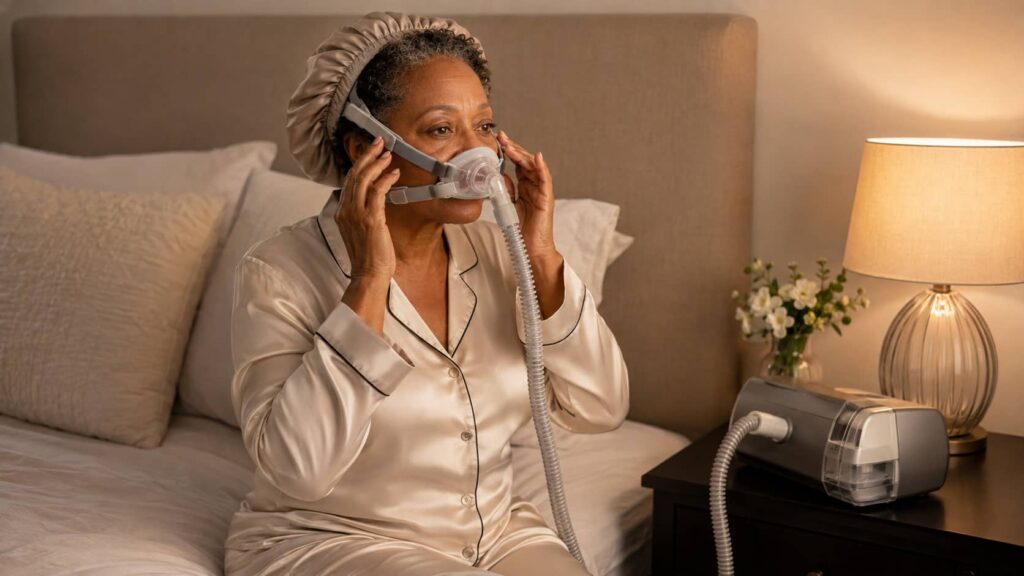
How tight should a CPAP mask be? Secure enough to maintain the prescribed seal, but comfortable enough that it does not dig painfully into your nose, cheeks, forehead or jaw.
The air pressure and cushion design should help create the seal. The straps should not have to force the frame deeply into the face.
Try these steps:
Fit it while lying in your sleeping position
A mask that looks correct while you are standing may shift when you lie on your side or back.
Put it on in your usual sleeping position with the machine running at your treatment pressure or using the mask fit function, when available.
Adjust in small amounts
Change one strap at a time.
Tightening everything at once can distort the cushion and create new leaks. In some cases, overtightening makes the seal worse because it prevents the cushion from inflating and sitting as designed.
Do not chase every tiny leak by tightening
Reseat the mask before pulling the straps tighter.
Lift the cushion gently away from the skin, allow it to reinflate and place it back in position. If leaks continue, contact your equipment provider about the size, cushion or a different mask style.
Check the bridge of your nose every morning
Do not judge fit only by whether the machine recorded a good seal.
Look and feel for tenderness, warmth, swelling, a persistent indentation or a patch that is darker than the surrounding skin.
Ask for a professional refit
A different size or mask shape may solve a problem that skincare cannot.
Some people may benefit from a mask with less contact across the nose bridge, but the right choice depends on breathing pattern, prescribed therapy and individual fit. Speak with your sleep specialist or equipment provider rather than changing essential equipment without guidance.
Can CPAP Mask Liners Reduce Skin Irritation?

CPAP mask liners can help some people by placing a soft layer between the cushion and the skin.
Depending on the design, a liner may:
Reduce rubbing
Absorb some sweat and facial oil
Make the contact surface feel softer
Reduce strap or cushion marks
Help some masks feel more comfortable
NHS CPAP guidance notes that a cotton mask liner may help when sweat or natural skin oil contributes to irritation.
However, a liner is not a substitute for a properly fitted mask.
Choose one designed for your mask style. It should not bunch beneath the cushion, interfere with the seal or cover the exhalation vents.
Never cover the mask’s exhalation holes. These vents are part of the safe operation of the equipment.
Wash reusable liners according to their instructions and replace them when they become rough, stretched or difficult to clean.
Stop using a liner if the skin becomes more irritated after introducing it. The fabric, detergent or changed fit may be part of the problem.
How to Treat CPAP Dermatitis and Calm an Active Rash
When people search for how to treat CPAP dermatitis, the first step is working out whether the problem is truly dermatitis, ordinary friction or pressure damage.
A dermatologist or doctor should assess a persistent, severe or recurring rash. Home care can support the skin, but it cannot identify an allergy or treat every possible cause.
Pause strong skincare on the irritated area
Temporarily stop products that sting, peel or increase sensitivity where the mask sits.
These may include:
Retinoids
Glycolic or salicylic acid
Strong vitamin C formulas
Exfoliating toners
Scrubs
Fragranced oils
Continue only when the skin is calm and introduce them gradually.
Cleanse gently
Wash with a mild, fragrance free cleanser and warm water.
Do not use a rough cloth or cleansing brush on the affected area. Pat the skin dry rather than rubbing it.
Moisturise earlier, not immediately before masking
During the day or earlier in the evening, use a simple fragrance free moisturiser containing ingredients such as glycerin, ceramides or colloidal oatmeal.
Allow it to absorb completely.
CPAP guidance commonly recommends placing the mask on clean, dry skin and avoiding oily creams where the cushion must seal. Moisturiser applied immediately before bed may cause movement, leaks and further irritation.
Follow the instructions for your particular mask. When the skin is very dry, ask your CPAP clinic which moisturisers or protective products are compatible with its cushion material.
Clean the mask according to its own instructions
Different cushions and mask materials may have different cleaning requirements.
Use the method in the manufacturer’s guide. For many silicone cushions, this means regular hand washing in warm water with mild soap and thorough rinsing.
Avoid adding strong disinfectants, fragrance, essential oils or household cleaning sprays unless the manufacturer specifically permits them.
Do not self-treat broken skin with active skincare
Do not apply azelaic acid, retinoids, exfoliating acids or dark spot serums to an open sore.
Contact your CPAP clinic and a medical professional for advice. Continuing to press equipment over broken skin can worsen the injury.
How to Fade CPAP Mask Marks on Face
Once the soreness, itching and peeling have completely settled, a flat dark patch may remain.
Repeated pressure and rubbing can cause inflammation. On melanin rich skin, that inflammation may leave frictional hyperpigmentation on Black skin, also known more broadly as post inflammatory hyperpigmentation.
Post inflammatory pigment is more common and can persist longer in darker skin tones. The colour may range from light brown to black and can become darker with sun exposure.
The first treatment is still correcting the mask.
You cannot fade a mark that is being recreated every night.
Keep the routine simple
After the irritation has healed:
- Cleanse gently.
- Use a moisturiser that supports the skin barrier
- Introduce one pigment care ingredient.
- Protect exposed areas from sunlight.
Possible ingredients include:
Azelaic acid
Niacinamide
Alpha arbutin
Licorice root extract
You do not need to begin all four.
Choose one product, introduce it slowly and stop if the area burns, stings or becomes sore. New irritation may cause additional darkening.
Use sunscreen every morning
Dark marks across the nose, cheeks or forehead can become more noticeable with sunlight.
Apply broad spectrum SPF 30 or higher to exposed skin. A tinted sunscreen containing iron oxide offers additional protection from visible light from the sun, which can worsen hyperpigmentation in darker skin tones.
Give the mark time
A mild spot may take several months to fade after the irritation stops. Deeper grey brown or blue grey pigment can remain for considerably longer.
Avoid trying to force it away with harsh peels, rough scrubs, lemon juice or strong combinations of brightening products.
The face is still wearing the mask every night. Gentle treatment is safer than creating another round of inflammation.
The same pattern of pressure and pigmentation may also cause glasses marks on the nose. In both cases, correcting the equipment comes before treating the color.
How to Protect Textured Hair and Edges From CPAP Headgear
CPAP straps may sit across the hairline, above the ears or around the back of the head.
On textured hair, repeated movement may create tangling, dryness or breakage, especially when the straps catch the same area every night.
A few adjustments may help:
Make sure the straps are not positioned directly across already fragile edges.
Keep Velcro fastenings away from loose coils.
Consider a compatible soft strap cover.
Use a smooth bonnet or wrap only when it does not disturb the mask fit.
Keep fabric away from the mask seal and exhalation vents.
Recheck for leaks after adding any bonnet, cover or liner.
A bonnet that causes the headgear to slide is not solving the problem.
The mask must still deliver effective therapy. Ask the equipment provider to check the fit if protecting your hair changes how the mask sits.
When to Contact Your CPAP Clinic or Dermatologist
Contact your CPAP clinic when:
- The mask only seals when painfully tight
- It repeatedly hurts the bridge of your nose
- You wake with deep marks that remain for hours
- The mask constantly slips or leaks
- A liner changes the seal
- You need help trying another size or mask style
- Skin irritation continues despite cleaning and adjustment
Contact a doctor or dermatologist when:
- The rash is persistent, recurrent or spreading
- The skin is intensely itchy, swollen, blistered or cracked
- You suspect an allergy
- There is an open wound
- The area is increasingly painful
- There is discharge, crusting or rapidly worsening inflammation
- You feel unwell or suspect infection
- A dark patch changes in shape, texture or size
Do not quietly endure worsening skin damage because you believe CPAP equipment must be uncomfortable.
It may take several adjustments to find the correct fit. Your sleep clinic should help you protect both your breathing and your skin.
Frequently Asked Questions About CPAP Mask Skin Irritation
Why is my CPAP mask irritating my skin?
Common causes include excessive tightness, poor fit, repeated movement, sweat, facial oil, residue, inadequate cleaning or sensitivity to something touching the face. The location and type of symptoms help identify the cause.
How do I stop a rash from a CPAP mask?
Begin by checking the fit and cleaning the mask according to its instructions. Use gentle skincare, keep the face dry where the mask seals and pause strong active products on the irritated area. Seek medical advice if the rash is severe, persistent, blistered or spreading.
How do you treat CPAP dermatitis?
The correct treatment depends on whether it is irritant or allergic contact dermatitis. Remove or avoid the trigger where possible, but do not change essential equipment without speaking to your CPAP provider. Persistent dermatitis may require medical diagnosis and treatment.
Can I put moisturiser under my CPAP mask?
Heavy or oily moisturiser beneath the seal may cause the mask to move or leak. Moisturise earlier in the evening and allow it to absorb fully. Follow your mask instructions and ask your clinic which products are compatible when dryness is severe.
Do CPAP mask liners work?
They may reduce rubbing and absorb some sweat or oil for certain users. They must fit the mask correctly, maintain the seal and leave all exhalation vents uncovered.
Are CPAP mask marks on the face permanent?
Temporary pressure lines usually fade. Dark marks caused by inflammation may take several months or longer to improve once the pressure and rubbing have stopped. A painful, warm, swollen or broken area needs professional assessment rather than pigment treatment.
Can I be allergic to a silicone CPAP mask?
An allergic reaction is possible, although irritation from fit, pressure, residue or cleaning products may be more common. Intense itching, swelling, blistering or a persistent spreading rash should be assessed by a medical professional.
What should I do about a CPAP mask sore on my nose?
Loosen excessive pressure and contact your CPAP clinic for a refit, cushion check or compatible protective option. Do not place strong skincare on broken skin or continue tightening the mask over the sore area without professional advice.
Can a CPAP mask cause dark spots on Black skin?
Yes. Repeated irritation may leave post inflammatory hyperpigmentation on melanin rich skin. Correct the source of pressure or friction first, allow the skin to heal and then treat the remaining pigment gently.
The Honest Takeaway
CPAP mask skin irritation should not be dismissed as something you simply have to tolerate.
A little temporary marking may happen. Persistent soreness, peeling, itching, deep pressure lines and broken skin are different.
Start with the equipment.
Check the fit.
Loosen excessive pressure.
Clean the mask according to its instructions.
Consider a compatible liner.
Then care for the skin gently.
If a dark mark remains after the irritation heals, remember that it is not dirt and it is not a personal failure. It is your skin responding to repeated inflammation.
Reduce the friction first.
Fade the pigment second.
And never allow concern about marks on your face to make you quietly abandon treatment that protects your breathing. Ask for help until the mask works for both your health and your skin.
Your CPAP should support your sleep, not punish your face.