Invisible woman syndrome is a phrase more women are quietly searching for, usually late at night, usually after a moment that stayed with them longer than it should have.
Maybe it happened at a shop counter, when the assistant looked straight past you and served someone younger first.
Maybe it happened at work, when your idea landed only after someone else repeated it.
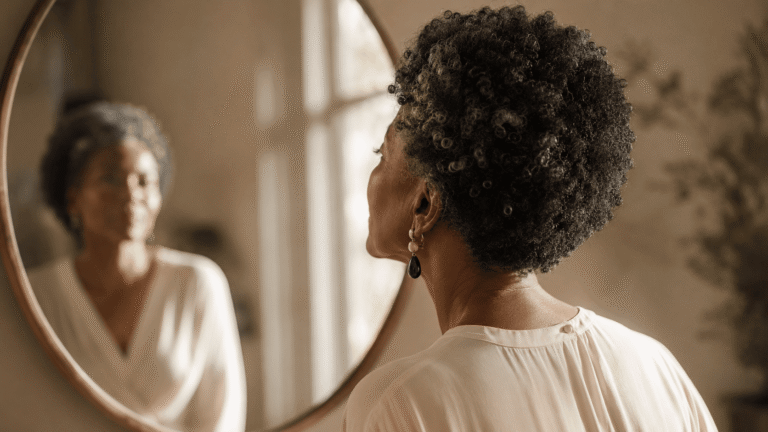
Maybe it happened in your own mirror.
And you found yourself wondering, when exactly did I stop being seen.
I want to talk about this honestly, because for many women after 50, the feeling is real. But it is not the whole story. And it does not have to become your story.
After 22 years working closely with womens hair, skin, and confidence, I have seen both sides of this season. I have seen women who felt erased by midlife. I have also seen women who felt freer, bolder, and more themselves than they ever did at 30. That difference matters. It tells us something important. Age alone does not decide how visible a woman feels. There is something deeper going on.
Let me say something personal before we go further.
I do not feel invisible.
There are things I no longer do. Certain clothes I no longer wear. I am not competing with women in their 20s or 30s. But I do not see that as loss. There is a time for everything, and I believe I have had my time, and I am still having it. That is not erasure. That is peace.
Why Women Feel Invisible After 50
Let us start with the truth. A lot of women do feel overlooked as they get older. The feeling is not imagined. It can show up in small moments and sharp ones. A room responds differently. The beauty industry speaks less directly to you. The social world can begin to center youth in ways that feel louder than it once did.
For years, visibility has been tied to youth, beauty, and desirability. Many women are taught this without anyone saying it out loud. Then when age changes the outside, some women feel as though the world quietly shifts its attention elsewhere.
That can hurt more than people admit.
It can feel like you are still the same woman inside, but the world has edited you out of the frame.
Still, I think this is only half the story.
The other half is how a woman sees herself.
Because yes, society plays a role. But so does self regard. Some women absorb the message that they are fading. Others decide they are still fully here. That decision changes how they carry themselves. It changes how they enter a room. It changes what they accept.
From the salon chair, I saw this again and again. The women who felt most invisible were rarely the ones who had aged the most. They were the ones who had stopped seeing themselves first. And the women who still glowed, no matter their age, were the ones who had decided they were still worth showing up for.
Can Menopause Make You Feel Strange or Unlike Yourself
Yes. Absolutely.
And this is a huge part of the conversation that often gets left out.
A lot of feeling unseen on the outside begins with feeling unlike yourself on the inside.
When hormones shift during perimenopause and menopause, it does not only affect the body. It can affect sleep, mood, patience, focus, energy, and emotional steadiness. Many women describe feeling foggy, flat, irritable, anxious, or simply unfamiliar to themselves. Some say they feel strange in a way they cannot fully explain.
That matters.
Because when you feel disconnected from yourself, it becomes easier to feel unseen by everybody else. The two experiences feed each other. You stop feeling anchored inside, and suddenly the outside world feels colder too.
This is one reason I think women need more gentleness in this season, not less. If your mood has shifted, if your energy has changed, if you feel more tender or more tired than usual, take it seriously. Do not dismiss it. This stage deserves support. You do not have to silently endure it.
Black Women Over 50 and the Extra Layer of Feeling Unseen
I want to handle this part carefully, because it matters.
Invisible woman syndrome is not limited to one race. Women across every background can feel it. But the reasons are not always identical, and pretending they are would not be honest.
For many white women, the feeling is tied mostly to ageism and youth driven beauty standards.
For Black women, there is often another layer.
Many of us have spent years navigating spaces that did not fully see us to begin with. So when age enters the picture, it does not arrive in a neutral world. It arrives on top of old exclusions, old beauty gaps, and old patterns of being overlooked.
That changes the texture of the experience.
And yet, there is another truth here too.
A lot of Black women over 50 also step into a very particular kind of freedom. A directness. A steadiness. A reduced need for approval. A stronger sense of who they are and what they will no longer tolerate. I have seen this in real life. Women who stopped shrinking. Women who stopped asking permission. Women who became quieter in some ways and more powerful in others.
That is not invisibility.
That is presence.
Reclaiming Yourself After 50 and Feeling Visible Again
So how do you move from feeling overlooked to feeling more like yourself again.
Not by pretending nothing has changed.
And not by chasing your younger self.
You do it by changing your relationship with yourself.
Start by seeing yourself first
So much of the pain comes from waiting for the world to notice you again. The shift begins when you stop waiting.
When you dress for yourself.
When you care for your skin for yourself.
When you do your hair in a way that makes you feel like you again.
When you stop asking the mirror to return the past and start asking it to reflect the woman you are now.
Visibility that depends on other people is fragile.
Visibility that begins inside you is steadier.
Redefine beauty for this stage of life
The beauty that suited you at 25 is not the beauty that suits you now. That is not failure. That is evolution.
Mature beauty has depth. It has calm. It has discernment. It has lived experience in it. When a woman stops comparing that kind of beauty to youth, she begins to wear it differently.
There is a kind of elegance that only arrives when you stop performing and start inhabiting yourself.
Care for your changing skin and hair with intention
This matters more than people think.
Good skincare and good haircare are not shallow in this season. They are grounding. They help you feel like yourself. They remind you that your body still deserves attention, softness, and respect.
When your skin changes, adjust the routine.
When your hair changes, adjust the routine.
Do not keep forcing old methods onto a new season.
There is wisdom in adapting.
Find the people who see you clearly
Isolation makes this feeling worse.
Community breaks it open.
The moment another woman says, yes, I have felt that too, something relaxes. You realize you are not disappearing. You are living through a stage that many women reach without enough language, support, or recognition.
Find women, voices, and spaces that speak to your reality. That helps more than most people realize.
Beauty After 50 and Finding Products That Finally See You
I also want to say this plainly.
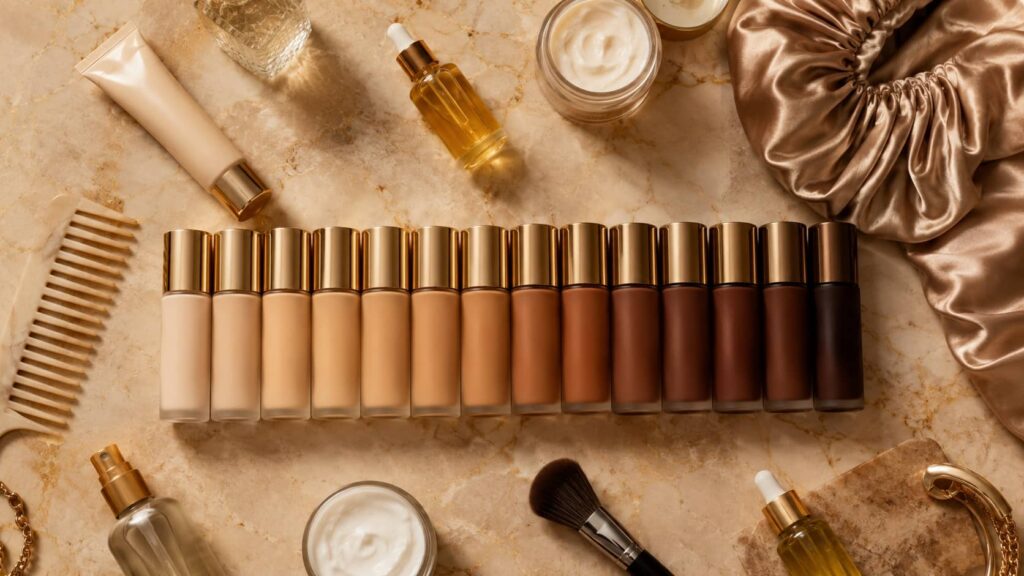
Part of feeling seen is finding products, brands, and spaces that actually include you.
For years, the beauty industry made many Black women feel like an afterthought. And depending on where you live, that can still be true in everyday life.
I am a Black woman living in Switzerland. Finding the right skincare and makeup for my skin here is nearly impossible. Once a year I travel to the UK, where there are larger Black communities, and I stock up. Half a dozen of this. A dozen of that. Enough to last me a full year. Because I never know when I will find what I need again.
That kind of thing leaves a mark.
Still, I do think the industry is changing. More brands are finally creating products that serve a broader range of skin tones, hair textures, and life stages. And that matters, because when beauty includes you, it sends a message. You are not an exception. You are not an afterthought. You belong here too.
That is one reason The Melanin Tone exists.
Not to flatter women with empty language.
Not to sell fantasy.
But to offer real guidance for Black women over 50 who want beauty that feels intelligent, inclusive, and honest.
You Are Not Invisible, You Are Becoming More Yourself
This is what I want to leave you with tonight.
You are not invisible.
You may feel overlooked.
You may feel changed.
You may feel unfamiliar to yourself on some days.
Still, you are not gone.
You are not less worthy because the room responds differently.
You are not less beautiful because the mirror asks for a new kind of relationship.
You are not less important because youth is louder in the culture.
You are still here.
And in many ways, this stage can bring a woman closer to herself than she has ever been.
Less performance.
Less chasing.
Less needing to be approved of.
More honesty.
More peace.
More self possession.
That is not invisibility.
That is becoming.
The Melanin Tone is here for the woman who refuses to be an afterthought. Honest beauty guidance. Real talk about menopause and identity. And a better mirror for Black women over 50 who are ready to move through this season with self respect and calm confidence.