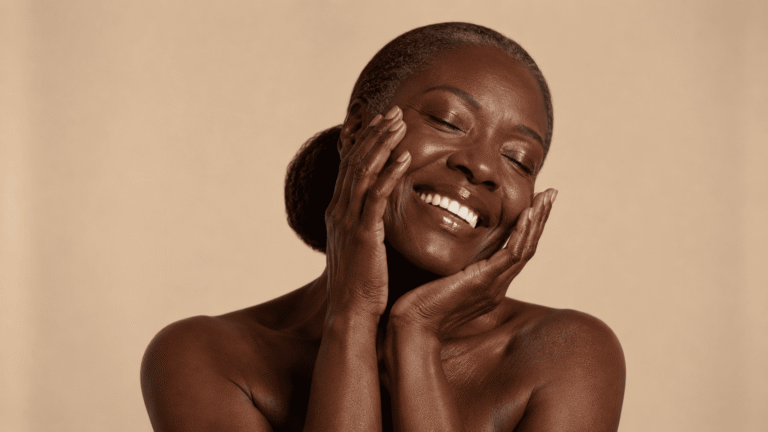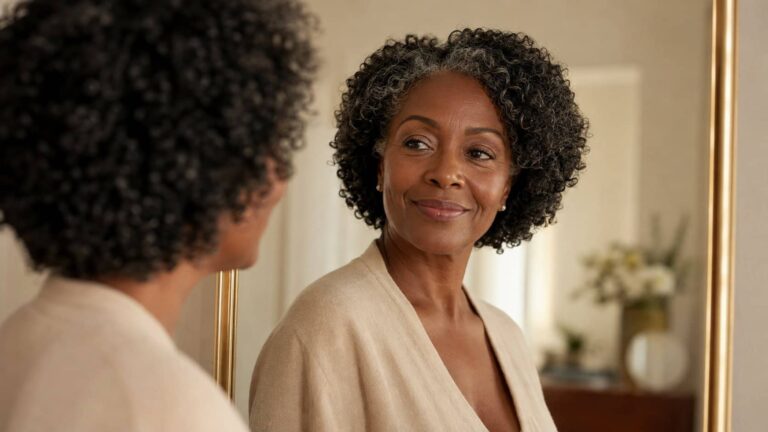
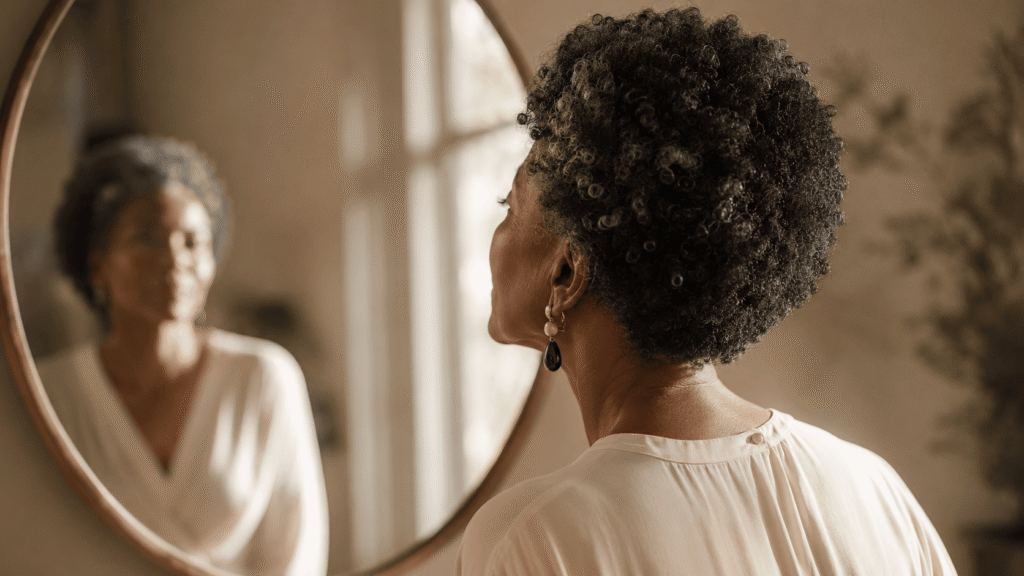
Beyond the mirror, what happens when the beauty standard never fully reflected you, and ageing makes that absence harder to ignore.
Eurocentric beauty standards have influenced what women are taught to call beautiful for generations, but for Black women, growing older can reveal just how narrow those standards have always been.
For many of us, the conversation started long before wrinkles, menopause, grey hair or changing skin entered the picture.
It started with hair.
Skin colour.
Features.
The way we were expected to present ourselves if we wanted to be considered polished, professional or simply beautiful.
Then we reach our fifties and discover another standard waiting for us.
Youth.
Suddenly, it is not enough to have spent years negotiating whether our natural features fit the beauty ideal. We are also surrounded by messages suggesting that ageing itself is something we should correct.
I have been thinking about this because when I look back at my own life, I realise something that at first seems contradictory.
I knew I was beautiful.
And I still changed part of myself to fit in.
What Are Eurocentric Beauty Standards?
Beauty standards are the ideas a society develops about which physical features are considered attractive, desirable or acceptable.
Research discussing Western beauty standards has identified characteristics such as lighter skin, narrower features, and long, straight hair among the traits that have traditionally been privileged.
That does not mean every white woman fits one identical standard.
It also does not mean every Black woman experiences these pressures in the same way.
Beauty is far more complicated than that.
But when one kind of appearance is repeatedly treated as the norm, everyone outside that norm receives a message about where they supposedly fall.
For Black women, hair has been one of the clearest examples.
Straight hair can be described as neat or professional.
Kinky hair can be described as difficult, unruly or something that needs managing.
A looser curl may be praised as good hair.
A darker complexion may be treated differently from a lighter one.
Features that naturally belong on Black faces can become things women are encouraged to soften, contour or alter.
And when these messages surround you from childhood, you do not have to consciously believe that European features are more beautiful for those ideas to influence the choices you make.
Sometimes they simply begin to feel normal.
I Knew I Was Beautiful, So Why Did I Still Change My Hair?
I will be honest with you.
I know I am a beautiful woman, and I say that with gratitude, not vanity. I thank God, and I thank my mother for the beauty I inherited.
Twice in my life, I have been stopped and asked whether I was interested in modelling.
I said no.
Even today, people are often surprised when I tell them my age.
My husband used to tell me that I did not need makeup.
And I understood what he meant.
I did not grow up believing there was something fundamentally wrong with my face. I did not spend my life thinking I was unattractive.
But here is the part that interests me now.
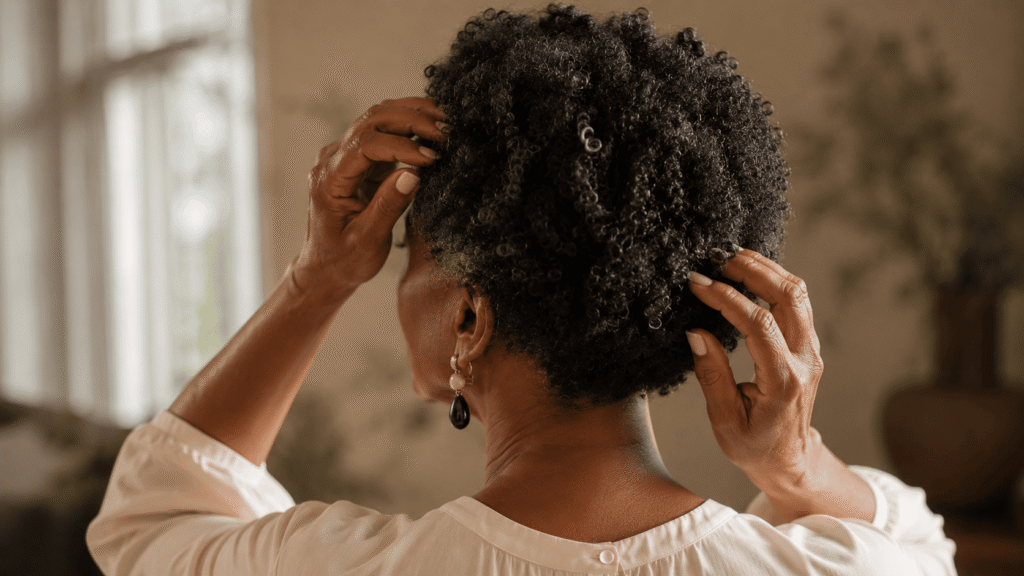
For much of my life in Europe, I still did not feel comfortable simply walking out of my door with my own African kinky hair.
I grew up in Switzerland.
For many years, extensions were simply what I wore. They were fashionable, but there was more to it than fashion. There was a certain appearance that felt more acceptable. More polished. More like the way you were expected to present yourself.
When I was in Africa, I felt differently.
I could walk around with my own hair and feel bold enough to do it.
Back in Switzerland, I felt that pressure to look a certain way again.
That was my experience. I am not suggesting every Black woman living in Europe feels the same way, or that every country in Africa has one relationship with natural hair.
But the difference in how I felt was real.
Today, I am far more confident wearing my braids freely. What once required negotiation inside my own head has become simply another way I choose to wear my hair.
And when I look back, one question stays with me.
How could I know that I was beautiful and still feel that one natural part of me needed to be changed before I presented myself to the world?
That is where this conversation becomes more interesting.
You do not have to dislike yourself to conform.
Confidence and conformity can exist in the same woman.
If that pressure could influence a woman who already felt confident in her own beauty, imagine how heavily it can sit on a girl or woman who is still trying to decide whether she is beautiful at all.
How Black Beauty Standards Get Shaped by Someone Else’s Mirror
There is something exhausting about being told, directly or indirectly, that you are beautiful after certain adjustments.
Beautiful, but straighten the hair.
Beautiful, but lighten the dark marks.
Beautiful, but soften this feature.
Beautiful, but tame that texture.
This is where Black beauty standards become complicated.
Not everything Black women do with our appearance means we are trying to become European.
I love beauty. I spent decades working in it.
Braids, wigs, extensions, relaxers, makeup, skincare and fashion can all be creative choices. Black women have an extraordinary tradition of transforming hair and beauty into art.
The problem begins when choice quietly becomes requirement.
There is a difference between wearing extensions because you love the way they look and feeling that you cannot be appropriately presented without them.
There is a difference between putting on makeup because you enjoy it and believing your natural face is something other people should not have to see.
There is a difference between treating pigmentation because it bothers you and believing that darker skin itself needs correcting.
The product may be exactly the same.
The question underneath it is different.
Am I doing this because it expresses me, or because I have learned that the unaltered version of me is less acceptable?
That is not always an easy question to answer.
Where Colorism Fits Into the European Standard of Beauty
We cannot talk seriously about the European standard of beauty without talking about colourism.
Colourism is not exactly the same as racism. It describes the preference or more favourable treatment that can occur based on skin tone, often privileging lighter skin even among people from the same racial or ethnic group.
And Black communities are not immune from it.
Many of us grew up hearing comments about who was light.
Who was dark.
Who had good hair.
Whose nose was too broad.
Whose features were considered fine.
Sometimes those comments were openly cruel.
Sometimes they were presented as jokes.
Sometimes they came from people who loved us.
That is part of what makes beauty standards so powerful.
They do not live only in advertisements.
They can travel through families, friendships, schools, workplaces and communities.
Not every Black woman carries the same history.
But many of us understand the language.
Beauty After 50 Adds Age to the Equation
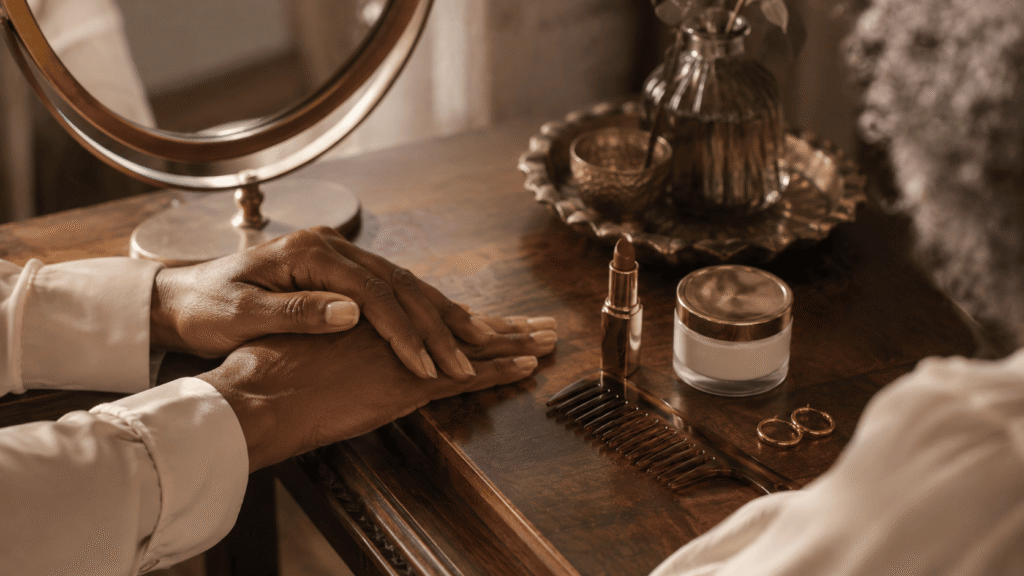
Then something changes.
We get older.
And beauty after 50 introduces another layer to a conversation that was already complicated.
Perhaps you have finally made peace with your hair, and now it is turning grey.
Perhaps you have learned to love your complexion, and menopause changes its texture.
Perhaps you spent years learning what suits your face, and suddenly the beauty industry is telling you that the lines appearing on that face are a new emergency.
Race does not disappear when we age.
Neither do beauty standards.
Age simply joins the equation.
Women have long been surrounded by a cultural connection between beauty and youth.
Look younger.
Correct the lines.
Lift this.
Tighten that.
Restore what has been lost.
Reverse the signs of ageing.
Even the language can make growing older sound like damage.
For Black women, the contradiction can feel particularly strange.
For years, some of the features associated with Black beauty were ignored, criticised or treated as undesirable.
Then suddenly some of those same features became fashionable.
Fuller lips became desirable.
Braids appeared on runways.
Curvier bodies moved in and out of trend.
Deep skin tones became more visible in beauty campaigns.
And just as the beauty industry began making more room for Black women, many of us reached an age when women over 50 were still not reflected with the same enthusiasm.
Sometimes it can feel as though the door finally opened and somebody quietly changed the guest list.
Aging as a Woman in a Youth-Obsessed Beauty Industry
There is nothing wrong with wanting beautiful skin at 50, 60 or 70 even 80.
There is nothing wrong with colouring your grey hair.
There is nothing wrong with wearing makeup, getting your brows done, enjoying a beautiful dress or wanting to look radiant when you walk into a room.
I reject the idea that embracing ageing means women should stop caring about their appearance.
That is simply another rule.
The more important question is whether beauty still feels like something you enjoy or whether it has become a constant project of trying not to look your age.
That distinction matters to me.
I do not want skincare to become warfare against my own face.
I do not want a grey hair to mean surrender.
I do not want a wrinkle to cancel beauty.
And I certainly do not believe Black women should spend the first half of life trying to meet one beauty standard and the second half trying to outrun ageing.
That sounds exhausting.
When Beauty Standards Become Body Image Issues
Body image issues are often discussed as though they belong mainly to younger women.
But the mirror does not disappear when we turn 50.
Our relationship with it simply changes.
The body changes.
Skin changes.
Hair changes.
Weight may move differently.
The face changes.
And at the same time, society continues showing us images of what women are supposedly meant to look like.
There is a danger at both extremes.
At one end is the demand to remain young forever.
At the other is the idea that once you reach a certain age, you should no longer care about beauty at all.
I do not accept either.
A positive body image does not require you to adore every physical change.
You can dislike a dark spot and still love your skin.
You can wish your hair were thicker and still feel beautiful.
You can wear makeup and still be comfortable without it.
You can look your best without trying to look thirty.
The goal is not indifference.
It is perspective.
Beauty can have a place in your identity.
It should not have to carry the whole thing.
Reclaiming Black Beauty After 50
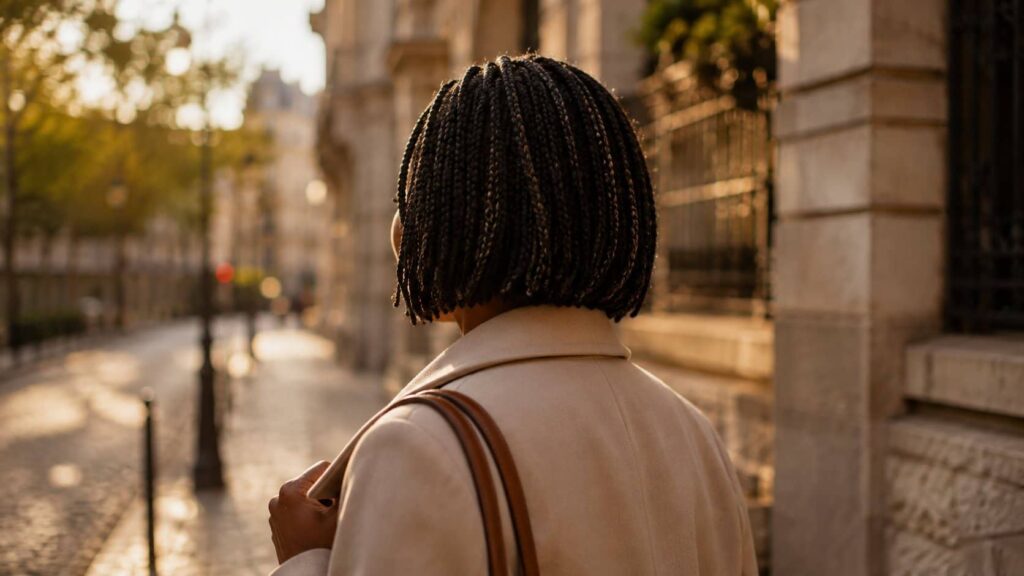
Something I appreciate about getting older is that many of the rules start looking less convincing.
You begin asking who made them.
Why exactly was my natural hair something I once felt unable to wear freely?
Why was straight considered more polished?
Why should a woman’s beauty become less valuable because her face records the years she has lived?
Why must growing older always be framed as loss?
The confidence I have now is different from the confidence I had when I was younger.
When you are young, confidence can depend heavily on being told that you look good.
Later, something else can begin to develop.
You still appreciate the compliment.
You still enjoy looking beautiful.
But you no longer need every room to agree with you.
That is freedom.
Not abandoning beauty.
Reclaiming it.
It means deciding that your kinky hair does not need permission.
Your braids do not need explanation.
Your skin does not need to become lighter.
Your face does not need to pretend it has never lived.
And your beauty does not expire because the industry discovers a younger woman to sell to.
Beyond the Mirror – Who Gets to Define Beauty Now?
For much of a woman’s life, the mirror can become crowded.
Parents stand somewhere behind it.
Partners.
Friends.
Magazines.
Beauty counters.
Advertising.
Social media.
The culture we grew up in.
The culture we moved into.
Race.
Colourism.
Age.
All of them whispering instructions about what we ought to see.
Perhaps one of the gifts of getting older is learning to clear the room.
I still believe in beauty.
Of course I do.
I believe in looking after your skin.
I believe in caring for your hair.
I believe in lipstick when you want lipstick and a bare face when you do not.
I believe a woman can enjoy looking beautiful without apologising for caring about her appearance.
But I no longer believe beauty should require us to move farther and farther away from ourselves.
I think about the younger version of me who could walk confidently with her own hair in Africa but felt she needed something different when she returned to Switzerland.
I understand her.
She was responding to the world around her.
But the woman I am today gets to make another choice.
And perhaps that is what beauty after 50 can become.
Not the desperate preservation of the woman you were.
Not surrender.
Not invisibility.
But a more deliberate relationship with the woman you are.
The mirror should be somewhere you meet yourself, not somewhere you go to measure how far you have moved away from thirty.
After all these years of being told what Black beauty should look like, perhaps we have earned the right to decide for ourselves.
That is what The Melanin Tone is here to celebrate. Black women over 50 understanding our beauty, caring for it and defining it on our own terms.