This article explores the symptoms of menopause at 52 through the real emotional and physical changes many Black women over 50 experience. It looks at skin, hair, sleep, mood, and the deeper shock of feeling unfamiliar to yourself. It also offers clear, practical ways to care for your skin, your hair, and your sense of self during this stage of life. About 10 min read.
Beyond the Mirror – Reclaiming Your Identity When Menopause Makes You Feel Like a Stranger to Yourself
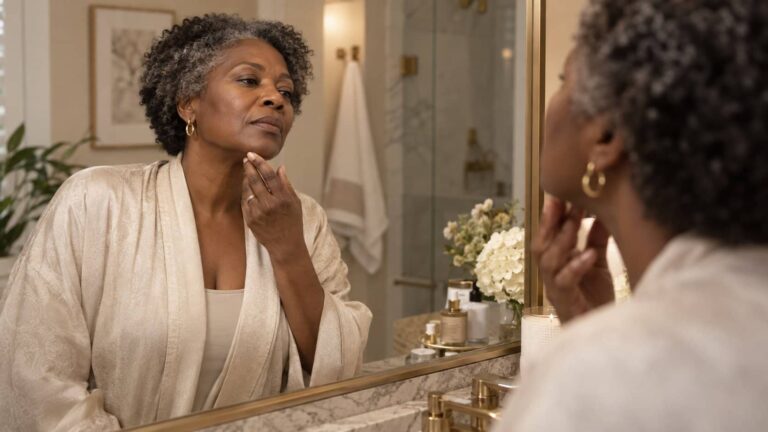
Nobody prepared many of us for this part of menopause. Not only the dry skin, the hair changes, or the restless nights. The deeper shock is looking in the mirror and feeling slightly disconnected from the woman staring back at you.
That is the part I want to talk about.
Not only what menopause does to your body. Also what it does to your sense of self.
Because for many women, especially Black women over 50, this stage is not only physical. It is emotional. It is psychological. It is personal. You wake up in the same life, in the same home, with the same responsibilities, and yet something feels different. Your skin responds differently. Your hair asks for something new. Your energy shifts. Even your face can feel less familiar.
After 22 years in hair and skin, I have seen women struggle to explain this feeling. They come in thinking they are asking about dry skin, thinning edges, or a new texture problem. Often they are trying to name something deeper. They are trying to understand why they do not fully feel like themselves.
Symptoms of Menopause at 52, What You May Notice First
Menopause does not look the same on every woman. But some changes show up often enough that many women recognize themselves in them.
Your skin feels drier
Skin that used to feel balanced can start to feel tight, dull, or thin. Moisture does not seem to last. Products that once worked well stop feeling like enough. Dark spots may become more visible. Your face may lose some of the softness and bounce it had before.
This shift can feel sudden, even when it has been building for a while. One day you realize your old routine no longer matches the skin you have now.
Your hair changes
Many women notice thinning at the crown or temples. Others see less fullness at the edges. Some feel a change in texture. The hair may seem drier, weaker, or harder to manage. The scalp may feel different too.
This can be one of the most emotional parts of menopause for Black women. Hair has never been a small thing for us. It carries identity, culture, memory, pride, and presence. So when it changes, the grief is real.
Your sleep becomes unreliable
Restless nights can leave you tired before the day begins. Some women wake up hot. Some wake up anxious. Some simply wake up and cannot settle again. Poor sleep then affects mood, patience, and focus.
Your mind feels crowded or foggy
You may forget simple things. You may lose your train of thought. You may feel slower than usual. This can be frustrating, especially for women who have spent years being the dependable one, the organized one, the strong one.
Your emotions shift too
You may feel more sensitive. More anxious. More irritated. More tired of carrying everything. Some women feel flat. Others feel unsettled. Some feel both.
These changes do not make you weak. They do not mean you are failing. They mean your body is moving through a major transition.
The Part Nobody Explains Clearly
Dry skin is easy to name.
Hair thinning is easy to name.
Hot flashes are easy to name.
But what do you call the moment when your reflection feels slightly unfamiliar.
What do you call the quiet grief of realizing your outside no longer matches the version of yourself you still hold inside.
That is the part many women are left to figure out alone.
I think we need to say this plainly. Menopause is not only a hormonal event. It is also an identity event.
For years, many women have known themselves through routine. Through beauty rituals. Through how they wear their hair. Through the face they recognize in the mirror each morning. When those things shift, even a little, the emotional effect can be larger than people expect.
This is not vanity. It is self recognition.
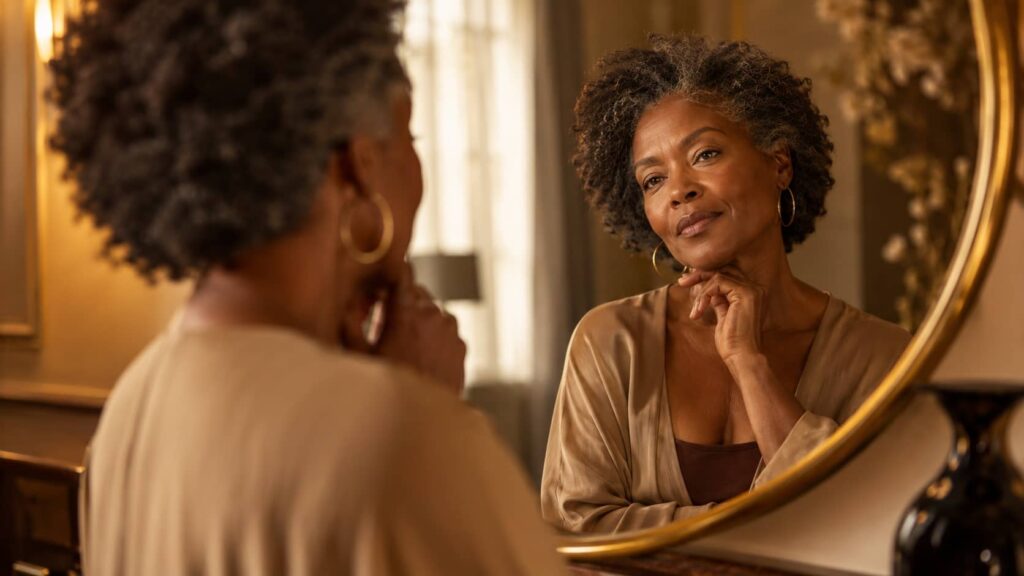
When the Mirror Starts to Feel Different
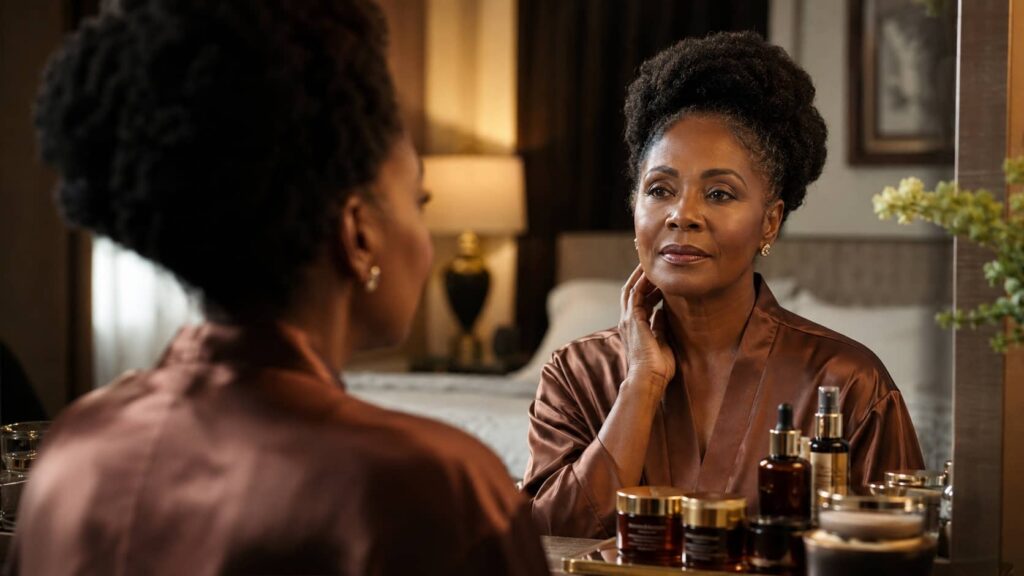
There is a moment many women reach in this stage. You look in the mirror and think, I know this face, but it does not fully feel like me.
That thought can be hard to admit. It sounds small when spoken out loud. It does not feel small when you live it.
It can happen while applying makeup. While washing your face. While parting your hair. While getting dressed for work. A small pause. A quiet disconnect. Not because you are no longer beautiful. Not because aging is wrong. Because change can feel strange before it feels understood.
I wish more women were told this before it happened.
I wish more women were given language for the identity shift, not only the symptom list.
From the Salon Chair
Over the years, women would sit in my chair and tell me they did not know what was happening to them. They were not only talking about their hair. They were talking about confidence. Presence. Mood. Energy. Menopause was touching every part of how they felt in themselves.
Why This Can Feel Harder for Black Women
Black women often carry beauty differently. We have had to be resourceful. We have had to adapt. We have had to work around products, spaces, and advice that did not always have us in mind.
That history matters.
When menopause changes your skin and hair, it does not happen in a neutral beauty world. It happens in a world where mature Black women are still underrepresented. A world where many products still do not speak directly to our skin tone, our texture, or our stage of life.
So the physical shift and the emotional shift can feel sharper.
You are not only adjusting to hormonal change. You are doing it while still trying to find products, language, and representation that reflect you with care.
That can create a deep feeling of being overlooked.
And being overlooked for too long has an emotional cost.
The Beauty Industry Still Leaves Too Many Gaps
Let us be honest about what many women still deal with.
Foundation shades still miss the depth or undertone of rich melanin skin.
Skincare often talks about mature skin as if all mature skin behaves the same.
Haircare still fails to speak clearly to textured hair in menopause.
Beauty marketing still centers youth or treats older women as one flat group.
And when mature Black women do appear, the offering is often limited. A campaign here. A product there. Rarely a full world built with us in mind.
That is one reason this stage can feel lonely.
You are changing. Your needs are changing. Yet the industry often keeps speaking to someone else.
That is why spaces like The Melanin Tone matter. Black women over 50 need more than products. We need recognition. We need better information. We need beauty conversations that start from our reality, not from a watered down version of it.
What Reclaiming Identity After 50 Looks Like
Reclaiming yourself after 50 does not mean pretending nothing has changed.
It means facing change honestly, then caring for yourself with more clarity.
It means accepting that the old routine may no longer serve you.
It means understanding that this season asks different things from your skin, your hair, your body, and your mind.
It means learning your new needs without shame.
This is not about chasing youth. It is about building a new relationship with yourself.
A more honest one.
A more gentle one.
A more informed one.
How to Start, Practically
Start with your skin barrier
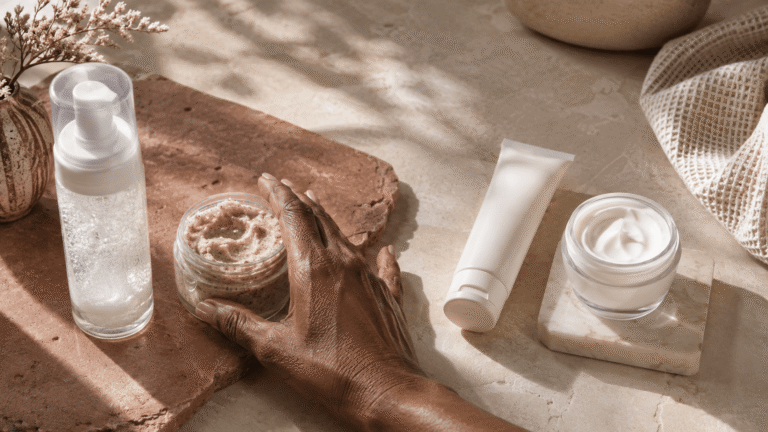
After menopause, skin often needs richer and steadier support. Move toward moisturizers and creams that help your skin hold onto hydration. Be gentle with cleansing. Do not overdo exfoliation. Pay attention to dryness, tightness, and irritation. Those are signals, not flaws.
If your skin feels different, listen to it. Do not fight it.
Revisit your hair routine
Ask yourself whether your current routine still matches your hair as it is now. Not as it was five or ten years ago. Focus on scalp care, moisture, gentler handling, and lower tension. If your hair feels weaker or drier, simplify first. Start with what your hair needs now.
Take your emotions seriously
If you feel disconnected, low, anxious, flat, or unlike yourself, do not brush it aside. This stage affects more than appearance. It can affect how you move through life. You deserve support for that too.
Speak to someone you trust. Write it down. Name what feels different. The moment you name it, it becomes easier to hold.
Find women who understand
Community matters. So much of the pain in this season comes from feeling isolated inside it. The moment another woman says, yes, me too, the room changes.
Find voices that speak honestly about menopause, beauty, aging, and identity. Not from fear. Not from performance. From truth.
Buy with intention
Do not keep spending money trying to force old solutions onto a new stage of life. Shop more slowly. Read more carefully. Choose products and voices that respect your age, your texture, your skin tone, and your reality.
That is not giving up. That is wisdom.
From the Salon Chair
The women who moved through this season with the most grace were not the women trying hardest to look younger. They were the women who got honest about what they needed. They adapted without apology. They cared for themselves with intention. That kind of beauty runs deeper than appearance.
You Are Still You
This part matters most.
Menopause can change how you look. It can change how you feel. It can change what your skin and hair need from you.
Still, it does not erase you.
You are still you.
You are still worthy of care.
You are still worthy of beauty that fits your life.
You are still worthy of language that makes sense of what you are feeling.
You are still worthy of seeing yourself clearly.
If the mirror has felt complicated lately, that does not mean you are lost forever. It may simply mean you are in the middle of becoming familiar to yourself again.
That takes time.
That takes compassion.
That takes truth.
And that is what I hope this space gives you.
The Melanin Tone exists for the woman who wants better information, better beauty, and a better mirror. A woman who is done being an afterthought. A woman who is ready to understand this season and move through it with care, dignity, and self respect.