
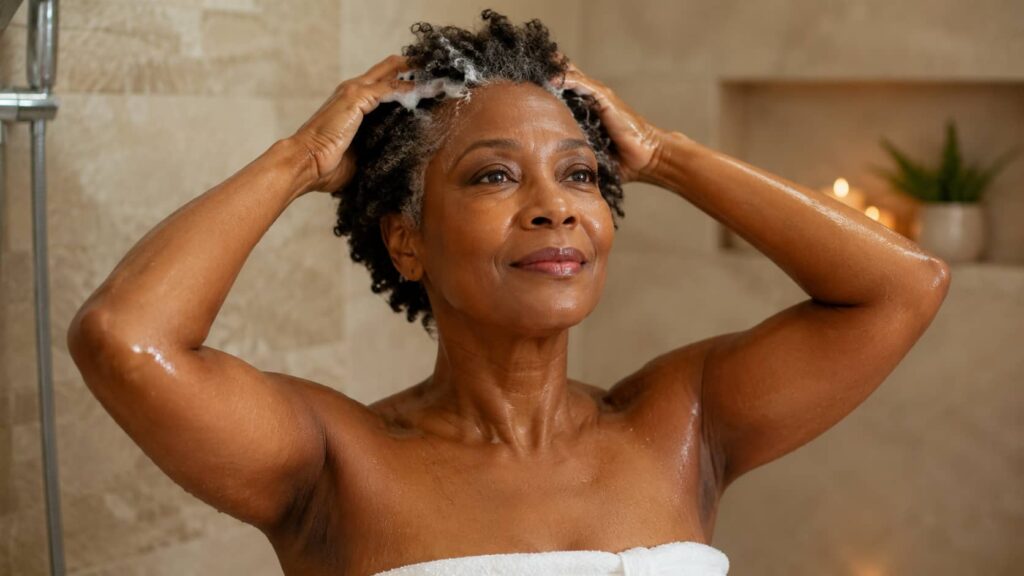
The great scalp reset begins when you stop treating your scalp like it is still 25
Product buildup on scalp does not begin overnight. For many Black women, it begins years earlier, in the routines we learned in our twenties.
Think back to your twenties. For many of us, Friday or Saturday meant a new hairstyle, fresh braids, cornrows, weaves, or sitting under a roaring salon dryer waiting for a chemical relaxer to set. We slicked our hairlines with heavy gels and patted down our parts with thick petroleum grease, completely unbothered. Our scalps were resilient back then. They bounced back from every chemical, every pull, and every layer of product overload.
But fast forward to today, and those same habits may be doing more harm than good.
At 50 and beyond, the body changes. The scalp changes with it. What once felt protective can start feeling heavy. What once felt normal can leave the scalp itchy, coated, tight, or simply uncomfortable in a way it never did before.
That is why I think of this stage as the great scalp reset.
Not a harsh detox. Not a trendy panic. A reset.
Because growing healthy, beautiful silver hair and mature textured hair often means unlearning the routines of our youth. It means looking honestly at what is still helping, what is only sitting there out of habit, and what your scalp no longer wants.
Product buildup on scalp after 50 is not only a beauty issue. It can show up as itch, flaking, tenderness, heaviness, dull hair, and a scalp that never quite feels clean no matter what you use. And for Black women, especially those of us who grew up on heavy grease, regular chemical processing, and styles that stayed in for weeks, that buildup story can go back decades.
This is not about blaming the past. It is about understanding what your scalp needs now.
What Product Buildup on Scalp Really Looks Like
A lot of women think buildup means dirty hair.
That is not always true.
Product buildup on scalp can happen even when you are washing your hair. It happens when layer after layer of grease, oil, gel, edge control, styling cream, or residue from old chemical treatments sits on the scalp and does not clear properly. Over time, the scalp starts to feel coated rather than cared for.
You may notice flakes that keep coming back.
You may notice itch that never fully settles.
You may feel a tight film on the scalp after styling.
You may part your hair and see residue sitting on the skin.
You may feel like your scalp never quite feels fresh, even after wash day.
That is what buildup often feels like. A scalp carrying too much, with too little relief.
And after 50, the scalp usually has less tolerance for that weight.
Why Product Buildup on Scalp Gets Worse After 50
This is where hormones enter the conversation.
As estrogen declines, the scalp often becomes drier and more reactive. Oil production slows. The skin barrier becomes more fragile. Moisture escapes more easily. So the scalp you once coated heavily without much trouble may now respond with itch, irritation, flaking, or discomfort.
That is why the same routine can suddenly feel wrong.
At 25, a heavy product may have felt soothing.
At 55, that same product may feel like too much.
This is also why so many women get confused. They assume the scalp is dry, so they add more grease. But heavy grease does not hydrate the scalp. It seals the surface. If the skin underneath is already dry, irritated, or carrying old residue, you may only be layering more product over a scalp that needs cleansing, lighter hydration, and calm.
That is the real mismatch.
Not evil ingredients.
Not a bad scalp.
An old routine meeting a new season.
If your scalp has also become tight, itchy, or uncomfortable in a way that feels hormonal, read Itchy Scalp and Menopause.
How Years of Heavy Products and Relaxers Can Leave the Scalp Overloaded
This part matters because the issue is not only what you used this week. It is what your scalp has lived through over time.
Years of relaxers can leave the scalp more sensitive than it once was.
Years of tight styles can leave the hairline more fragile.
Years of layering grease, oils, gels, and edge control can make the scalp harder to truly cleanse.
Years of treating the scalp as something to coat rather than something to care for can quietly catch up with you.
I say this without judgment, because these were the routines many of us knew. We used what was passed down, what worked in the moment, what helped us manage our hair, what felt familiar.
But familiarity is not always the same thing as suitability.
At this stage, the scalp may need less coating, less tension, less product sitting on the skin, and more real care.
That means a reset.
Not punishment.
Not stripping.
A reset.
The Signs Your Scalp Needs a Reset
A lot of women keep going with the same routine because nobody told them what the warning signs look like.
Here is what I would pay attention to.
Persistent itch, even after washing
Flaking that keeps returning
A feeling of heaviness or residue on the scalp
Product sitting visibly on the skin when you part the hair
Styles feeling uncomfortable faster than they used to
A hairline that looks more stressed, sparse, or fragile
Tenderness when you touch or part the scalp
A scalp that feels tight instead of calm
If your scalp keeps asking for your attention, it is telling you something.
A healthy scalp should not be dramatic. It should not keep demanding to be noticed. It should sit quietly under your hair and do its job.
How to Clean Scalp Build Up Without Stripping the Scalp
This is where women often go too far.
They feel buildup, so they reach for the harshest shampoo they can find. The scalp gets scrubbed, stripped, and dried out. Then it becomes even more reactive, and now the woman has both buildup and irritation.
That is not the goal.
The goal is to clean the scalp gently but properly.
Start by washing more regularly than you may have in the past, but with a gentler product. If you have been stretching wash day for too long while layering grease and styling products in between, shortening that gap can help. A mature scalp usually does better when buildup is cleared before it has had weeks to settle in.
Use a gentle clarifying shampoo occasionally, not aggressively. You want something that lifts residue without making the scalp feel raw. Sulfate free clarifying options can work well here because the point is not punishment. The point is relief.
Massage the scalp with the pads of your fingers, not your nails. Let the cleanser do the work. You do not need to scrape the skin to prove you are washing it.
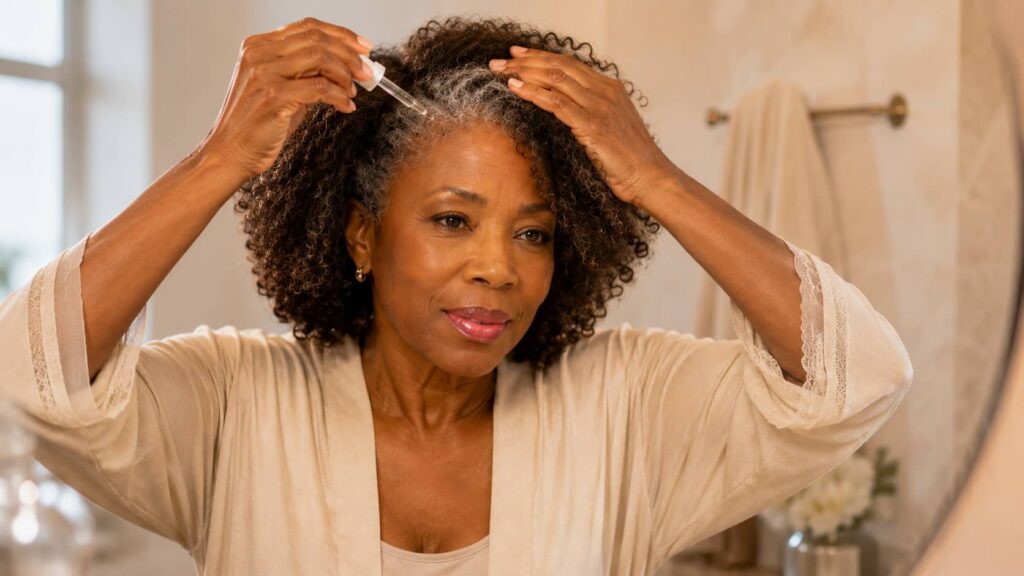
And after clarifying, give the scalp something lighter than grease. A lightweight scalp serum or hydrating scalp treatment is often a better next step than putting the same heavy product back on top.
That is the difference between cleansing the scalp and starting the whole cycle again.
What a Healthy Scalp Looks Like After 50
Most women look at their hair.
Very few look at their scalp.
So let me make this simple.
A healthy scalp looks even in tone.
It should not look heavily coated.
It should not have patches of visible residue.
It should not feel painfully tight, constantly itchy, or tender to the touch.
It should not have crusting, persistent bumps, or shiny areas where follicles seem to have gone quiet.
And just as importantly, a healthy scalp should feel unremarkable.
If you are constantly aware of your scalp, something is usually off.
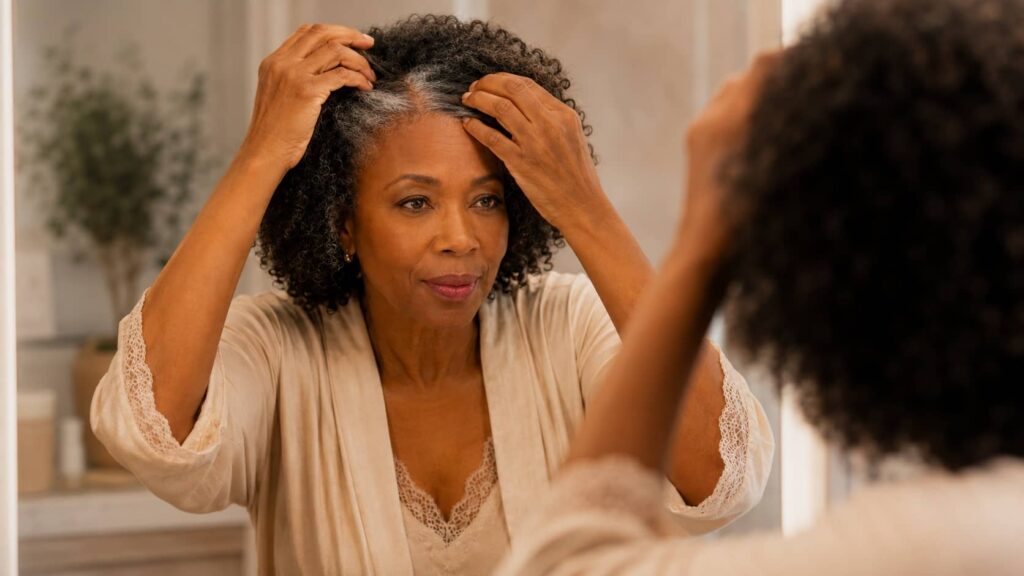
That is one reason I think more women need to part the hair and actually look. Good light. A mirror. A calm few minutes. Look at the skin, not only the style.
That one habit alone can tell you more than another random product purchase.
If you want a fuller guide to signs of scalp stress, you can also link out to signs of a healthy scalp.
A Simple Scalp Care Routine for Black Hair After 50
This is the routine I would trust more than a so called detox shelf.
Wash the scalp regularly with a gentle cleanser.
Not harsh. Not rare. Gentle and consistent.
Clarify when needed.
If you know there is buildup, use a clarifying step now and then, but not so often that the scalp starts feeling stripped.
Choose lighter hydration.
Look for lightweight scalp products that soothe and support the skin instead of sitting heavily on top of it.
Keep the heavy grease for where it truly helps, if you still want to use it at all.
The lengths of the hair may tolerate more than the scalp does. The scalp often needs a lighter hand.
Loosen your styles.
A mature hairline does not need extra stress layered on top of hormonal change and product buildup.
Take styles down sooner.
What was comfortable for eight weeks before may not feel good now.
Pay attention to your own scalp.
Not trends. Not nostalgia. Not what your younger routine used to need. What your scalp is asking for now.
What to Use Instead of Heavy Grease and Stiff Gels
This is usually the hardest part emotionally, because old products can feel comforting.
Still, there comes a point when comfort and usefulness are not the same thing.
If your scalp is overloaded, move toward products that are lighter, water based, or easier to cleanse away. Aloe based scalp products. Lightweight scalp serums. Hydrating leave ins for the hair itself, rather than thick layers pressed directly onto the scalp.
And for your edges, try not to live in a permanent state of slicking and re slicking. A mature hairline does not need daily pressure from stiff gels and repeated brushing.
Sometimes the better question is not what new product to buy.
It is what old habit to stop repeating.
How to Protect a Fragile Hairline After 50
A scalp reset is not only about product. It is also about pressure.
Too much tension, too much edge control, too much brushing, too much pulling back, too many styles that rely on the hairline to do all the work. That is how a fragile hairline gets pushed past what it can tolerate.
If your scalp feels more delicate than it used to, believe it.
Wear styles a little looser.
Give your edges more rest.
Let the scalp breathe between installs.
Reduce the need for daily force and manipulation.
And if the hairline is already thinning, do not wait too long to take it seriously. Read Edges Thinning? A Salon Owner Shares the Honest Truth About Why It Happens, And What Actually Helps.
The Honest Takeaway
Product buildup on scalp after 50 is not about being dirty.
It is about being overloaded.
A routine that once felt protective can begin to feel heavy.
A scalp that once tolerated everything can become more sensitive.
A woman who has spent years caring for her hair in one way may wake up and realize that same care no longer feels like care at all.
That is not failure.
That is information.
Your scalp is asking for a different kind of relationship now.
More cleansing.
Less coating.
More gentleness.
Less tension.
More attention to the skin underneath the hair.
That is the great scalp reset after 50.
Not panic.
Not punishment.
Not trendy detox language for the sake of it.
Just a calmer, wiser way of caring for the scalp you have now.
That is what The Melanin Tone is here for.