
Black Female Hair Loss After 50: What May Be Causing It
Hair Loss in women can feel especially confusing after 50 because thinning does not always come from one cause. For Black women, it may be linked to traction alopecia, CCCA, menopause, styling history, scalp inflammation, or more than one issue happening at the same time.
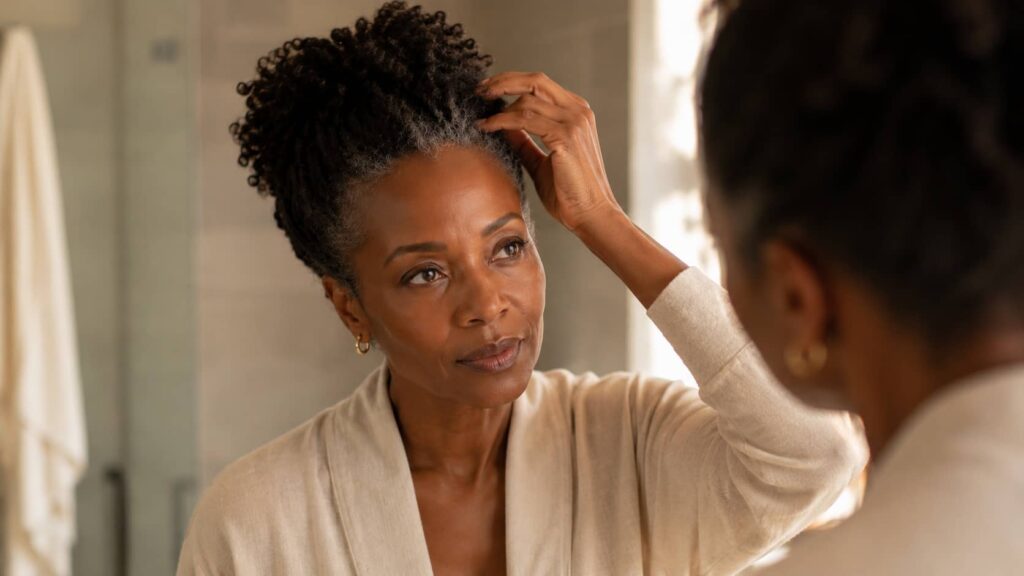
One morning, you stand in front of the mirror and lift your hair away from your part. Something in your stomach drops. The part looks wider than it did a few months ago. The crown looks thinner under the bathroom light. Your edges seem to have moved back again, just slightly, but enough for you to notice. Maybe the hair in your brush has increased. Maybe your ponytail feels smaller. Maybe your scalp feels tender in one area, or maybe it feels completely normal and the thinning is the only clue.
You try to tell yourself it is the lighting.Then you take a photo and the photo says what your eyes have been trying not to say.
Something is changing.
For many Black women in midlife, hair loss can come from more than one direction. It may be traction alopecia from years of tension. It may be CCCA, which stands for central centrifugal cicatricial alopecia. It may be menopause related shedding or female pattern hair loss. Sometimes, more than one of these can be happening at the same time.
That is why the difference matters.
The right response depends on the cause. Tension related hair loss needs one kind of action. CCCA needs medical attention early because it can cause permanent loss. Menopause related thinning may need a different kind of support altogether. The mirror may show thinning, but the scalp underneath may be telling a more specific story.
I spent 22 years behind the salon chair watching Black women’s hair tell those stories. I saw edges slowly disappear under styles that were called protective but were pulling too tightly. I saw women whose crowns were thinning long before they had a name for what was happening. I saw shedding arrive around perimenopause and catch women completely off guard. I also saw how often women blamed themselves before anyone explained the difference between breakage, shedding, scarring, and hormonal change.
I am not a dermatologist, and this article is not a diagnosis. But it can help you notice the patterns, ask better questions, and know when it is time to seek professional help.
Let us walk through it carefully. What Is Happening to Your Hair? Before you can understand the type of hair loss you may be facing, it helps to understand one basic idea.
Not all hair loss is the same.
Some hair loss is non scarring, which means the follicle is still alive and may be able to grow hair again if the cause is treated or removed.
Some hair loss is scarring, which means inflammation damages the follicle and scar tissue replaces it. Once that happens, hair may not grow back in that area.
That difference is everything.
Traction alopecia can begin as non scarring hair loss when the follicle is stressed by repeated pulling. If the tension continues for years, it can become permanent. The American Academy of Dermatology warns that tight hairstyles such as cornrows, locs, tight braids, buns, ponytails, extensions, and weaves can lead to traction alopecia when they pull on the hair repeatedly.
CCCA is different. It is a scarring form of hair loss by definition. The American Academy of Dermatology describes CCCA as a type of alopecia that can cause permanent hair loss and is more commonly seen in Black women. Treatment may help prevent further permanent loss, which is why early care matters.
Menopause related hair loss is often different again. It may show up as shedding, diffuse thinning, or female pattern hair loss. DermNet notes that female pattern hair loss can affect women at any age but is more common after menopause.
So the first question is not simply:
Why is my hair thinning?
The better question is:
What kind of thinning is this, and is the follicle still healthy?
That is the question a dermatologist can help answer.
Why Black Women Over 50 May Notice More Hair Loss
Many Black women reach midlife with a long hair history.
Relaxers. Braids. Cornrows. Sew ins. Wigs. Ponytails. Locs. Heat. Color. Edge control. Tight styling for work. Protective styles that were sometimes protective and sometimes too tight. Years of doing what we had to do to maintain our hair, our image, our professionalism, our culture, and our sense of self.
By the time a woman reaches 50, her hair has lived a life.
Some thinning may be connected to styling tension over time. Some may be connected to genetics. Some may be connected to scalp inflammation. Some may be connected to hormonal shifts. Some may be connected to stress, medications, thyroid concerns, low iron, vitamin deficiencies, or other health factors.
This is why guessing can cost time.
The American Academy of Dermatology notes that when Black women lose hair, common causes can include CCCA, which starts in the center of the scalp, and traction alopecia, which is caused by hairstyles that constantly pull and damage the hair over time.
For women over 50, menopause can add another layer. Hair may shed more. The ponytail may feel smaller. The part may widen. The hair may feel finer, drier, or less dense. That does not always mean the follicles are gone. But it does mean the hair growth cycle may be changing.
The difficult part is that these causes can overlap.
A woman can have traction damage along her edges, early CCCA at the crown, and hormone related shedding at the same time. That is why a simple online answer is rarely enough.
Your hair needs a closer look.
How Traction Alopecia Usually Shows Up
Traction alopecia is hair loss caused by repeated pulling on the hair follicle.
The keyword is repeated.
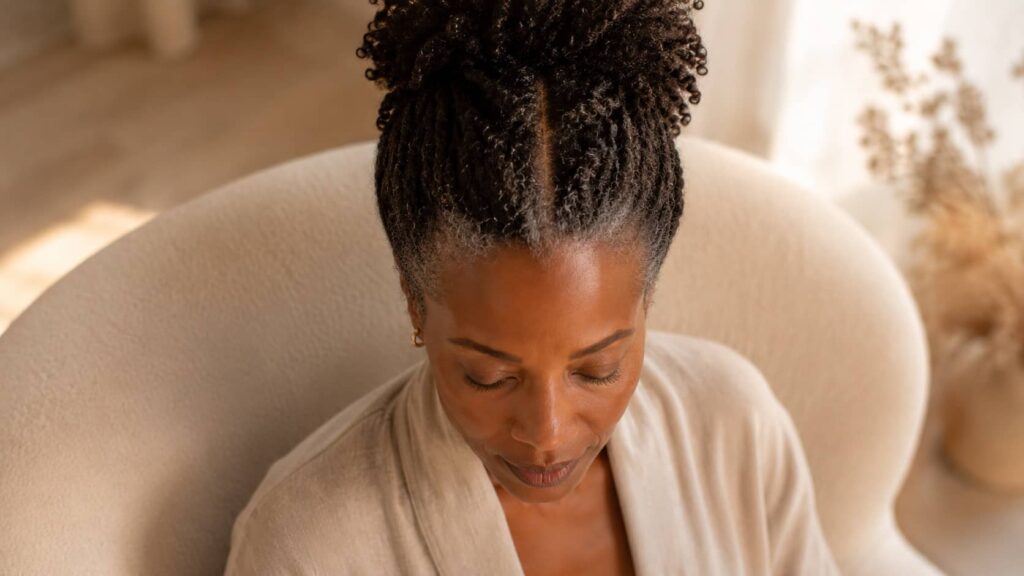
One tight hairstyle may not destroy your edges. But years of tension can slowly weaken the follicles, especially around the hairline, temples, nape, and areas where braids, wigs, extensions, or ponytails pull the most.
Signs to notice
Thinning along the hairline
Receding edges
Thin or broken hairs around the edges
Small bumps around the follicles where tension is applied
Tenderness during or after styling
Hair loss that matches the area where styles pull
Thinning at the nape from tight styles or friction
Edges that look thinner after each new install or tight style
A simple rule from the salon chair is this:
If a style hurts, it is not protective. Pain is information. Tightness is information. Small bumps after braids are information. A style that pulls your eyes back or leaves your scalp sore is not just uncomfortable. It may be stressing the follicle.
The hopeful part is that traction alopecia can often improve when caught early. Removing the tension may allow the follicles to recover. But if the pulling continues for too long, the loss can become permanent.
What may help
Looser hairstyles
Breaks between braids, wigs, and extensions
Avoiding tight ponytails and buns
Protecting the nape and edges
Reducing glue, tension, and friction
Seeing a dermatologist if hair does not return
Realistic next step
If your hair loss is mostly around the edges, temples, or nape, look honestly at your styling history. Then give those areas a break and book a dermatologist appointment if the thinning has lasted for months or is getting worse.
How CCCA Usually Shows Up
CCCA stands for central centrifugal cicatricial alopecia.
That is a long name, but the pattern helps explain it.
Central means it often begins near the center of the scalp.
Centrifugal means it spreads outward.
Cicatricial means scarring.
Alopecia means hair loss.
CCCA is one of the most important hair loss conditions for Black women to understand because it can lead to permanent hair loss if it is not treated early. A JAMA Dermatology patient page describes CCCA as a disease marked by permanent hair loss in the crown region of the scalp, along with inflammation and scarring, and notes that it occurs almost exclusively in Black women.
Signs to notice
Thinning that begins at the crown
A widening area at the top center of the scalp
Hair loss that slowly spreads outward
Tenderness, itching, burning, or soreness in the crown
A shiny or smooth looking scalp in the thinning area
Less visible follicle openings where hair used to grow
A family history of crown thinning
A part that keeps widening even after changing hairstyles
This is the condition that many women miss at first because it does not always begin dramatically.
It may start as a small area at the crown that looks a little thinner in photos. It may be noticed by a stylist before the woman sees it herself. It may itch. It may burn. Or it may have no symptoms at all.
That is why crown thinning should be taken seriously, especially if it is spreading.
What may help
A scalp examination
Possible scalp biopsy if CCCA is suspected
Anti inflammatory treatment if prescribed
Gentle hair practices
Avoiding heat and tension while the scalp is inflamed
Early intervention to protect remaining follicles
Realistic next step
If your thinning starts at the crown and spreads outward, do not wait to see if an oil will fix it. A dermatologist, especially one experienced with Black hair and scalp conditions, should evaluate it.
Honest truth
Hair that has already been lost to scarring may not grow back. But treatment may help protect hair that is still there. That is why timing matters.
How Menopause Related Hair Loss Usually Shows Up
Menopause related hair loss can feel different from traction alopecia or CCCA.
It may not begin with a bald patch. It may not hurt. It may not appear only at the hairline or crown. Instead, it may feel like your whole head of hair is slowly becoming less dense.
You notice more hair in the shower. More hair in your brush. More hair on your pillow. Your ponytail feels smaller. Your part looks wider from front to back. Your hair may feel finer, drier, or less full than it used to.
This can happen during perimenopause, menopause, or after menopause. It may be connected to hormonal shifts, genetics, stress, health changes, medications, thyroid issues, iron levels, or other internal factors.
Signs to notice
More shedding than usual
Overall thinning across the scalp
A smaller ponytail
A wider part across the top of the head
Hair that feels finer or less dense
Less volume at the crown without a smooth bald patch
No burning, soreness, or shiny scarred scalp
A family history of female pattern hair loss
Female pattern hair loss is often gradual and may become more noticeable around menopause. DermNet notes that it is more common after menopause and can progress in phases, with periods of shedding and stability.
What may help
A dermatologist evaluation
Blood work if your doctor recommends it
Checking thyroid, iron, vitamin D, and other possible contributors
Topical minoxidil if recommended
Gentle scalp care
Lower tension styling
Addressing stress, sleep, and health factors
Discussing menopause symptoms with a qualified clinician
Realistic next step
If your shedding increases suddenly or your part is widening across the whole top of your head, book a dermatologist appointment and consider speaking with your doctor about possible internal contributors.
Honest truth
Menopause related hair loss may be treatable, but it needs the right kind of support. A hair oil alone is not a plan.
A Simple Way to Notice the Pattern
This is not a diagnosis tool. It is simply a way to help you observe what is happening before you speak with a professional.
If the loss is mostly at the edges
Think about traction alopecia, especially if you wear tight braids, wigs, ponytails, buns, extensions, or styles that pull.
If the loss begins at the crown
Think about CCCA, especially if the area is spreading, tender, itchy, burning, or shiny.
If the loss is diffuse across the scalp
Think about menopause related shedding, female pattern hair loss, stress, health changes, thyroid concerns, iron levels, medications, or other internal causes.
If more than one pattern is present
Take that seriously. Black women can experience overlapping causes of hair loss, especially after 45. A dermatologist can help separate the patterns and build the right treatment plan.
What to Do Next
If anything in this article sounds familiar, your next step is not to panic. Your next step is to gather information.
Start with photographs. Take clear pictures of your hairline, temples, nape, crown, and part. Use the same lighting if you can. Take new photos every month. Hair loss can be hard to judge day by day, but photographs can reveal progression.
Then write down your timeline.
When did you first notice thinning?
Where did it start?
Has it changed quickly or slowly?
Does your scalp itch, burn, or feel tender?
What styles have you worn over the past year?
Have you had major stress, illness, surgery, weight loss, or medication changes?
Are you in perimenopause or menopause?
Does hair loss run in your family?
Bring that information to a dermatologist.
And not just any dermatologist if you can help it. Look for one who understands hair loss, Black hair, scalp disorders, or skin of color. The right dermatologist should examine your scalp closely. They may use magnification. They may discuss blood work. If CCCA is suspected, they may recommend a scalp biopsy to confirm what is happening.
This is not about being dramatic.
It is about not losing time.
When to See a Dermatologist Quickly
Make an appointment as soon as possible if you notice:
Crown thinning that is spreading
A shiny or smooth looking scalp
Burning, itching, soreness, or tenderness
Bald patches
Sudden heavy shedding
Hair loss with scalp scaling or inflammation
Hair loss that does not improve after reducing tension
A widening part that keeps getting worse
A family history of scarring hair loss
Any hair loss that worries you
If a doctor or stylist dismisses your concern without looking closely, do not be afraid to seek another opinion.
You are not being difficult.
You are protecting your crown.
The Honest Truth About Hair Loss in Black Women Over 50
Hair loss is not vanity.
The grief that comes with watching your hair change is real. You are allowed to feel it. Hair carries meaning in Black women’s lives that the wider beauty world has never fully understood. It can hold identity, memory, culture, pride, self expression, discipline, softness, and survival.
So no, it is not just hair.
But here is the other truth.
Avoiding the mirror will not protect your hair.
Waiting years will not protect your follicles.
Another oil will not reverse scarring.
A tight protective style is not protective if it is pulling.
A diagnosis matters more than a guess.
Whatever you decide, decide with clarity.
Some hair loss can improve. Some can be slowed. Some cannot be reversed once scarring has happened. The earlier you know what you are dealing with, the better your choices become.
The women who protect the most hair after 50 are not the women who panic. They are the women who notice, ask questions, see the right specialist, change what needs changing, and make decisions with information instead of fear.
Whatever you decide, decide with clarity.
If you want to fight for regrowth, fight with the right diagnosis.
If you want to change your style, change it with confidence.
If you want to grieve, grieve without shame.
If you want to let go of old styling habits, let them go without apology.
If you want a new look, you have the right to choose that too.
The mirror is telling you something.
Now you know how to listen.