The signs, the damage, and how the right care makes all the difference
Is hard water bad for your hair? After 22 years working with Black hair and skin, my honest answer is yes, it can be, but it is not the whole story. Hard water can leave your hair dry, brittle, and harder to manage, and it can leave your skin tight and ashy too. But here is the part that matters most. With the right care, you can absolutely protect your hair and skin from it. So this is not a scary post. It is an empowering one.
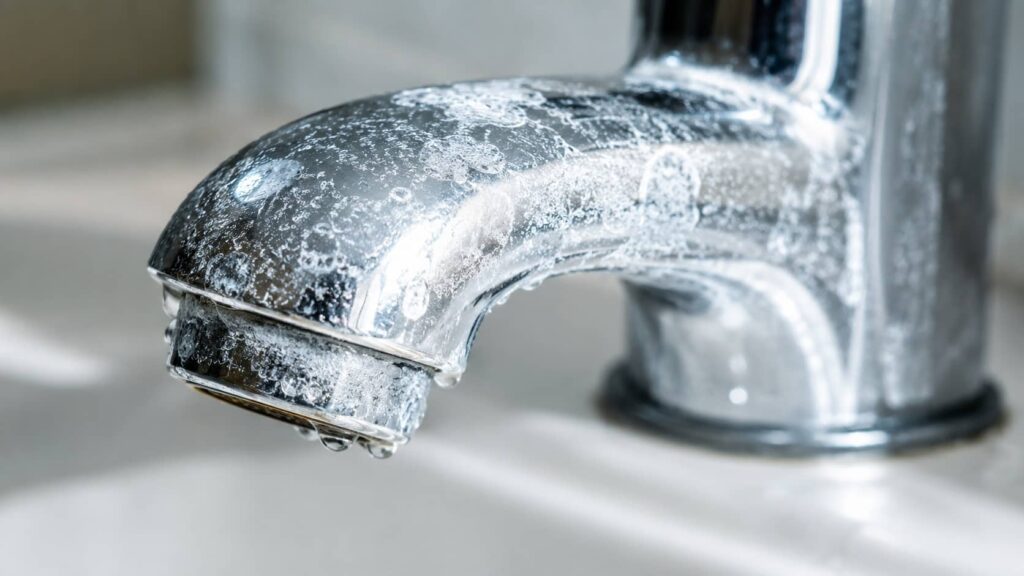
“Let me share something that happened this very morning. I was at my toilet sink, and the faucet was crusted with hard white mineral buildup. We call it kalk here. I had to soak the tap in vinegar to dissolve it. And as I watched it dissolve, I thought, this is exactly what hard water does to our hair. That same stubborn mineral buildup that coats my tap is the same buildup that coats your strands.”
In my salon I learned this lesson long ago, which is why I installed a filter on the faucet there. And still, whenever I clean it, I see traces of tiny stones and kalk crusted around the edges. That is the mineral content of the water made visible. And if it collects like that on metal, imagine what it does to delicate hair.
I live in Switzerland, where the water is clean and safe to drink, but in many regions it is very hard. And after two decades of caring for textured hair, I want to walk you through exactly what hard water does, how to spot it, and most importantly how to protect yourself. Let us begin.
The Signs of Hard Water on Your Hair
First, let us understand what hard water actually is, kept simple. Hard water is water that carries a high level of dissolved minerals, mainly calcium and magnesium. Those minerals are harmless to drink. But on your hair and skin, they leave a residue, a buildup, much like the kalk on my toilet tap.
The Minerals in Hard Water That Harm Your Hair and Skin
Let me show you exactly what is in hard water, because once you know, it all makes sense. The two main troublemakers are calcium and magnesium. But iron, copper, and silica can be present too, and each one affects your hair and skin in its own way.
Calcium is the main culprit. It binds heavily to the hair shaft and creates a hard layer that seals moisture out, leaving hair stiff, straw like, and brittle. On the skin, it reacts with your cleanser to leave a sticky film that can clog pores and irritate sensitive skin.
Magnesium strips away the natural oils that protect your skin barrier and your hair cuticles. Without those oils, moisture escapes quickly, leaving you with a dry, flaky scalp and itchy skin.
Iron and copper are heavy metals. Iron causes severe dryness and can dull the hair. Copper oxidises in the shower and can speed up chemical damage, which matters a great deal if you colour or relax your hair. On the skin, these metals create free radicals that break down collagen and lead to premature aging.
Silica leaves a glass like deposit along the hair strand. Over time it makes the hair almost impossible to penetrate, which means your deep conditioners and oils simply cannot get in to do their work.
So when we talk about hard water, we are really talking about a mix of minerals, each one leaving its own mark on your hair and skin. No wonder our hair struggles when it is fighting all of this at once.
The Simple Science
When you wash your hair in hard water, the calcium and magnesium minerals bind to your hair and leave a film on each strand. This film stops moisture from getting in, blocks your products from working properly, and leaves a rough, dry coating on the hair. For textured and curly hair, which is naturally drier and more fragile to begin with, this buildup is especially damaging.
And here is the part that matters most for us, the part the general hair websites rarely explain. Afro and 4C hair is naturally more porous than other hair types. The cuticles, the outer layer of each strand, are more raised and open. This is what makes our hair absorb moisture quickly but lose it just as fast. Now think about what that means with hard water. Those harsh minerals do not just sit on the surface of our hair. They penetrate and bind inside the more open hair shaft. That is why hard water causes more severe dryness, more tangling, and more breakage for Black hair than for straight hair. Our hair is simply more vulnerable to it. Understanding this is the key to protecting your hair properly.
So how do you know if hard water is affecting your hair? Here are the signs to look for.
The Signs of Hard Water on Your Hair
- Your hair feels dry, rough, or straw like even after washing and conditioning
- Your hair feels coated or filmy, never quite clean
- Your products do not lather or absorb the way they should
- Your curls lose definition and look dull instead of shiny
- Your hair tangles and breaks more easily
- Your scalp feels dry, itchy, or flaky
- Your colour fades faster than it should
If several of these sound familiar, hard water may well be part of your problem. And the good news is, once you know, you can do something about it.
Does Hard Water Cause Hair Loss and Breakage?
This is the question that worries women the most, and I want to answer it honestly. Hard water does not directly pull hair out of your head the way a tight braid does. But it absolutely contributes to breakage, and breakage can look and feel like hair loss.
Here is how it happens. The mineral buildup makes your hair dry and brittle. Dry, brittle hair snaps and breaks far more easily. Over time, if your hair keeps breaking, it can look thinner, shorter, and less full. For Black women, whose hair is already more fragile and prone to dryness, this matters even more.
From the Salon Chair
“I saw it so many times. A client whose hair simply would not thrive no matter what she did. Dry, breaking, splitting at the ends, never holding moisture. And often the culprit was not her products at all. It was the water she was washing with. Once we addressed the water, everything else finally started to work.”
Hard water can also dry out and irritate the scalp. And a dry, unhealthy scalp is not the best foundation for strong hair growth. So while hard water is not a direct cause of hair loss, it creates exactly the conditions, breakage, dryness, and scalp irritation, that lead to thinner, weaker hair over time.
Hard Water Effects on Skin: Why It Leaves You Dry and Ashy
Here is something many women do not realize. The same hard water that coats your hair is also affecting your skin every time you shower. And for Black skin, which shows dryness so visibly, this matters.
The mineral buildup from hard water can leave a residue on your skin that disrupts its natural moisture barrier. This is what leaves your skin feeling tight, dry, and ashy after a shower, no matter how much lotion you apply. It can also cause itchiness, irritation, and in some cases a dry rash.
If your skin feels tight and ashy right after showering, and your moisturiser never seems to be enough, hard water may be part of the reason. It is not just your skin being dry. It is your skin being coated and stripped at the same time.
So when we talk about protecting yourself from hard water, we are protecting both your hair and your skin together. The solutions help both.
Chelating Shampoo and How It Removes Hard Water Buildup
Now for the insider knowledge. This is the word I want every woman dealing with hard water to know. Chelating.
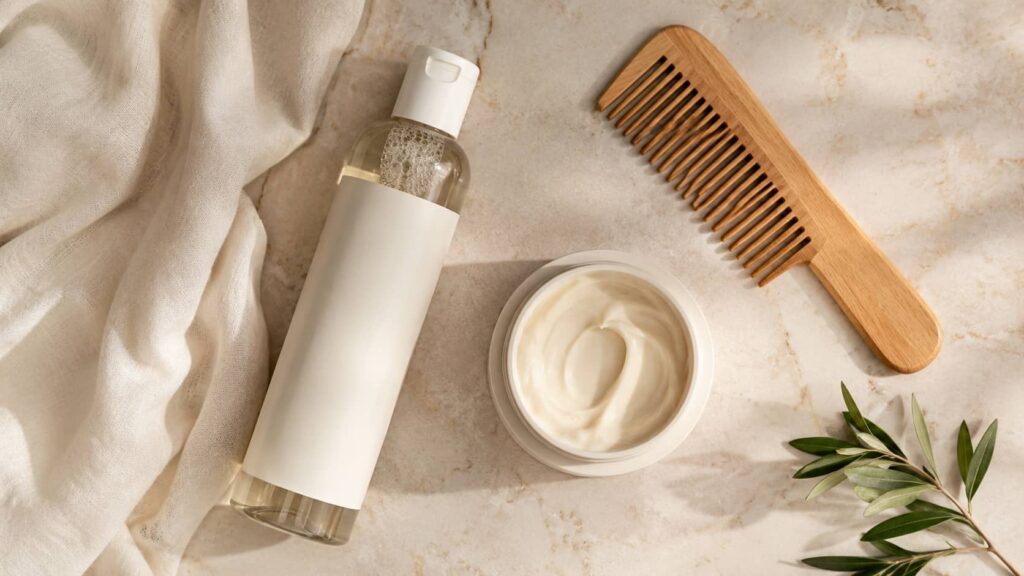
A chelating shampoo is a special kind of clarifying shampoo designed specifically to remove mineral buildup from your hair. Think of it as the vinegar that dissolved the kalk on my kitchen tap, but made gently for your hair. It binds to the calcium and magnesium minerals and lifts them away, leaving your hair truly clean and able to absorb moisture again.
What Chelating Means
Chelating ingredients work by grabbing onto the mineral deposits left by hard water and pulling them off the hair. A regular shampoo cannot do this. Only a chelating or strong clarifying shampoo can remove that stubborn mineral film. Used about once or twice a month, it resets your hair so your normal products can finally work the way they are meant to.
A word of care for textured hair, though. Chelating shampoos can be drying because they clean so deeply. So always follow a chelating wash with a rich, deep conditioning treatment to restore moisture. Clean first, then nourish. That is the rhythm.
Do not use a chelating shampoo every single wash. Once or twice a month is enough for most women. Using it too often can strip your hair. Like everything with melanin rich hair, balance is everything.
How to Protect Your Hair and Skin From Hard Water
Here is your complete, practical plan for protecting both your hair and your skin from hard water. None of this is complicated, and all of it makes a real difference.
1
Use a chelating shampoo once or twice a month
This removes the mineral buildup that regular shampoo leaves behind. Always follow with deep conditioning.
2
Install a shower filter
Install a shower filter. This is exactly what I did in my salon, and it makes a real difference. A simple shower head water filter reduces the minerals in your water before they ever reach your hair and skin. It is one of the most effective and affordable solutions there is, and anyone can install one at home in minutes.
3
Do a final rinse with filtered or bottled water
If a filter is not possible, a final cool rinse with filtered or bottled water removes surface minerals from your hair after washing.
4
Deep condition regularly
Hard water dries hair, so replenishing moisture is essential. A weekly deep conditioning or moisture mask keeps textured hair soft and strong.
5
Seal in moisture and protect your skin
Use rich oils and butters to seal moisture into your hair. And after showering, moisturize your skin while it is still damp to lock hydration in before the hard water residue dries it out.
“Hard water is real, and it does affect us. But the right care makes all the difference. You are not powerless against your water. You simply need to know how to work with it.”
The Honest Takeaway
So, is hard water bad for your hair? Yes, it can dry it, coat it, and contribute to breakage, and it dries your skin too. But it does not have to defeat you.
Once you understand what hard water does, the signs become obvious, and the solutions become simple. A chelating shampoo once or twice a month, a shower filter, regular deep conditioning, and good moisture sealing will transform how your hair and skin feel, even in the hardest water.
I think of my toilet tap this morning, crusted with kalk, coming clean again with a little care and the right approach. Your hair is exactly the same. It is not damaged beyond hope. It just needs the right care for the water you have. And once you give it that, it will thrive.
The Right Care Makes All the Difference.
Now I would love to hear from you. Are you noticing hard water more on your hair or on your skin? Have you spotted any of these signs in your own routine? Tell me in the comments below. I read every one, and your experience might be exactly what another woman needs to hear.
The Melanin Tone brings you honest, practical hair and skin guidance for Black women over 50. The insider knowledge, the gentle solutions, and the expertise of 22 years behind the chair. Stay close. 🖤