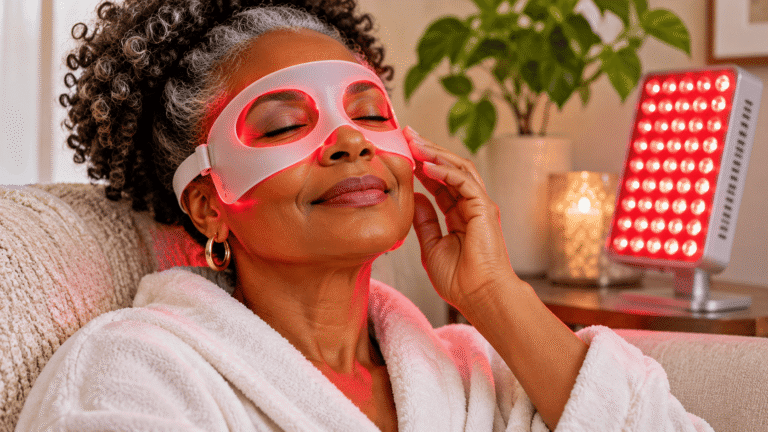
What Is Exosome Treatment And How Does It Actually Work?
What is Exosome therapy and why does it matter for mature melanin skin and hair?
Exosome therapy is one of the most exciting developments in skincare and haircare science right now. But what is it exactly and does it actually work for mature melanin skin? In this post, The Melanin Tone breaks down the science in plain language, explains why Black women over 50 stand to benefit most, and gives you the honest pros and cons before you spend a single franc, pound, or dollar.
The skin and hair science mature melanin has been waiting for · Part One of the Exosome Series
“In over two decades behind the chair, I watched thousands of Black women walk in looking for answers the beauty industry simply wasn’t giving them. Exosome therapy may finally be one of those answers.”
I have seen trends come and go things that promised everything and delivered very little. So when something new arrives, I don’t get excited right away. I wait. I read. I dig deeper. Because you deserve more than recycled marketing dressed up in new packaging.
Exosome therapy made me put my coffee down.
And if you are a Black woman in your 50s watching your skin change its personality, noticing your hairline doing something unfamiliar, wondering why the products that used to work now feel like they are speaking a completely different language then this conversation is for you.
The Science
Okay. I always say if I can’t explain something so a 9 year old gets it, then I don’t understand it well enough myself. So here’s exosomes, the simple way.
Your cells talk to each other. All day. Every day. They send little messages back and forth saying things like hey, build more collagen over here, or this follicle needs some help, or we need to repair this dark spot right now. The tiny packages those messages travel in? Those are called exosomes.
The Simple Science
Exosomes are microscopic messengers released by stem cells. They carry instructions: proteins, growth factors, and genetic signals that tell your other cells how to repair themselves, how to grow, and how to stay healthy. Think of them like tiny text messages your body sends to itself. When you are young, those messages fly. After 50, the signal gets weaker. The idea behind exosome therapy is to turn that signal back up.
That is really it. Your body already knows how to heal, regenerate, and grow healthy hair and glowing skin. The thinking is that exosomes gently remind it. Lab-made exosomes sourced from plant stem cells or human-derived stem cells are applied to the skin or scalp, either through professional treatments or high quality serums. The aim is to step back into the conversation your cells used to have so naturally, and help restart it.
They don’t add something foreign. They remind your cells of something they already know how to do.
Now you understand why I got excited.
The Hormonal Reality
What Is Really Happening in Your Body After 50 And Why It Matters
Before we talk about what exosome therapy can do, I want you to understand what is actually happening in your body. Because so many women arrive at 52 or 57 feeling like something is deeply wrong and nobody told them this was coming.
When estrogen starts to drop and for most of us that journey begins in our late 40s and picks up speed in our 50s it doesn’t just affect our mood or our cycles. Estrogen was doing a whole lot of quiet work behind the scenes. Keeping collagen strong. Keeping the scalp producing enough oil to nourish follicles. Keeping skin plump, bouncy, and full of life.
When estrogen leaves? She takes all of that with her.
Collagen drops. Skin gets thinner. That bounce-back you used to have overnight slows right down. The skin barrier weakens. Moisture that used to stay in now escapes faster than any lotion can replace it. Sebum production slows, which means your scalp and skin are both working with less of their natural oil than they used to have.

From the Salon Chair
“Women used to sit in my chair and say I don’t know what happened. I didn’t change anything but my skin and hair feel completely different. I’d tell them: you’re right. You didn’t change anything. Your hormones did. And your skin and hair are just telling the truth.”
For Black women specifically, this hormonal shift can trigger something else a spike in hyperpigmentation. Dark spots that were manageable before suddenly deepen. Melasma flares. Old scars come back to say hello. Our melanin rich skin has a sensitive response to inflammation, and menopause pulls that trigger.
This is exactly where exosome therapy becomes interesting. The idea is that it works at the cellular level, not just on the surface of what you are seeing, but on the biology underneath it. The hope is that it is not a cream sitting on top of the problem, but a signal reaching closer to the heart of it.
Benefits for Skin
The Benefits of Exosomes for Skin – What Mature Melanin Actually Needs
This is where I want you to lean in. Because the broader beauty world is only just catching up to exosome science. But Black women over 50 have specific skin concerns that make this technology particularly relevant for us. Let’s walk through them honestly.
Dark Spots, Melasma & The Hyperpigmentation Loop
Melanin rich skin is extraordinary. It provides natural UV protection, it ages with remarkable grace, and its depth is genuinely beautiful. But it also has a well-known tendency it marks. Trauma, sun exposure, hormonal fluctuation, inflammation our skin remembers all of it in colour.
After 50, dark spots and melasma can intensify in ways that feel defeating. And a lot of brightening treatments were honestly formulated for lighter skin tones. They can be too aggressive, triggering the very inflammation they are supposed to resolve.
Exosomes are thought to work differently. Early research suggests they may help calm the inflammatory response that sends melanocytes into overdrive. And less inflammation could mean fewer dark spots being created in the first place. If that holds up, it is a smarter, gentler approach, one that respects the complexity of our skin rather than fighting against it.
Dryness – The “Ashy” Battle Nobody Wants to Talk About
Listen. We talk about it with our girlfriends. But not enough people in the beauty industry talk honestly about how real this gets after 50.
When the skin barrier is compromised, moisture escapes faster than any lotion can replace it. Light moisturisers the ones that used to be enough just don’t cut it anymore. This is the season to move into rich oils, luxury balms, and barrier-repair formulations. Your skin is not being dramatic. It is working harder with fewer resources.
Exosome serums, layered underneath those rich moisturizers, are meant to help signal the skin to begin rebuilding its own barrier from the inside. Think of it as laying new wiring before you turn on the lights, so the products you put on top work better because the foundation underneath is being repaired.
Radiance – Getting That Lit-From-Within Glow Back
Nobody warns you about this one. Wrinkles and dark spots get talked about. But the quiet loss of glow? That one sneaks up on you.
After 50, skin cell turnover slows way down. Dead cells sit on the surface longer. Light scatters instead of reflecting. The result is skin that looks flat and tired even when you feel wonderful.
Early studies suggest exosomes may help stimulate cell regeneration and collagen production. When that process picks back up, the skin surface can look more even, more reflective, more alive.
“After 22 years behind the chair, I can tell you this the women who aged most beautifully were not the ones who fought their skin. They were the ones who learned to speak its new language.”
Benefits for Hair
The Benefits of Exosomes for Hair Scalp Health & Hair Loss in Melanin 50+
Now. Here is the part I feel most deeply. Because I watched it for over two decades and it never stopped meaning something to me.
Most Black women dealing with hair thinning whether from hormones, traction damage, or hereditary loss are ashamed. They won’t open their hair in public. They pull their hat down a little lower. A wig becomes their saviour. And I say that with zero judgment because I understand exactly why.
Hair is the pride of a woman. For Black women, it carries something even deeper than appearance it carries culture, identity, history. When you don’t have it the way you used to, the shame is real. And it deserves to be taken seriously.
From the Salon Chair
“Some of my hardest conversations were never really about hair. They were about confidence. About a woman who used to walk into a room owning it and now pulls her collar up a little higher. That’s what hair loss really takes. And that’s why real solutions matter so deeply to me.”
Hair loss in Black women over 50 is a layered conversation. It can be hormonal falling estrogen means follicles that were once receiving strong growth signals are now operating on reduced input. It can be traction-related, from years of protective styles, weaves, or braids that stressed the hairline. It can be stress-induced, nutritional, hereditary. Usually it is several of these things at once.
Exosome therapy for scalp health is designed to deliver growth signals directly to the follicle environment. Here is what early research is pointing toward, with the honest caveat that the studies are still small and ongoing:
It may extend the growth phase of the hair cycle, keeping follicles active longer. It may help reduce scalp inflammation, one of the most underdiagnosed causes of hair thinning in Black women. It may support the cells at the base of the follicle, the engine of hair growth. And it may improve blood circulation in the scalp, so follicles receive more of the nutrients they need.
For thinning edges, sparse crowns, and temple recession, exosome scalp treatment is one of the more promising options being studied right now. It is not yet a proven replacement for established treatments, but it is an area worth watching. And unlike some pharmaceutical interventions, it is not known to carry hormonal side effects. For women over 50 already navigating enough hormonal complexity, that matters a great deal.
The Honest Truth & Where to Begin
The Honest Pros and Cons of Exosome Therapy. The Full Picture.
You know I am not here to just sell you a dream. That is not what The Melanin Tone is about. So here is both sides, the full picture, honestly.
The Pros
- Works deep at the cellular level, not just the surface
- Anti-inflammatory gentle on melanin rich skin
- Addresses both skin AND hair in one technology
- No hormones, no harsh chemicals
- Real, growing science behind it
- Minimal downtime for professional treatments
- Makes your other luxury products work better
- Emerging clinical evidence, not just marketing
The Cons
- Professional treatments are expensive
- At-home products vary wildly in quality
- Results take time 8 to 12 weeks minimum
- Limited long-term data for melanin-specific skin
- Not all providers understand Black skin
- The market is largely unregulated right now
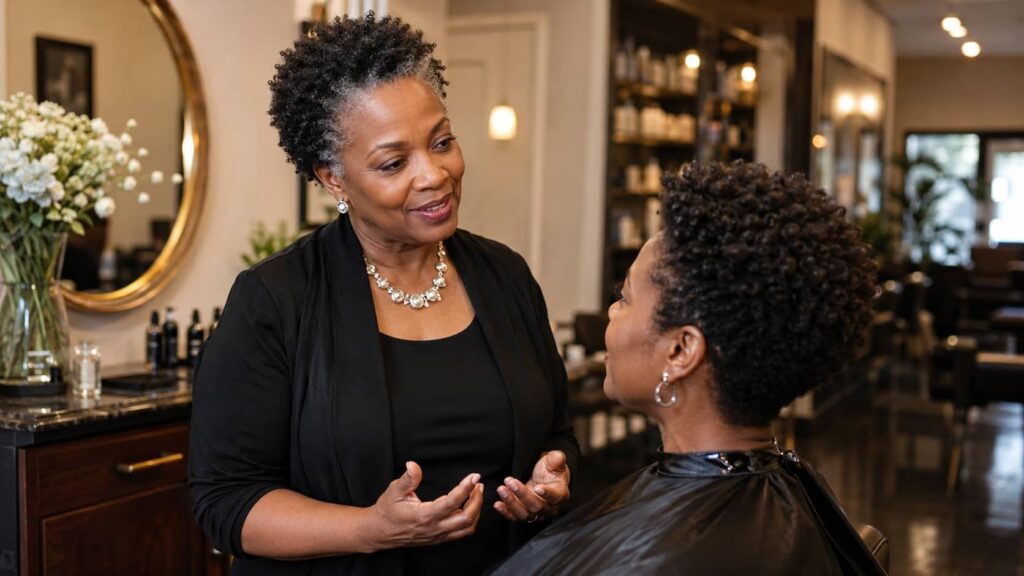
That last con matters more than it might seem. If you pursue professional exosome treatments microneedling with exosome serums, or scalp injection protocols please ask your provider directly about their experience with melanin rich skin. Ask about their post-treatment protocol for hyperpigmentation risk. These are not paranoid questions. They are necessary ones. You deserve a provider who can answer them without hesitation.
Where to Begin Without Overwhelming Yourself
You don’t have to book a clinical treatment tomorrow to start. Begin simply. For your skin look for a high quality exosome serum where exosomes are listed prominently in the ingredients. Not buried at the bottom of a 40-item list. Apply it before your moisturiser and before your SPF. Every single day. And yes SPF is non-negotiable for melanin 50+. Sun exposure accelerates every skin concern we have discussed today. Every. Single. One.
For your scalp and hair start with an exosome scalp serum applied twice a week to your thinning areas. Edges, crown, temples. Massage it in gently with your fingertips using slow, circular pressure. Give it at least eight to twelve weeks before you assess results. Hair growth is patient work. It rewards consistency, not impatience.
Real cellular regeneration is not fast. It is, however, real. And for Black women who have spent too long being offered solutions that weren’t made with us in mind, real is exactly what we deserve.
You are not starting over. you are starting deeper.
For readers curious about topical exosome skincare, The INKEY List Exosome Hydro-Glow Complex is one accessible option to consider. It uses plant-derived exosome technology and is positioned for glow, hydration, and smoother-looking skin.
This is not the same as professional exosome therapy carried out in a clinic. Think of it as an at home skincare product for women who want to explore exosome inspired skincare gently, without adding too many complicated steps to their routine.
You can read the full product edit here: Best Exosome Serum for Black Skin.
The Melanin Tone exists to bring you the science, the luxury finds, and the honest expertise to help you navigate this season of life beautifully and confidently.
Read Part 2: How Long Does Exosome Hair Therapy Last? Your complete FAQ on exosome hair therapy, including how long the treatment may last, whether it is safe, and what side effects you should know about.